

Understanding bicycle gear systems is fundamental to becoming a confident and efficient cyclist. Whether you're navigating city streets, tackling mountain trails, or competing in road races, your bicycle gear determines how smoothly you transfer power to the wheels and how easily you can adapt to changing terrain. Modern cycling technology has evolved significantly, offering riders an impressive array of gear configurations and shifting mechanisms that can transform the riding experience. For Indian cyclists facing diverse conditions from flat urban roads to challenging hill climbs, mastering your bicycle gear setup becomes even more critical to enjoying every ride.
Understanding Bicycle Gear Fundamentals
The bicycle gear system consists of multiple interconnected components working together to multiply your pedaling force. At its core, you'll find the front chainrings attached to your crankset, the rear cassette mounted on your wheel hub, and the chain connecting these elements. Cyclingnews offers an in-depth explanation of how bike gears work, discussing different gear systems and their mechanical advantages.
Key components in any bicycle gear system include:
- Front chainrings (typically 1-3 rings)
- Rear cassette or freewheel (ranging from 7-12 sprockets)
- Chain connecting front to rear
- Front and rear derailleurs for shifting
- Shifters mounted on handlebars
- Cables and housing transmitting shift commands
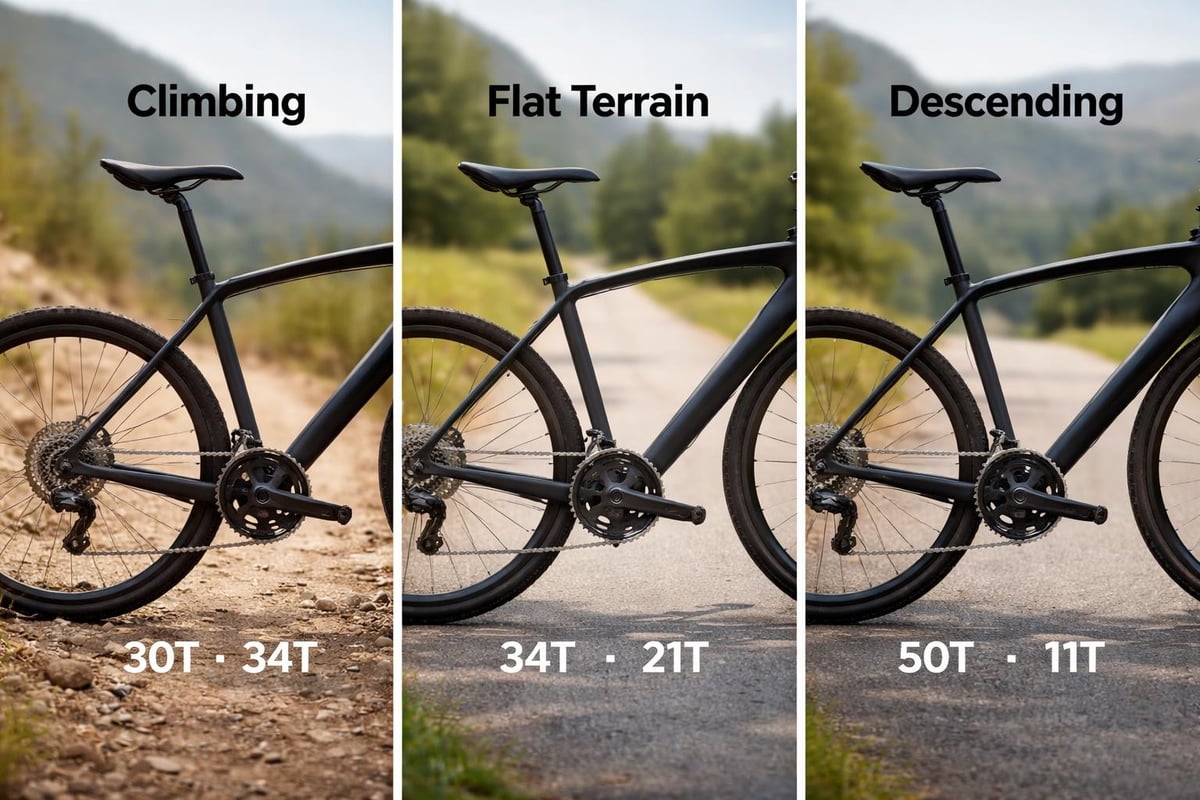
The gear ratio determines how far your bike travels with each pedal revolution. Lower gears (smaller front chainring, larger rear cog) make pedaling easier for climbing hills, while higher gears (larger front, smaller rear) enable faster speeds on flat terrain. Modern groupsets from manufacturers like Shimano, SRAM, and Campagnolo offer precisely calibrated gear ratios optimized for different cycling disciplines.
Selecting the Right Gear Configuration
Your ideal bicycle gear setup depends entirely on your riding style and local terrain conditions. Road cyclists in India's metropolitan areas might prefer compact cranksets with 50/34 tooth chainrings paired with 11-28 or 11-32 cassettes, providing versatile gearing for both flat commutes and occasional hill climbs. Mountain bikers tackling technical trails benefit from wide-range cassettes extending to 11-50 teeth, offering extreme low gears for steep ascents.
Single-chainring setups have gained tremendous popularity across all cycling categories. These 1x drivetrains simplify shifting, reduce weight, and minimize mechanical complications while still offering sufficient gear range through wide-ratio cassettes. The trade-off involves larger jumps between gears compared to traditional 2x or 3x systems, which some riders find less optimal for maintaining consistent cadence.
| Drivetrain Type | Front Rings | Rear Cogs | Best For | Advantages |
|---|---|---|---|---|
| 1x (Single) | 1 | 10-12 | Mountain, Gravel | Simple, light, reliable |
| 2x (Double) | 2 | 10-12 | Road, Touring | Smooth progression, versatility |
| 3x (Triple) | 3 | 8-10 | Touring, Hybrid | Maximum range, easy climbing |
When choosing components like cassettes or chainrings, consider your fitness level and local geography. Beginners benefit from lower gear ratios that make climbing less intimidating, while experienced riders might prefer tighter gear spacing for precise cadence control.
Maintaining Your Bicycle Gear System
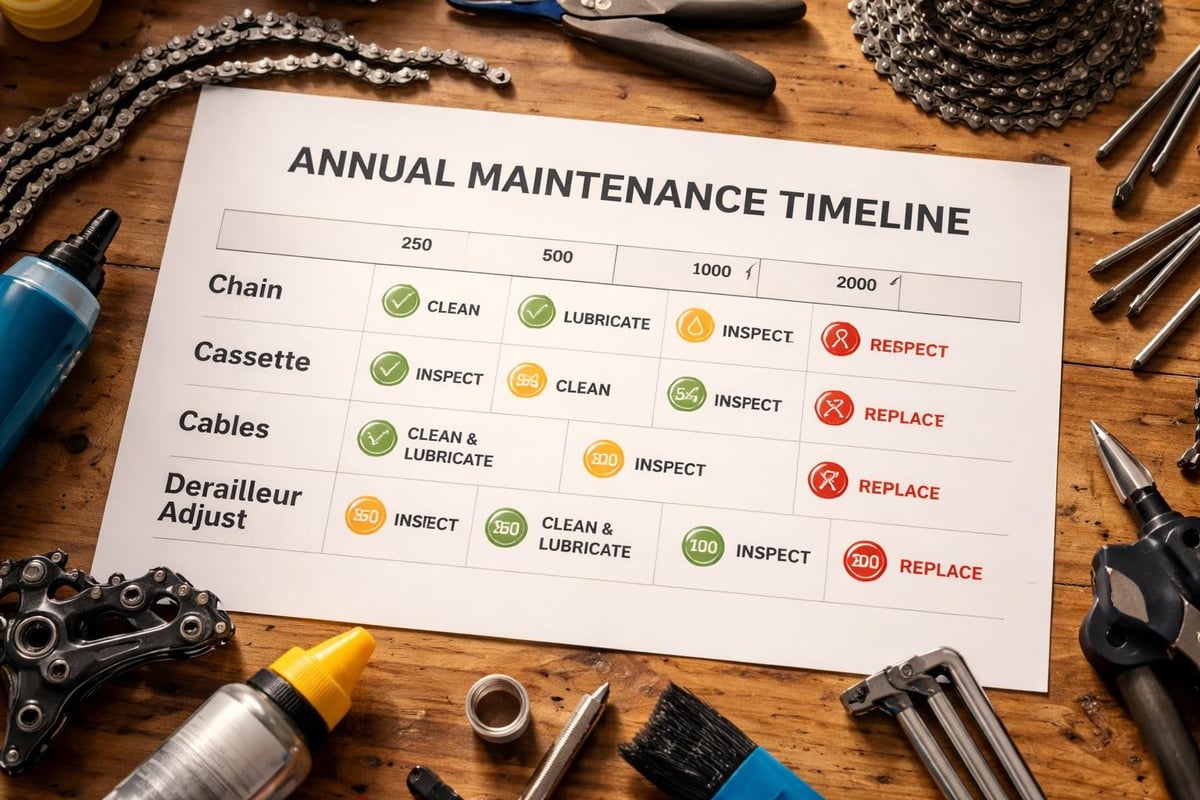
Regular maintenance extends the lifespan of your bicycle gear components and ensures smooth, reliable shifting. The City of Madison's official website outlines regular bicycle maintenance checks, including gear inspections to ensure safe and efficient riding. Indian cyclists face unique challenges from monsoon moisture, dust accumulation, and temperature extremes that accelerate component wear.
Essential Maintenance Tasks
Cleaning your drivetrain should occur every 150-200 kilometers or after riding in wet conditions. Use a dedicated chain cleaner or degreaser to remove accumulated grime from the chain, cassette teeth, and chainrings. Thoroughly rinse and dry all components before applying fresh lubricant specifically formulated for your riding conditions. Wet lubes work better during monsoon season, while dry lubes prevent dust buildup in arid regions.
Monthly maintenance checklist includes:
- Inspect chain for wear using a chain checker tool
- Clean and lubricate drivetrain components
- Check derailleur alignment and cable tension
- Examine cassette teeth for wear patterns
- Test shifting performance across all gears
- Tighten chainring bolts to manufacturer specifications
Cycling Weekly discusses the importance of timely replacement of bicycle chains and cassettes, providing guidelines on recognizing wear. Replacing your chain before it stretches beyond 0.5% prevents accelerated cassette and chainring wear, saving money long-term.
Optimizing Shifting Performance
Precise, responsive shifting requires properly adjusted derailleurs and correctly tensioned cables. Tom's Guide outlines six essential checks including gear shifting tests to ensure your bicycle gear is ready for the season. Many shifting problems stem from cable stretch, derailleur hanger misalignment, or limit screw misconfiguration rather than component failure.
Adjusting Your Derailleurs
The rear derailleur requires precise positioning to align the jockey wheels with each cassette cog. Start by setting the high and low limit screws to prevent the chain from overshooting into the spokes or falling off the smallest cog. Then adjust cable tension using the barrel adjuster until shifts occur crisply without hesitation or chain rub. Front derailleur adjustment involves setting the cage height 2-3mm above the largest chainring and rotating it parallel to the chainrings.
This article provides detailed instructions on adjusting, repairing, and maintaining bicycle gears, emphasizing regular maintenance for optimal performance. Modern indexed shifting systems demand precise cable tension and derailleur positioning, but once properly configured, they deliver thousands of trouble-free shifts.
Cross-chaining occurs when using extreme gear combinations like the largest chainring with the largest cassette cog. This creates severe chain angle stress that accelerates wear and reduces shifting efficiency. Avoid these combinations by selecting appropriate front chainring positions for your rear cassette range. With proper front derailleurs and rear derailleurs setup, you can maximize component longevity.
Upgrading Your Bicycle Gear Components
Component upgrades offer noticeable performance improvements without requiring a complete bike replacement. Modern bicycle gear technology delivers lighter weights, wider gear ranges, and smoother shifting compared to equipment from just five years ago. Strategic upgrades targeting high-wear items or outdated technology provide excellent value for performance-focused cyclists.
Upgrading to a higher-quality groupset transforms your riding experience through improved shift quality, reduced weight, and enhanced durability. Entry-level groupsets from Shimano's Tourney or Altus families work reliably but use heavier materials and less refined shifting mechanisms. Moving to Deore, Tiagra, or higher-tier groupsets brings noticeable improvements in shift crispness, weight reduction, and component longevity. Complete groupsets ensure component compatibility and cohesive performance.
Common upgrade paths include:
- Replacing worn cassette with wider-range option
- Upgrading to lightweight chainrings
- Installing higher-quality shifters with better ergonomics
- Switching to more durable chain construction
- Adding clutch-equipped rear derailleur for better chain retention
Do it Best offers a comprehensive guide on bicycle maintenance, covering gear adjustments to keep your bike in top shape. When planning upgrades, ensure compatibility between components regarding speeds (9/10/11/12-speed), mounting standards, and brand-specific technologies.

For cyclists seeking quality components and expert guidance, Cycling Gears Hub offers premium cycling gear and accessories designed for riders of all levels, with trusted products that improve comfort, safety, and performance for every ride.
Electronic Shifting Revolution
Electronic shifting systems have revolutionized bicycle gear technology by replacing mechanical cables with electric wires and servo motors. Shimano Di2, SRAM AXS, and Campagnolo EPS systems deliver instantaneous, precise shifts at the touch of a button regardless of cable contamination or housing friction. These systems automatically trim front derailleurs, offer customizable shift patterns, and integrate with cycling computers for performance data.
Benefits and Considerations
The precision of electronic shifting eliminates the indexing drift common in cable systems as cables stretch over time. Once configured, electronic systems maintain perfect adjustment indefinitely until battery replacement becomes necessary. Multi-shift capability allows holding the shift button to move through multiple gears rapidly, while programmable buttons enable personalized control layouts matching individual preferences.
Battery life typically ranges from 1000-2000 kilometers per charge depending on shift frequency and system type. SRAM's wireless AXS eliminates shift wires entirely, simplifying installation and bike cleaning. The primary drawbacks involve higher initial cost, potential electronic failure in remote locations, and complexity requiring specialized service knowledge. For serious cyclists prioritizing performance, electronic shifting represents a worthwhile investment despite the premium pricing.
| Feature | Mechanical | Electronic |
|---|---|---|
| Shift Speed | Fast | Instantaneous |
| Maintenance | Cable replacement | Battery charging |
| Weight | Light | Slightly heavier |
| Cost | $200-1500 | $1500-3500 |
| Adjustment | Periodic | Self-maintaining |
Troubleshooting Common Bicycle Gear Issues
Even well-maintained bicycle gear systems occasionally develop problems requiring diagnosis and correction. CycleGuard provides a bicycle maintenance guide with simple steps including regular checks to ensure your bicycle gear remains in excellent condition. Understanding common issues helps you address problems quickly before they escalate into component damage or safety hazards.
Skipping Gears Under Power
Chain skip during hard pedaling usually indicates a worn chain, worn cassette, or both components simultaneously. Chains stretch gradually through normal use, causing poor engagement with cassette teeth. Install a new chain immediately upon detecting skip, and replace the cassette if the new chain doesn't resolve the problem. Delaying replacement damages chainrings and creates expensive cascading wear across the entire drivetrain.
Other causes of gear problems include:
- Derailleur hanger bent from impact
- Stretched or frayed shift cables
- Contaminated or dry chain
- Loose chainring bolts
- Damaged derailleur jockey wheels
- Incompatible component combinations
Ghost shifting, where gears change unexpectedly without input, typically results from insufficient cable tension or contaminated housing. Increase tension using the barrel adjuster quarter-turn increments until shifts stabilize. If adjustments don't resolve the issue, replace shift cables and housing to restore proper function.
Gear Selection Strategies for Different Terrains
Effective bicycle gear usage involves anticipating terrain changes and shifting proactively rather than reactively. Experienced cyclists shift before reaching steep gradients, maintaining smooth pedaling cadence around 80-90 RPM regardless of speed. This cadence optimization reduces muscular fatigue and delivers consistent power output across varied terrain.
Climbing Techniques
Approach climbs in a gear allowing sustainable effort without grinding at excessively low cadence. Shift to easier gears before the gradient steepens, preventing the need for shifting under heavy load that stresses components. Maintain seated climbing position in easier gears, standing only for short power bursts or extremely steep pitches where additional leverage outweighs the efficiency loss.
For long climbs exceeding 5-10 minutes, finding a comfortable rhythm in an appropriately easy gear prevents premature fatigue. Don't hesitate to use your easiest gears-they exist precisely for challenging climbs. Proper utilization of low gears with high-quality chains ensures efficient power transfer during demanding ascents.
Descending requires shifting to harder gears before gravity accelerates your speed beyond comfortable pedaling cadence. Continue pedaling lightly during descents to maintain control and keep your chain tensioned, reducing chain slap and improving stability. Shift back to moderate gears before reaching the descent's end, preparing for the transition to flat terrain or subsequent climbs.
Future Trends in Bicycle Gear Technology
Bicycle gear innovation continues advancing through wireless integration, expanded gear ranges, and materials science breakthroughs. Manufacturers consistently pursue reduced weight, improved durability, and enhanced user experience through technological refinement. Understanding emerging trends helps cyclists make informed purchasing decisions and anticipate future maintenance requirements.
Wireless electronic shifting eliminates the final cables from modern bicycles, creating cleaner aesthetics and simplified maintenance. Battery technology improvements extend operating duration while reducing recharge frequency. Integration with smartphones and cycling computers enables firmware updates, shift customization, and performance tracking previously impossible with mechanical systems.
Emerging technologies include:
- Continuously variable transmission (CVT) systems
- Automatic shifting based on cadence and power
- Improved sealing against contamination
- Lighter weight composite materials
- Extended component lifespan through coating technologies
Gear range expansion continues with 13-speed cassettes entering the market, offering even finer gear spacing or wider total range. Single-chainring systems dominate new bike specifications across categories from cross-country mountain bikes to road racing machines. The industry trend toward simplification and reliability suggests future bicycle gear systems will feature fewer components requiring less maintenance while delivering superior performance.
Mastering your bicycle gear system unlocks improved performance, enhanced riding enjoyment, and extended component longevity through proper selection, maintenance, and usage. Whether you're upgrading components, troubleshooting shifting issues, or simply learning to use your current setup more effectively, understanding these fundamental principles transforms your cycling experience. Cycling Gears Hub provides Indian cyclists with premium components, expert guidance, and comprehensive support backed by fast shipping and hassle-free returns, helping you optimize every aspect of your ride.