

Full face bicycle helmets represent the pinnacle of cycling safety equipment, offering comprehensive protection that extends beyond what traditional helmets provide. Originally designed for downhill mountain biking and BMX racing, these helmets have evolved to serve various cycling disciplines where maximum head and facial protection is essential. As cycling continues to grow in popularity across India, understanding when and why to choose full coverage protection becomes increasingly important for riders pushing their limits on challenging terrain or participating in gravity-focused disciplines.
Understanding Full Face Helmet Construction
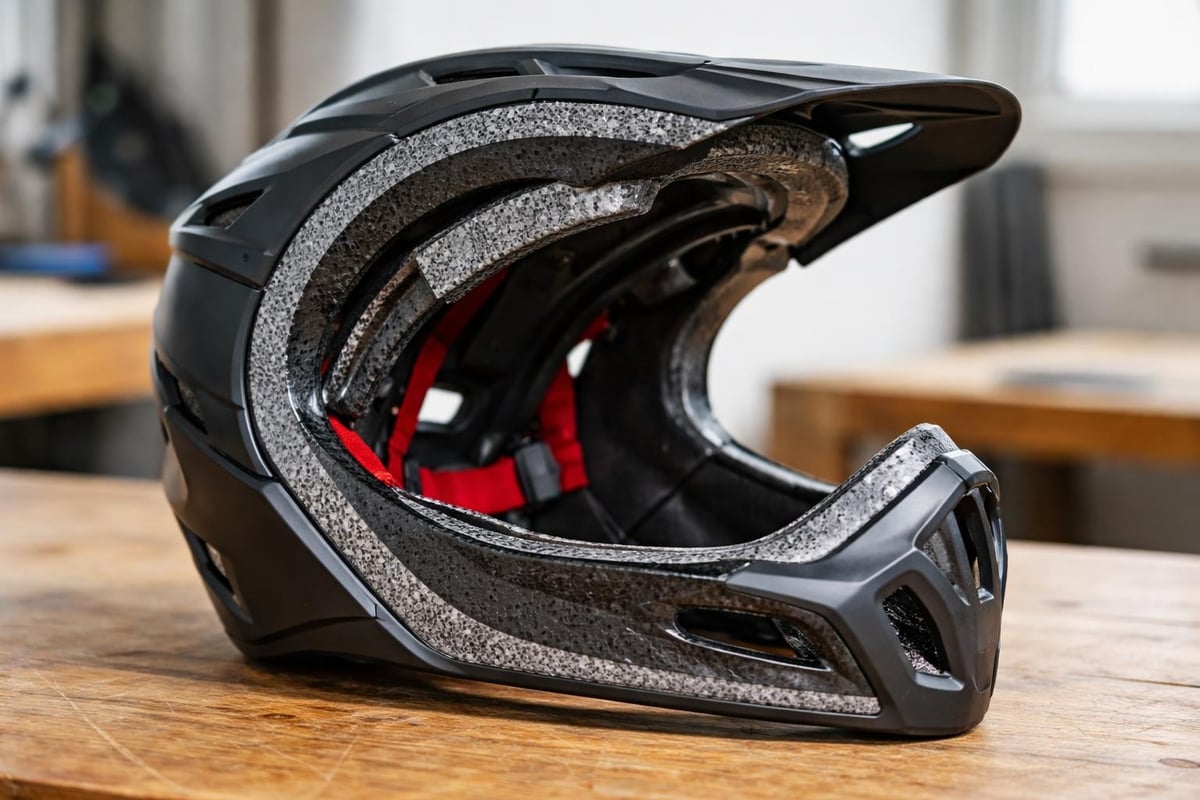
Full face bicycle helmets differ fundamentally from standard cycling helmets through their extended coverage area and reinforced structural design. These helmets encase the entire head, including the chin, jaw, and lower face, creating a protective shell that absorbs impacts from multiple angles.
The construction typically involves a hard outer shell made from polycarbonate or composite materials, combined with an impact-absorbing EPS (expanded polystyrene) foam liner. The chin bar, a defining feature of full face designs, connects both sides of the helmet and provides crucial protection for the lower face and jaw. This component must meet specific strength requirements to withstand significant impact forces without compromising or breaking.
Key Structural Components
Understanding the anatomy of full face bicycle helmets helps riders appreciate their protective capabilities:
- Outer shell: Distributes impact forces across the helmet surface
- EPS liner: Crushes upon impact to absorb energy and reduce force transmission
- Chin bar: Protects jaw and lower face while maintaining structural integrity
- Retention system: Secures helmet firmly to prevent movement during crashes
- Ventilation channels: Manages airflow to reduce heat buildup
- Comfort padding: Provides fit customization and moisture management
The integration of these components creates a safety system that significantly outperforms half-shell helmets in high-impact scenarios. Modern manufacturing techniques allow for optimized weight distribution, making contemporary full face options more comfortable than earlier generations.
Safety Standards and Certifications
Full face bicycle helmets must meet rigorous safety standards that verify their protective capabilities. The ASTM F1952-15 standard specifically addresses helmets used in downhill mountain bicycle racing, establishing performance requirements for impact attenuation, penetration resistance, and chin bar integrity.
In Europe, the EN 1078 standard applies to bicycle helmets, while dedicated downhill helmets may also meet motorcycle helmet standards like ECE 22.05 or DOT FMVSS 218. These certifications indicate that helmets have undergone extensive laboratory testing to verify their ability to protect riders during crashes.
| Standard | Region | Application | Key Requirements |
|---|---|---|---|
| ASTM F1952-15 | USA | Downhill MTB | Enhanced impact protection, chin bar strength testing |
| EN 1078 | Europe | Cycling | Impact absorption, retention system strength |
| CPSC 1203 | USA | Bicycle helmets | Impact attenuation, positional stability |
| ECE 22.05 | Europe | Motorcycle (some DH helmets) | Rigorous multi-impact testing |
Safety testing goes beyond minimum standards. Organizations like Virginia Tech's Helmet Lab conduct independent evaluations, assigning safety ratings based on real-world crash scenarios. These ratings help consumers identify helmets that exceed basic certification requirements.
Importance of Proper Certification
Choosing certified helmets is non-negotiable for rider safety. Recent investigations have revealed that some helmets from certain brands failed to meet safety regulations, highlighting the importance of purchasing from reputable manufacturers and retailers. When investing in full face bicycle helmets, verify that certification labels are present and authentic.
Types and Discipline-Specific Designs
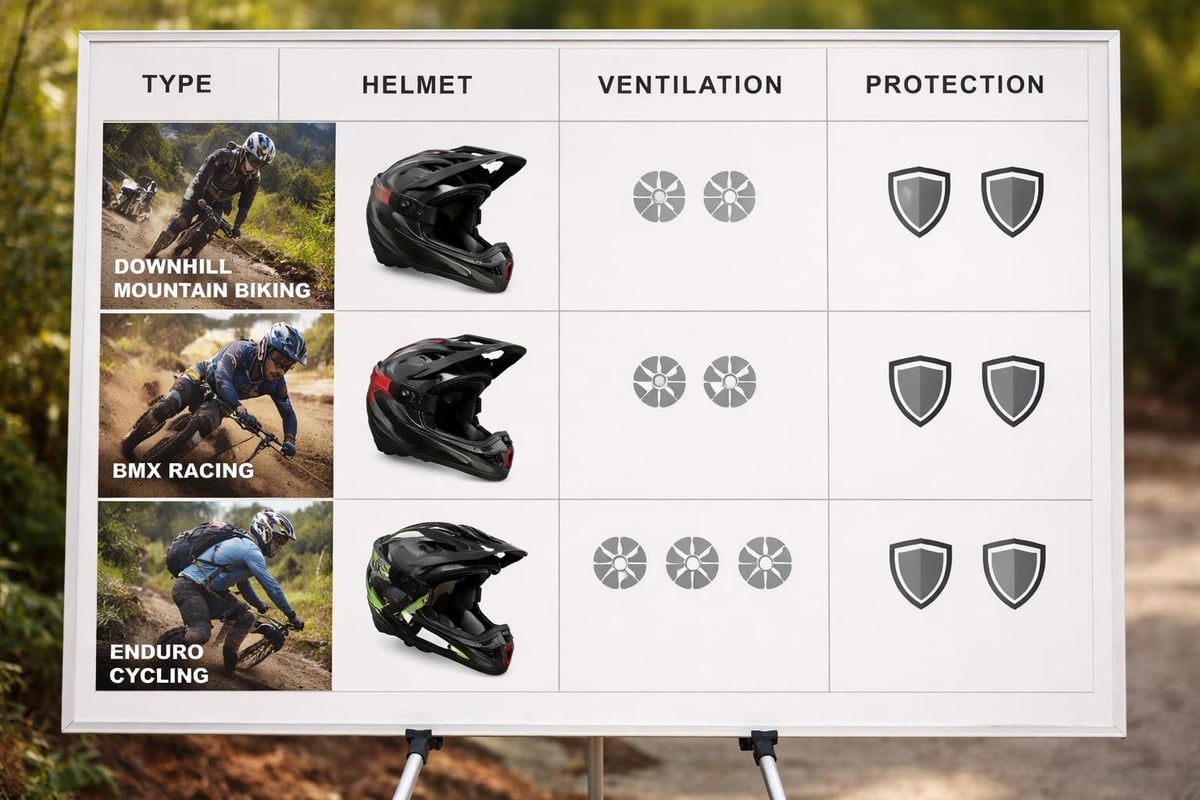
Full face bicycle helmets serve distinct cycling disciplines, each requiring specific design characteristics. Understanding these variations helps riders select appropriate protection for their activities.
Downhill Mountain Biking Helmets
Downhill-specific full face helmets prioritize maximum protection while managing weight for extended use during lift-accessed or shuttle-run riding. These helmets feature extensive ventilation systems to combat heat buildup during intense descents, often incorporating 15-20 vents with internal channeling for airflow optimization.
Weight typically ranges from 800 to 1,100 grams, balancing protection with neck strain reduction during long riding sessions. Many models include removable cheek pads and adjustable visors to accommodate goggles and personal preference.
BMX and Dirt Jump Helmets
BMX-oriented full face designs emphasize durability and impact resistance for repeated crashes and hard landings. These helmets often feature smaller ventilation openings to maintain structural integrity, accepting reduced airflow as a trade-off for enhanced protection during tricks and jumps.
The fit tends to be more compact, with less emphasis on extended visor coverage since BMX riders typically don't use goggles. Weight distribution focuses on stability during aerial maneuvers and landings.
Convertible and Enduro Helmets
Some modern full face bicycle helmets feature removable chin bars, allowing transformation between full face and half-shell configurations. This versatility appeals to enduro riders who pedal uphill but require maximum protection on descents.
However, convertible designs involve compromises. The chin bar attachment mechanisms may not match the strength of integrated construction, and overall weight increases compared to dedicated half-shell helmets. Riders should carefully evaluate whether the convenience justifies these trade-offs for their specific use cases.
Fit and Sizing Fundamentals
Proper fit is absolutely critical for full face bicycle helmets to function as designed. An ill-fitting helmet can shift during impact, compromising protection and potentially causing injury.
Measuring for Correct Size
Start by measuring head circumference using a flexible measuring tape positioned approximately one inch above the eyebrows, wrapping around the largest part of the head. Record this measurement in centimeters and compare against manufacturer sizing charts, which typically offer sizes ranging from XS (52-54 cm) to XXL (61-63 cm).
Head shape varies significantly among individuals. Some riders have round head shapes, while others tend toward oval or elongated profiles. Full face helmets from different manufacturers accommodate these variations differently, making brand-specific fit trials important.
Conducting a Proper Fit Test
- Position the helmet level on your head with the front edge approximately one inch above your eyebrows
- Adjust the retention system until snug but comfortable
- Shake your head vigorously side-to-side and up-and-down
- The helmet should remain stable without excessive movement
- Check that cheek pads contact your face without creating pressure points
- Ensure the chin bar provides adequate clearance for jaw movement
The helmet should feel snug initially, as padding will compress slightly with use. However, it should never cause pain or restrict blood flow. When selecting full face bicycle helmets, comprehensive guides on bike helmet selection can provide additional fitting insights across different helmet types.
Common Fit Issues and Solutions
Pressure points: Usually indicate incorrect size or incompatible head shape for that particular model. Try different brands or sizes rather than accepting discomfort.
Excessive movement: Suggests the helmet is too large. Even with maximum retention system tightening, the helmet should not shift during head movement.
Chin bar contact: The chin bar should not press against the chin during normal riding position. Some contact during extreme jaw opening is acceptable, but constant pressure indicates poor fit.
Ventilation and Comfort Management
Full face bicycle helmets face inherent ventilation challenges due to their enclosed design. Managing heat buildup and moisture accumulation directly impacts rider comfort and performance during extended sessions.
Modern designs incorporate strategic vent placement to maximize airflow while maintaining structural integrity. Intake vents at the front channel cool air through internal EPS foam passages, while exhaust vents at the rear create negative pressure that pulls hot air away from the head.
Ventilation Design Features
- Chin bar vents: Allow airflow across the lower face and reduce fogging on goggles
- Forehead intake ports: Channel cooling air across the scalp
- Crown exhaust vents: Release hot air through upper helmet areas
- Internal channeling: Directs airflow through EPS foam for improved cooling
- Moisture-wicking liners: Draw sweat away from skin to enhance evaporation
Despite these innovations, full face bicycle helmets inherently provide less ventilation than half-shell alternatives. Riders transitioning from open-face helmets should expect a warmer experience, particularly during climbs or in hot weather conditions.
When Full Face Protection Becomes Essential
Determining when to wear full face bicycle helmets depends on riding discipline, terrain, speed, and personal risk tolerance. Certain scenarios clearly justify comprehensive protection, while others present judgment calls.
Downhill mountain biking: The high speeds, technical terrain, and elevated crash risk make full face helmets standard equipment. Most bike parks and downhill racing events require or strongly recommend full coverage.
Bike park riding: Even on intermediate trails, the constructed features, jumps, and elevated speeds warrant additional protection beyond half-shell helmets.
Lift-accessed riding: When utilizing chairlifts or shuttles for descent-focused riding, full face protection provides appropriate coverage for the speeds and features encountered.
BMX racing and freestyle: Both competitive and recreational BMX activities involve significant facial injury risk from crashes, making full face bicycle helmets the appropriate choice.
Questionable Applications
The suitability of full-face helmets for commuting and road cycling remains debated. While these helmets offer superior protection, their weight, reduced ventilation, and restricted peripheral vision create practical challenges for everyday riding. Most riders find half-shell helmets more appropriate for commuting, road cycling, and cross-country mountain biking.
Urban cycling at moderate speeds typically doesn't justify the compromises associated with full face designs. The increased neck strain, limited visibility, and communication difficulties outweigh benefits in most city riding scenarios.
Regulatory Considerations and Racing Requirements
Competitive cycling disciplines enforce specific helmet requirements through governing bodies. Understanding these regulations helps racers ensure compliance while maximizing protection.
The UCI (Union Cycliste Internationale) maintains detailed regulations for helmet designs in road cycling, though these primarily address aerodynamic half-shell helmets rather than full face designs. Downhill mountain bike racing under UCI sanctioning requires helmets meeting ASTM F1952 or equivalent standards.
Bike park operators and race organizers may impose additional requirements beyond minimum certifications. Some venues mandate full face helmets for all riders regardless of skill level, while others require them only for specific trail ratings or age groups.
Event-Specific Requirements
Before participating in organized events, verify helmet requirements through event registration materials or organizer communications. Requirements may specify:
- Minimum certification standards (ASTM F1952, EN 1078, etc.)
- Maximum helmet age (typically 3-5 years from manufacture date)
- Damage-free condition verification
- Full face versus half-shell requirements by category or course
Arriving at an event with non-compliant equipment can result in registration denial or inability to participate, emphasizing the importance of advance verification.
Maintenance and Lifespan Management
Proper care extends the functional lifespan of full face bicycle helmets while ensuring they provide intended protection when needed. Unlike many cycling components, helmets have definitive replacement schedules regardless of visible condition.
Routine Cleaning and Care
Regular cleaning prevents odor buildup and maintains comfort padding effectiveness. Remove liner components if possible and hand wash with mild soap and lukewarm water. Avoid machine washing, which can damage foam structures and adhesives. Allow all components to air dry completely before reassembly.
Clean the helmet shell with damp cloths, avoiding harsh chemicals or solvents that might degrade materials. Pay particular attention to ventilation channels where dirt and debris accumulate, potentially blocking airflow.
Store helmets in cool, dry locations away from direct sunlight. UV exposure degrades plastics and adhesives over time, compromising structural integrity even without visible damage.
Replacement Timing Criteria
After any significant impact: Even if no visible damage appears, the EPS foam may have compressed, reducing future impact protection. Replace helmets after crashes involving head contact.
Manufacturer recommendations: Most helmet makers specify 3-5 year replacement intervals from manufacture date (not purchase date). This accounts for material degradation regardless of use intensity.
Visible damage: Cracks in the shell, compressed foam, detached components, or compromised retention systems all warrant immediate replacement.
Fit changes: If the helmet no longer fits properly due to liner compression or body changes, replacement ensures proper protective function.
When shopping for replacement helmets, Cycling Gears Hub provides access to quality protective equipment designed for Indian cyclists' needs. Their selection includes options across price points and disciplines, making it easier to find appropriate full face bicycle helmets backed by proper certifications and manufacturer support.

Advanced Features and Technologies
Contemporary full face bicycle helmets incorporate increasingly sophisticated technologies aimed at enhancing protection, comfort, and performance. Understanding these innovations helps riders make informed purchasing decisions.
MIPS and Rotational Impact Protection
The Multi-directional Impact Protection System (MIPS) represents one of the most significant recent advances in helmet safety. This technology addresses rotational forces during angled impacts, which can cause brain injuries even when linear impact protection is adequate.
MIPS works through a low-friction layer inside the helmet that allows slight rotation relative to the head during impact, reducing rotational forces transmitted to the brain. Many premium full face bicycle helmets now incorporate MIPS or similar technologies like WaveCel or SPIN.
Magnetic Buckle Systems
Traditional helmet buckles require two-handed operation for release, which can be frustrating when wearing gloves or in emergency situations. Magnetic buckle systems allow one-handed operation while maintaining secure retention during rides.
These systems typically involve magnetic alignment that guides buckle components together, followed by a mechanical latch that ensures the connection won't release accidentally. The combination provides convenience without compromising safety.
Integrated Camera Mounts
Action camera integration has become standard on many full face designs, with manufacturers including dedicated mounting points that don't compromise helmet integrity. These mounts position cameras for optimal footage angles while distributing weight to minimize neck strain.
Proper integration matters because aftermarket adhesive mounts can create stress concentration points that weaken helmet structures. Factory-designed mounting systems account for structural requirements while providing secure camera attachment.
Price Considerations and Value Assessment
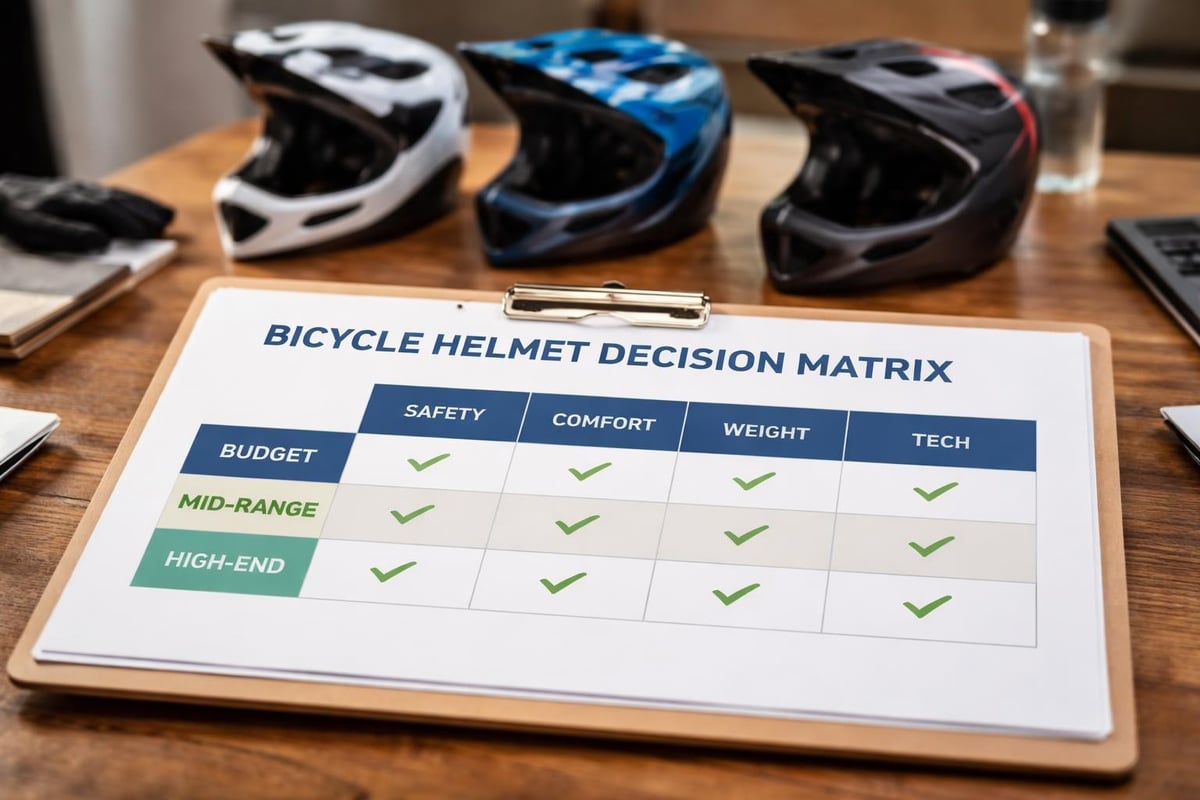
Full face bicycle helmets represent significant investments, with prices ranging from approximately ₹8,000 for entry-level options to ₹35,000 or more for premium models with advanced features. Understanding what drives these price differences helps riders allocate budgets effectively.
| Price Range | Typical Features | Best For |
|---|---|---|
| ₹8,000-₹12,000 | Basic certification, standard ventilation, higher weight | Occasional riders, budget-conscious buyers |
| ₹12,000-₹20,000 | ASTM certification, improved ventilation, moderate weight | Regular park riders, intermediate racers |
| ₹20,000-₹28,000 | MIPS/rotational protection, optimized ventilation, lighter weight | Serious riders, frequent park visits |
| ₹28,000+ | Premium materials, maximum ventilation, minimal weight, advanced features | Professional riders, performance enthusiasts |
Higher prices generally reflect lighter materials, better ventilation systems, advanced safety features like MIPS, and refined fit systems. However, even entry-level certified helmets provide substantial protection when properly fitted and maintained.
Evaluating Cost Versus Protection
Safety certifications establish minimum protection thresholds that all compliant helmets must meet regardless of price. A ₹10,000 helmet meeting ASTM F1952 standards provides fundamental protection comparable to more expensive certified options.
Premium pricing typically addresses comfort, weight, ventilation, and advanced rotational impact protection rather than basic impact absorption. Riders should prioritize proper certification and fit over brand prestige or cosmetic features when budget constraints exist.
Integration With Other Safety Equipment
Full face bicycle helmets function as part of a comprehensive safety system that includes protective gear, bike components, and riding techniques. Optimizing these integrations maximizes overall protection and performance.
Goggle Compatibility
Most full face designs specifically accommodate goggles rather than glasses, providing superior eye protection and preventing debris intrusion during aggressive riding. The visor positions above goggles to deflect roost and maintain clear vision.
Goggle fit should be verified during helmet trials. The goggle strap should sit in dedicated channels on the helmet exterior, and the goggle face foam should seal against the face without interference from the helmet's lower edge. Incompatible combinations create gaps that allow dirt and debris entry.
Neck Brace Compatibility
Riders engaging in the most aggressive downhill racing or bike park riding may use neck braces for spinal protection. Not all full face bicycle helmets work properly with neck braces, as the chin bar and lower helmet edge must interface correctly with the brace.
Manufacturers typically specify neck brace compatibility or design helmets specifically for brace use. Using incompatible combinations can compromise both helmet and brace function, potentially increasing injury risk rather than reducing it.
Body Armor Coordination
Comprehensive protection systems extend beyond the head to include chest protectors, elbow guards, and knee pads. When selecting full face helmets, consider how they work within your complete protective setup.
Weight distribution matters across all equipment. A heavier helmet combined with extensive body armor can create fatigue that compromises bike control and increases crash risk. Balance maximum protection with sustainable comfort for your typical riding duration and intensity.
Common Misconceptions and Facts
Several myths persist around full face bicycle helmets that can mislead riders making protection decisions. Addressing these misconceptions helps establish realistic expectations.
Misconception: "Full face helmets prevent all head injuries."
Reality: No helmet eliminates injury risk. Full face designs significantly reduce injury severity and frequency, but crashes can still result in concussions, neck injuries, and other trauma. Helmets are one component of comprehensive risk management alongside skill development, appropriate speed, and terrain selection.
Misconception: "Heavier helmets provide better protection."
Reality: Weight doesn't correlate directly with protection. Modern materials allow manufacturers to reduce weight while maintaining or improving impact absorption. Certification compliance matters more than absolute weight.
Misconception: "Full face helmets are only for professional riders."
Reality: Protection requirements depend on riding style and terrain, not skill level. Beginners riding bike parks or downhill trails face similar impact risks to professionals on the same terrain. The question isn't skill level but rather whether riding conditions justify comprehensive coverage.
Misconception: "You can use motorcycle helmets for cycling."
Reality: Motorcycle helmets significantly exceed cycling helmet weight, creating neck strain and fatigue that compromise bike control. While they offer substantial protection, their design doesn't suit cycling biomechanics or thermal management needs. Dedicated full face bicycle helmets balance protection with cycling-specific requirements.
Regional Considerations for Indian Cyclists
Indian cycling conditions present unique challenges that influence full face helmet selection and use. Understanding these factors helps riders make region-appropriate choices.
Climate considerations affect ventilation prioritization. India's warm temperatures and high humidity make efficient airflow critically important for rider comfort and safety. Helmets with maximum ventilation become essential rather than optional for extended riding sessions.
When exploring options through platforms like Cycling Gears Hub, riders gain access to equipment suited for Indian conditions with appropriate ventilation characteristics. The availability of COD and EMI options also makes higher-quality protective equipment more accessible to cyclists across different budget ranges.
Trail Development and Protection Needs
India's growing mountain biking scene includes developing bike parks and trail networks that attract riders to gravity-focused disciplines. As these facilities expand, the need for proper protective equipment including full face bicycle helmets increases proportionally.
Riders should assess their local terrain and available facilities when deciding on helmet investments. If nearby trails include significant downhill sections, jumps, or technical features, full face protection becomes increasingly relevant regardless of rider skill progression.
Full face bicycle helmets provide unmatched protection for riders engaged in downhill mountain biking, bike park riding, and other gravity-focused disciplines where facial injuries pose significant risks. Understanding certification standards, proper fit, maintenance requirements, and discipline-specific needs enables riders to select appropriate protection that balances safety, comfort, and performance. Whether you're exploring road bikes or preparing for aggressive trail riding, Cycling Gears Hub offers the equipment and expertise Indian cyclists need to ride safely and confidently with fast shipping, flexible payment options, and hassle-free returns.