

Understanding how to effectively use gears cycling techniques can transform your riding experience from frustrating to exhilarating. Whether you're tackling steep climbs in the Himalayas or cruising through city streets, mastering your bicycle's gearing system is essential for efficiency, speed, and endurance. Modern bicycles offer sophisticated gear systems that allow riders to adapt to changing conditions, but many cyclists never fully unlock their potential. This comprehensive guide explores everything you need to know about gears cycling, from basic mechanics to advanced shifting strategies that professional riders employ.
Understanding the Fundamentals of Gears Cycling
The science behind bicycle gears revolves around mechanical advantage and gear ratios. When you shift gears, you're essentially changing the relationship between how many times you pedal and how many times your wheel rotates. How bicycle gears work involves a complex interplay between chainrings, cassettes, and derailleurs that convert your leg power into forward motion.
The Anatomy of Gear Systems
Modern bicycles typically feature one of three main gearing configurations:
- Single-speed or fixed-gear: One gear ratio, simple and lightweight
- Traditional derailleur systems: Multiple chainrings (front) and cogs (rear cassette)
- Internal hub gears: Enclosed mechanism requiring less maintenance
Each system has distinct advantages depending on your riding style and terrain. Derailleur systems dominate the market because they offer the widest range of gear ratios with relatively light weight. Internal hub gears provide durability and protection from the elements, making them popular for commuter bikes in urban environments.
The front chainrings and rear cassette work together to create your total gear range. A standard road bike might have two chainrings with 50 and 34 teeth paired with an 11-28 tooth cassette, while mountain bikes often use a single front chainring with wide-range cassettes exceeding 50 teeth on the largest cog.
Gear Ratios Explained for Practical Cycling
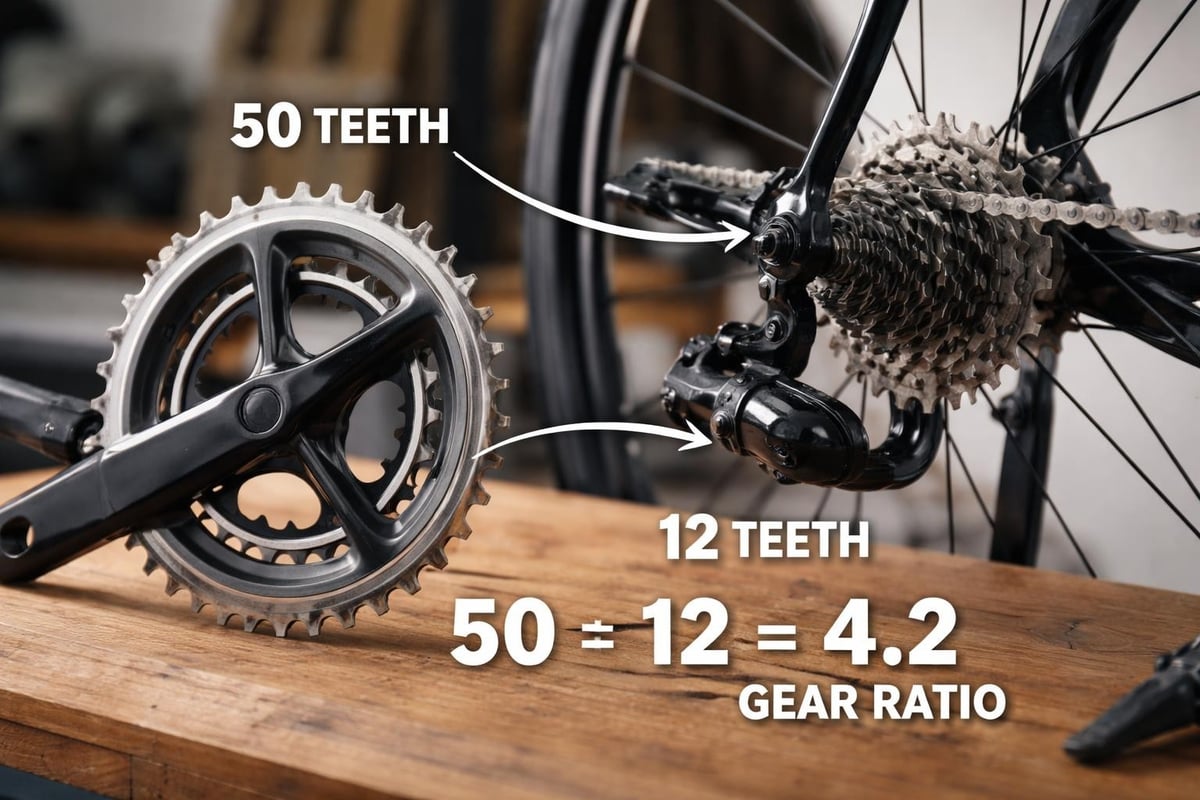
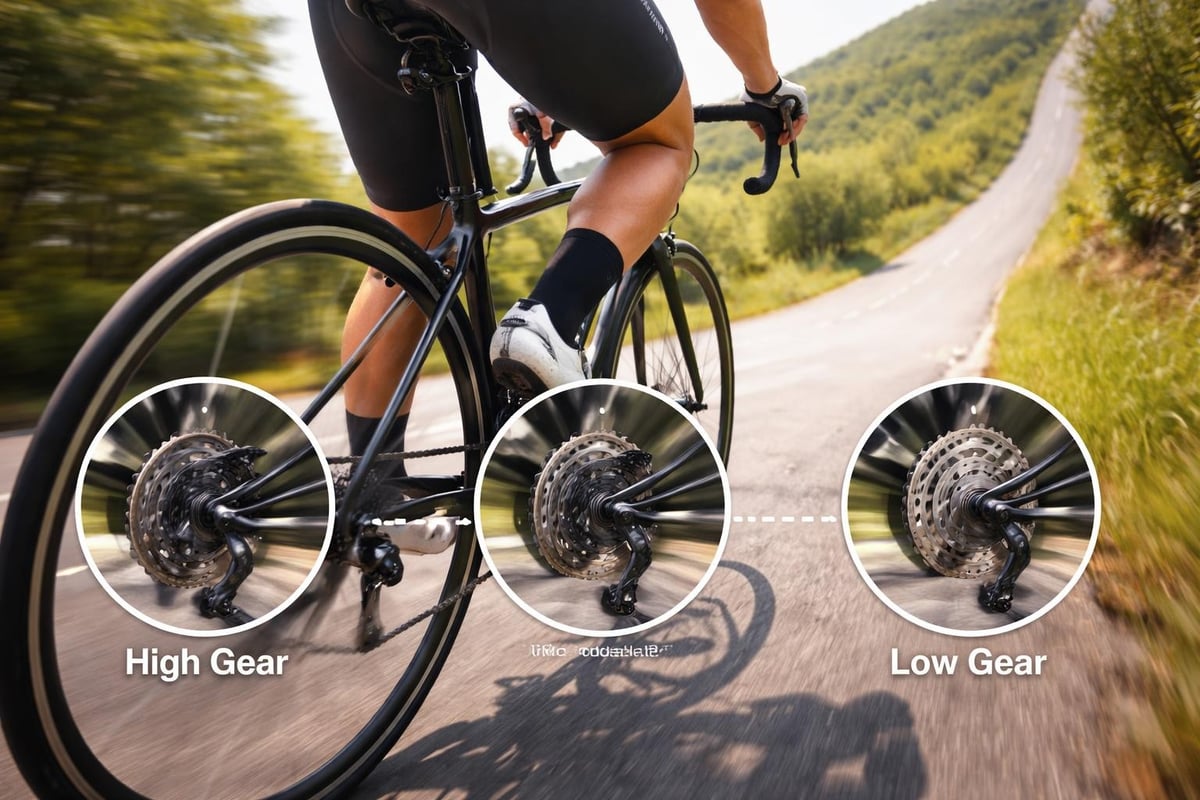
Gear ratios represent the mechanical relationship between your pedaling effort and wheel rotation. Understanding bicycle gear ratios helps you select the right gear for any situation. A higher gear ratio means more wheel rotation per pedal stroke, which translates to greater speed but requires more force. Conversely, lower ratios make pedaling easier but reduce speed.
| Gear Type | Ratio Range | Best For | Cadence Impact |
|---|---|---|---|
| Low Gears | 1.0-2.0 | Steep climbs, technical terrain | High cadence, low resistance |
| Medium Gears | 2.0-3.5 | Flat roads, moderate hills | Balanced cadence and speed |
| High Gears | 3.5-5.0+ | Descents, sprints, tailwinds | Lower cadence, high speed |
Calculating Your Optimal Ratio
To determine gear ratios, divide the number of teeth on your front chainring by the number on your rear cog. For instance, a 50-tooth chainring paired with a 25-tooth cog yields a 2.0 ratio. This calculation helps you understand your bike's capabilities and plan for different routes.
Most cyclists benefit from analyzing their local terrain and selecting gear ranges accordingly. Flat regions favor tighter ratio spacing for fine-tuned speed control, while mountainous areas demand wide-range cassettes with extremely low gears for sustained climbing.
Mastering Shifting Techniques in Gears Cycling
Proper shifting technique separates efficient cyclists from those who struggle unnecessarily. Knowing when and how to shift gears prevents chain wear, reduces mechanical stress, and maintains momentum. The golden rule is to shift before you need to, anticipating changes in gradient or speed rather than reacting after you've already lost momentum.
Pre-Shift Strategies
Successful gears cycling requires thinking ahead:
- Scan the road ahead for upcoming hills, turns, or obstacles
- Shift to easier gears before climbing begins, not during the steepest section
- Increase cadence slightly just before shifting to reduce chain tension
- Avoid shifting under maximum power when sprinting or climbing hard
- Practice smooth, deliberate movements rather than multiple rapid shifts
Front derailleur shifts create larger changes in resistance and should be used strategically for major terrain transitions. Rear derailleur shifts offer fine adjustments and should handle most of your shifting needs during rides.
Modern electronic shifting systems like Shimano Di2 and SRAM eTap have revolutionized gears cycling by providing precise, effortless shifts at the push of a button. These systems automatically trim the front derailleur and can be programmed for sequential shifting patterns.
The Relationship Between Cadence and Gearing
Cadence and gear selection work together to optimize your power output and endurance. Cadence refers to how many times you complete a full pedal revolution per minute. Most experienced cyclists maintain cadences between 80-100 RPM on flat terrain, adjusting their gears to stay within this range regardless of speed.
Finding Your Sweet Spot
Individual riders have unique optimal cadences based on fitness level, muscle composition, and cycling discipline. Track cyclists might spin at 120+ RPM during efforts, while touring cyclists carrying heavy loads often prefer 60-70 RPM in lower gears. Experimenting with different cadences in various gears helps you discover your most efficient pedaling rhythm.
Higher cadences in easier gears reduce muscular stress and can improve endurance on long rides. Lower cadences in harder gears develop strength but can lead to earlier fatigue. The key to effective gears cycling is selecting combinations that keep you in your target cadence zone.
Terrain-Specific Gearing Strategies
Different riding conditions demand distinct approaches to gears cycling. Understanding how to adapt your shifting for various scenarios improves both performance and enjoyment.
Climbing Techniques
Hills present the greatest gearing challenge for most cyclists:
- Shift to climbing gears early before gradient increases
- Maintain steady cadence rather than grinding in too hard a gear
- Use your full gear range without being afraid of the easiest gears
- Stand and shift to harder gear for brief power surges over steep sections
For extended climbs, settling into a sustainable rhythm in an appropriate gear prevents premature fatigue. Many riders make the mistake of using too hard a gear, which depletes glycogen stores and causes muscle damage.
Descending and Flat Road Tactics
Downhills and flat sections allow you to maximize speed through smart gearing:
| Situation | Recommended Action | Benefit |
|---|---|---|
| Beginning descent | Shift to harder gear | Maintain pedaling control |
| Mid-descent | Match gear to leg speed | Avoid spinning out |
| Approaching flat after climb | Pre-shift to moderate gear | Quick acceleration |
| Steady flat riding | Fine-tune rear shifts | Optimize cadence |
Anticipating shifts as terrain changes keeps you in control and maximizes your efficiency. The best gear bicycle setup allows seamless transitions between different riding conditions.
Common Gears Cycling Mistakes to Avoid
Even experienced riders can develop bad shifting habits that reduce efficiency and increase wear on components. Recognizing these errors helps you ride smarter and extend the life of your drivetrain.
Cross-Chaining Problems
Cross-chaining occurs when you use extreme gear combinations like the largest chainring with the largest rear cog, or smallest with smallest. This creates an inefficient chainline that accelerates wear and reduces power transfer. Modern wide-range cassettes and chainring options mean you can usually find appropriate gears without resorting to these combinations.
Shifting Under Load
Attempting to shift while applying maximum force causes several problems:
- Increased chain and derailleur wear
- Rough, grinding shifts that may fail to complete
- Potential for chain drops or derailleur damage
- Reduced shifting precision
Momentarily easing pedal pressure during shifts allows the chain to move smoothly between gears. This technique becomes second nature with practice and significantly extends component lifespan.
Advanced Gear Selection for Different Cycling Disciplines
The approach to gears cycling varies significantly across cycling specialties. Road racing, mountain biking, touring, and commuting each benefit from specific gearing philosophies.
Road Cycling Considerations
Competitive road cyclists prioritize tight ratio spacing for precise speed control. Compact chainrings (50/34) paired with 11-28 or 11-30 cassettes provide sufficient range for most terrain while maintaining small steps between gears. This setup allows riders to maintain optimal cadence across varying speeds and gradients. Many riders looking for the best gear bicycle options for road riding find that essential cycling accessories complement proper gearing choices.
Mountain Bike Gearing Evolution
Modern mountain bikes have largely adopted 1x (single chainring) drivetrains with cassettes ranging from 10-50 or even 10-52 teeth. This simplifies shifting and reduces weight while providing enormous gear range. The advent of understanding gear ratios has helped riders optimize these systems for technical terrain.
Maintenance and Optimization for Peak Performance
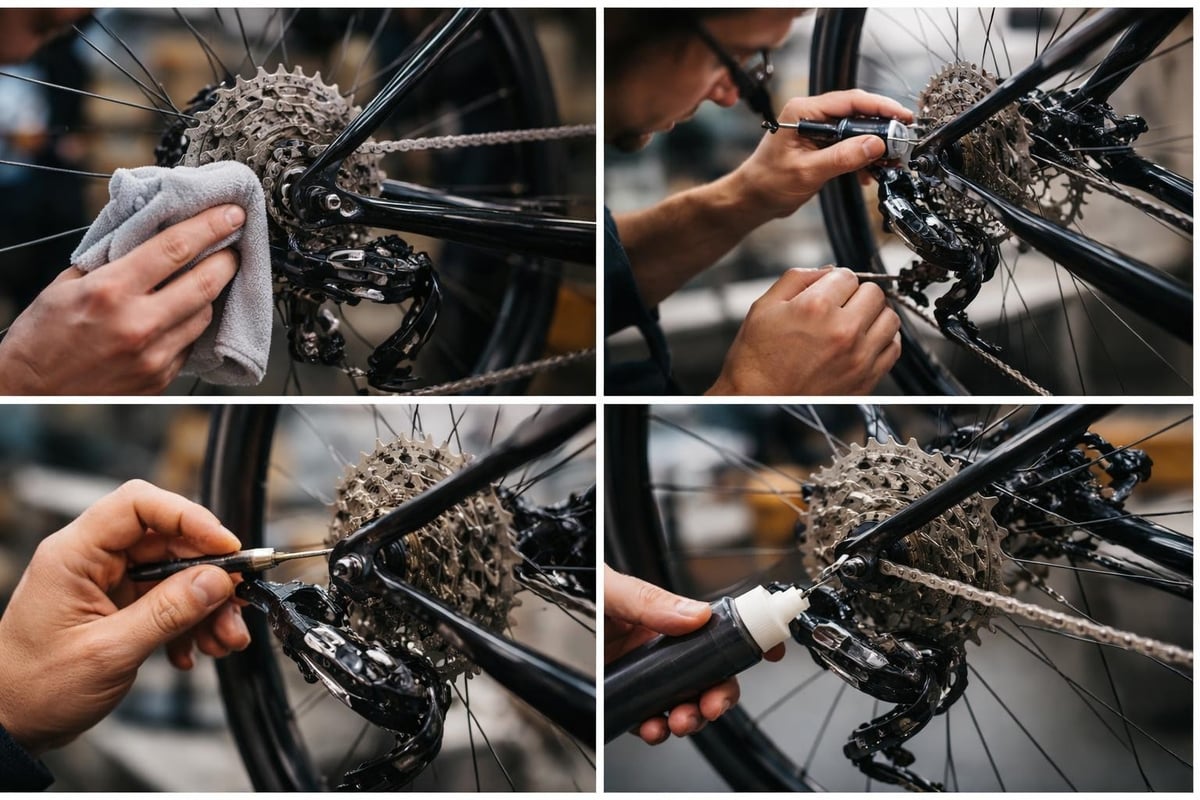
Keeping your gearing system in optimal condition ensures smooth, reliable shifts when you need them most. Regular maintenance prevents premature wear and maintains shifting precision.
Essential Drivetrain Care
- Clean and lubricate your chain every 100-200 miles or after wet rides
- Inspect cassette and chainring teeth for wear patterns and hooking
- Check cable tension and adjust barrel adjusters as needed
- Monitor chain stretch and replace at 0.5-0.75% elongation
- Ensure derailleur alignment and limit screw adjustment
Professional-level performance requires attention to these details. Many riders discover that proper maintenance dramatically improves their gears cycling experience. Cycling Gears Hub offers comprehensive selections of maintenance tools and replacement components for keeping your drivetrain running smoothly.

When to Replace Components
| Component | Typical Lifespan | Replacement Indicator |
|---|---|---|
| Chain | 2,000-3,000 miles | 0.75% stretch measurement |
| Cassette | 5,000-10,000 miles | Shark-tooth wear pattern |
| Chainrings | 10,000-20,000 miles | Visible tooth hooking |
| Cables/Housing | 1-2 years | Fraying or sticky shifting |
Proactive replacement prevents the cascade effect where one worn component accelerates wear on others. Chains are the most critical component to monitor, as a worn chain rapidly destroys cassettes and chainrings.
Electronic Shifting Systems and Future Technology
The landscape of gears cycling has been revolutionized by electronic shifting systems. These computerized drivetrains offer advantages that mechanical systems cannot match, though they come at higher costs and introduce battery management considerations.
Benefits of Electronic Drivetrains
Electronic systems provide consistent shift quality regardless of cable stretch or contamination. They enable features like:
- Programmable shift patterns tailored to individual preferences
- Automatic trim that adjusts front derailleur position
- Multi-shift capability with single button holds
- Wireless operation eliminating cable routing challenges
- Integration with power meters and cycling computers
Semi-automatic and fully automatic shifting systems are emerging as the next frontier. These use sensors and algorithms to select optimal gears based on cadence, power output, and gradient. While still in early stages, such technology promises to make gears cycling more accessible to beginners while offering data-driven optimization for experienced riders.
Training Your Body to Work With Gears
Physical conditioning and technical skill both contribute to effective gears cycling. Optimizing gear ratios for different riding styles works best when paired with appropriate fitness training.
Cadence Drills and Technique Work
Dedicated training sessions focused on gearing skills accelerate improvement:
- High-cadence intervals: Spin in easy gears at 110-120 RPM for 3-5 minutes
- Low-cadence strength work: Grind in hard gears at 50-60 RPM on moderate climbs
- Shift practice: Complete rides focusing exclusively on smooth, timely shifts
- Single-gear challenges: Ride fixed gear or lock out shifts to develop leg strength
These targeted workouts build the neuromuscular patterns and muscular endurance needed to maximize your gearing system's potential. Many cyclists find that dedicated gearing practice yields noticeable improvements in overall riding efficiency.
Regional Considerations for Indian Cyclists
Cycling conditions in India present unique gearing challenges. Diverse terrain ranging from coastal flats to Himalayan passes demands versatile gear selection. Urban cyclists in cities like Mumbai, Bangalore, or Delhi face constant stop-and-go traffic requiring frequent shifts, while touring cyclists tackling routes like Manali-Leh need extremely low gears for sustained high-altitude climbing.
Temperature extremes affect component performance and maintenance schedules. Monsoon conditions accelerate chain wear and require more frequent cleaning and lubrication. Dust in arid regions can infiltrate shifting mechanisms, making sealed systems and regular maintenance even more critical.
For riders exploring mountain biking accessories in India, understanding local trail conditions helps determine ideal gearing setups. Technical terrain in regions like Goa or the Western Ghats benefits from wide-range gearing that handles both steep technical climbs and fast descents.
Practical Tips for Everyday Riding
Implementing expert shifting tips transforms theoretical knowledge into practical skill. Here are actionable strategies for immediate improvement:
Before Your Ride:
- Check that derailleurs shift through full range smoothly
- Ensure chain is clean and properly lubricated
- Verify that shift cables move freely without binding
During Your Ride:
- Shift one gear at a time and feel how your bike responds
- Listen for unusual sounds indicating poor chain line or adjustment issues
- Practice shifting while maintaining steady power output
- Experiment with different gear combinations on familiar routes
Building Shifting Intuition:
Developing instinctive gear selection takes time and deliberate practice. Start by becoming aware of your current cadence and how it feels at different effort levels. Notice how small gear changes affect your rhythm and breathing. Over time, you'll develop automatic responses to terrain changes that optimize your efficiency without conscious thought.
Many riders benefit from temporarily using a cadence sensor to build awareness of their pedaling speed. After several rides monitoring this metric, you'll develop the ability to estimate cadence by feel, allowing you to shift proactively to maintain your target range.
Mastering gears cycling fundamentally improves your riding experience by maximizing efficiency, reducing fatigue, and enhancing your connection with the bike. Whether you're tackling challenging climbs, pursuing competitive goals, or enjoying recreational rides, proper gear selection and shifting technique make every pedal stroke count. Cycling Gears Hub supports your cycling journey with high-quality components, maintenance supplies, and expert guidance trusted by over 10,000 Indian cyclists. Explore their comprehensive selection to optimize your bike's performance and discover how the right equipment elevates your riding to the next level.