

The combination of a gravel bike with a Rohloff hub represents one of the most reliable and versatile setups for adventure cycling, long-distance touring, and bikepacking. Unlike traditional derailleur systems, the Rohloff Speedhub 500/14 offers 14 internally geared speeds, sealed protection from the elements, and virtually maintenance-free operation. For riders tackling everything from smooth tarmac to rocky trails, understanding the benefits and considerations of a gravel bike Rohloff configuration can transform how you approach multi-surface cycling adventures.
Understanding the Rohloff Speedhub System
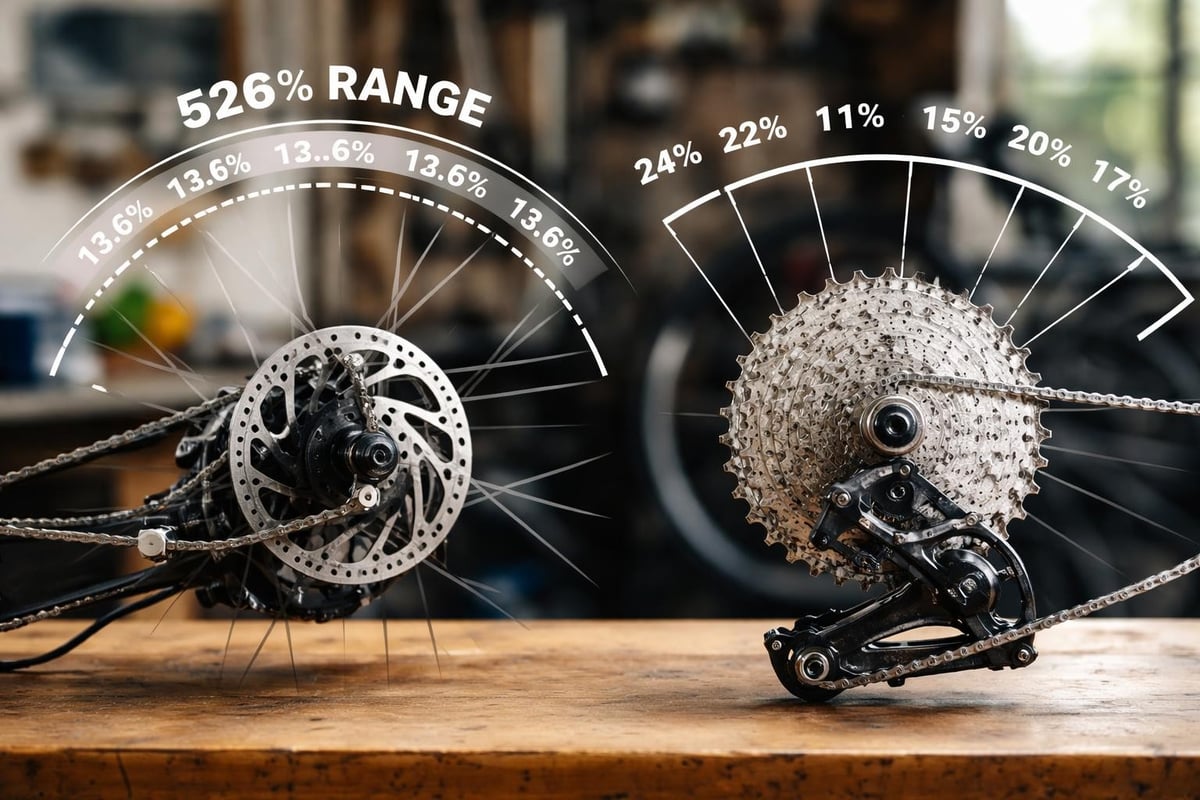
The Rohloff Speedhub 500/14 revolutionized bicycle drivetrains when it was introduced, offering an alternative to conventional derailleur systems. This internal gear hub contains all shifting mechanisms within a sealed unit, protecting critical components from mud, water, dust, and debris. The system provides a remarkable 526% gear range, comparable to many 2x and 3x drivetrain setups found on traditional gravel bikes.
Technical Specifications and Gear Range
The Rohloff hub delivers consistent 13.6% steps between each of its 14 gears, creating predictable and intuitive shifting patterns. This uniformity helps riders maintain optimal cadence across varying terrain without the irregular jumps common in cassette-based systems.
| Feature | Rohloff Speedhub 500/14 | Traditional 2x11 Gravel Setup |
|---|---|---|
| Number of Gears | 14 | 22 |
| Gear Range | 526% | 420-500% |
| Weight | 1,650g (hub only) | 850-1,100g (complete drivetrain) |
| Maintenance Interval | Oil change every 5,000km | Regular cleaning, chain replacement every 3,000-5,000km |
| Weather Sealing | Fully sealed | Exposed components |
The weight consideration often surprises riders new to internal hub systems. While the hub itself adds substantial weight compared to a standard rear hub, the overall system weight becomes competitive when you eliminate the front derailleur, shifter, chainrings, and the need for a wide-range cassette.
Shifting Mechanism and Performance
One distinctive characteristic of the gravel bike Rohloff setup involves its twist-grip or trigger shifter operation. The system allows shifting while stationary, a significant advantage when you've stopped on a steep incline or technical section. Many bikepacking routes through India's mountainous regions benefit from this capability, particularly on routes like the Manali-Leh highway or trails through the Western Ghats.
The shifting action requires no chain tension, meaning you can shift through all 14 gears even when the bike is parked. This feature proves invaluable during bikepacking trips when you need to adjust gearing before tackling an unexpected climb.
Building the Perfect Gravel Bike Rohloff Setup
Constructing a gravel bike around a Rohloff hub requires specific frame compatibility and thoughtful component selection. Not every gravel frame accommodates the unique requirements of this internal gear hub system.
Frame Compatibility Requirements
Your frame needs horizontal dropouts, sliding dropouts, or an eccentric bottom bracket to maintain proper chain tension. Unlike derailleur systems that use a clutched rear mech to manage chain slack, the Rohloff system operates with a single chainring and cog, requiring precise tensioning.
- Horizontal or sliding dropouts that allow 15-20mm of adjustment
- Disc brake mounts (Rohloff hubs use disc brakes exclusively)
- Clearance for wider tires (most Rohloff gravel builds run 40-50mm tires)
- Cable routing compatible with external Rohloff shifter cables
- Boost spacing (110mm rear) or standard 135mm OLD compatibility
Several manufacturers offer gravel bikes specifically designed for Rohloff integration, incorporating the necessary dropout design and cable routing from the factory. Custom titanium and steel frames remain popular choices for gravel bike Rohloff builds due to their durability and the welding ease these materials provide for proper dropout configuration.
Component Selection Strategy
Building a complete gravel bike Rohloff system demands attention to compatibility across multiple components. The chainring size typically ranges from 38 to 42 teeth for gravel applications, paired with rear cogs between 16 and 19 teeth depending on your preferred gear range and terrain.
Essential Components:
- Rohloff Speedhub 500/14 with appropriate axle standard
- Gates Carbon Drive belt or traditional chain system
- Eccentric bottom bracket or frame with sliding dropouts
- Rohloff shifter (twist grip or trigger style)
- Disc brake wheelset built around the Rohloff hub
- Bash guard or chain device for chain retention
The choice between a Gates Carbon Drive belt and a traditional chain significantly impacts your build. Belt drives eliminate chain maintenance entirely and offer whisper-quiet operation, but require a frame with a splittable rear triangle or dropout system. Traditional chains work with any compatible frame but need regular cleaning and lubrication.
When planning your build, consider that Cycling Gears Hub provides comprehensive support for cyclists across India, including access to premium components and expert guidance for specialized builds like Rohloff-equipped gravel bikes.

Real-World Performance on Indian Terrain
The gravel bike Rohloff combination truly excels in the diverse and challenging conditions found throughout India. From the dusty trails of Rajasthan to monsoon-affected routes in Kerala, the sealed hub system maintains consistent performance where traditional drivetrains struggle.
Maintenance Advantages in Harsh Conditions
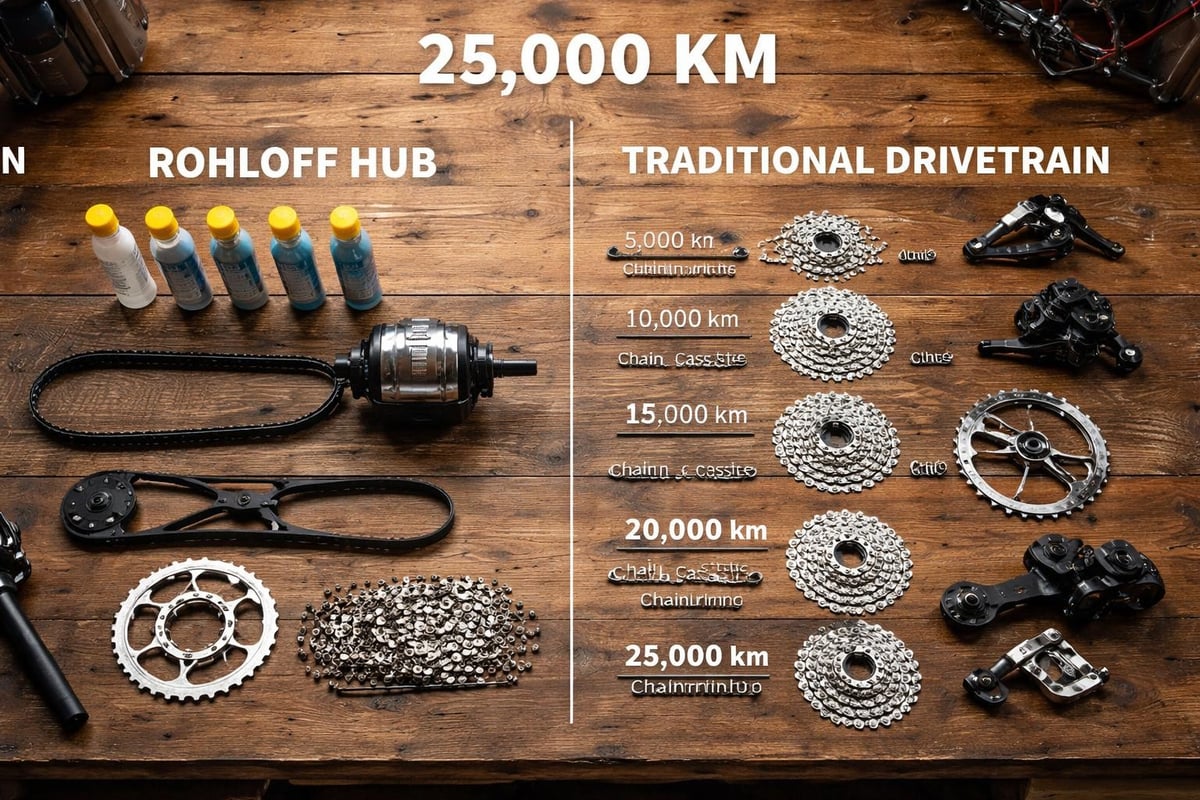
Indian cycling conditions present unique challenges: extreme heat, heavy monsoons, dust storms, and roads that transition unpredictably from pavement to gravel to sand. The Rohloff hub's sealed design protects internal components from these elements, requiring only an oil change every 5,000 kilometers regardless of conditions.
This maintenance schedule contrasts sharply with derailleur systems, which demand frequent cleaning, regular chain lubrication, and component replacement after exposure to dust and moisture. For touring cyclists crossing multiple states or bikepacking through remote regions, the reduced maintenance burden becomes a decisive advantage.
| Maintenance Task | Rohloff System | Traditional Derailleur |
|---|---|---|
| Cleaning | External wipe-down only | Deep cleaning every 200-300km in dusty conditions |
| Lubrication | Oil change at 5,000km | Chain lube every 100-200km |
| Cable Adjustment | Minimal, once per year | Regular indexing adjustments |
| Major Service | Professional service at 25,000km | Cassette replacement 8,000-12,000km, chain 3,000-5,000km |
Touring and Bikepacking Applications
Long-distance touring represents the gravel bike Rohloff system's strongest use case. The Hilite s Rohloff Gravel Allroad exemplifies how manufacturers optimize frame geometry and features specifically for touring applications with this hub system.
Key Touring Benefits:
- Shift while stopped at traffic lights or before steep climbs
- Carry fewer spare parts (no spare derailleur, hanger, or cassette needed)
- Maintain consistent shifting performance regardless of load
- Eliminate concerns about bent derailleur hangers on rough terrain
- Reduce mechanical failures in remote areas far from bike shops
For Indian cyclists planning extended tours through regions like Ladakh, Spiti Valley, or the Northeast, these reliability factors become critical. The nearest qualified bike mechanic might be hundreds of kilometers away, making the self-sufficient nature of a Rohloff-equipped gravel bike particularly valuable.
Practical Considerations and Trade-offs
While the gravel bike Rohloff setup offers compelling advantages, understanding its limitations helps riders make informed decisions about whether this system suits their specific needs and riding style.
Weight and Cost Analysis
The financial investment for a Rohloff hub system significantly exceeds traditional derailleur setups. The hub itself typically costs between ₹1,20,000 to ₹1,50,000 in India, before factoring in wheelbuilding, shifters, and frame modifications. This initial cost must be weighed against long-term savings in component replacement and maintenance.
The weight penalty, approximately 800-1,000 grams compared to a complete traditional drivetrain, affects climbing performance and acceleration. Competitive riders focused on racing may find this weight disadvantageous, but touring and bikepacking cyclists typically prioritize reliability over marginal weight savings.
Shifting Characteristics and Learning Curve
The Rohloff system shifts differently than familiar derailleur systems. Riders often describe a brief "clunk" during shifts, particularly under load. This mechanical engagement differs from the smooth chain movement across sprockets in derailleur shifting.
New Rohloff users typically adapt within a few hundred kilometers of riding. The system's predictability and the ability to shift multiple gears with a single twist actually simplifies gear selection once riders internalize the 14-gear sequence.
Adaptation Tips:
- Practice shifting while stationary to understand gear spacing
- Learn the gear sequence (1-7 for climbing, 8-14 for flats and descents)
- Ease pedal pressure slightly during shifts for smoothest operation
- Use gear 7 or 8 as your "default" gear for varied terrain
- Shift early before steep climbs rather than under maximum load
Specialized Gravel Bike Rohloff Builds
Custom builders and select manufacturers create purpose-built gravel bike Rohloff platforms that optimize the entire package for specific applications. Understanding these specialized builds helps identify the ideal configuration for your riding priorities.
Steel and Titanium Frame Options
Steel and titanium dominate the gravel bike Rohloff building scene due to their superior durability, repairability, and ride characteristics. These materials handle the continuous stress from the Rohloff hub's engagement forces while providing compliance over rough surfaces.
The Booda Bike Alpine Rohloff demonstrates how dedicated touring frames integrate features specifically supporting long-distance Rohloff applications. These frames typically include generous tire clearance, multiple bottle cage mounts, and rack mounting points.
Titanium offers particular appeal for Indian cyclists due to its corrosion resistance in coastal humidity and monsoon conditions. While initially expensive, titanium frames paired with Rohloff hubs create remarkably durable platforms that can serve riders for decades with minimal maintenance.
Belt Drive Integration
Combining a gravel bike Rohloff hub with a Gates Carbon Drive belt system creates the ultimate low-maintenance adventure machine. Belt drives eliminate chain lubrication, rust, and the mess of traditional chain maintenance entirely.
This combination requires frames with either a splittable chainstay or an S&S coupling to install the belt. The belt drive's constant tension matches perfectly with the Rohloff hub's requirements, creating a synergistic system where both components enhance each other's strengths.
Belt Drive Advantages:
- Zero lubrication requirements
- 20,000+ kilometer lifespan (2-3x longer than chains)
- Silent operation
- No grease stains on clothing or gear
- Consistent performance in all weather conditions
- Lighter weight than chain systems
The Schindelhauer Wilhelm Gravel with Rohloff represents this premium configuration, combining German engineering with the ultimate in low-maintenance reliability. For riders prioritizing long-term cost efficiency and minimal upkeep, this combination delivers exceptional value despite higher initial costs.
Geometry and Handling Characteristics
The gravel bike Rohloff setup influences bicycle geometry and handling in subtle but important ways. Understanding these effects helps riders set realistic expectations and optimize their bike setup.
Weight Distribution and Balance
The Rohloff hub concentrates significant weight at the rear axle, shifting the bicycle's center of gravity rearward. This weight distribution affects handling characteristics, particularly during climbing and technical descents. Many riders report improved traction on loose surfaces and steep climbs due to enhanced rear wheel weighting.
Detailed geometry specifications, like those available for the 2024 Mi-Tech Gravel Rohloff, reveal how manufacturers adjust head tube angles, chainstay lengths, and bottom bracket heights to compensate for the Rohloff hub's weight and maintain balanced handling.
Wheel and Tire Selection
Building a wheelset around the Rohloff hub requires careful spoke tension management due to the hub's weight and torque loads. 36-hole spoke patterns provide optimal strength and durability for loaded touring and rough gravel conditions. High-quality double-butted spokes and hand-built wheels ensure long-term reliability.
Tire selection for gravel bike Rohloff setups typically favors the 40-50mm range, balancing comfort, grip, and rolling resistance. The system's efficiency benefits from this larger volume, as the sealed hub minimizes drivetrain friction even with slightly slower-rolling tire compounds.
Integration with Modern Gravel Bike Standards
Contemporary gravel bike design continues evolving rapidly, and the gravel bike Rohloff system adapts to these changes while maintaining its core advantages. Understanding how Rohloff hubs work with current standards helps riders plan future-proof builds.
Disc Brake Compatibility
All Rohloff hubs use disc brake mounting exclusively, aligning perfectly with modern gravel bike standards. The hub accommodates both 6-bolt and Centerlock rotor mounting systems, though 6-bolt remains more common in touring applications due to wider parts availability globally.
The disc brake requirement actually benefits Rohloff builds by providing consistent braking performance in all weather conditions, particularly important during monsoon season touring or multi-day bikepacking trips through variable terrain. Recent reviews of the best gravel bikes consistently highlight disc brakes as essential for serious gravel riding, making the Rohloff hub's requirement a non-issue for modern builds.
Axle Standards and Boost Spacing
Rohloff offers the Speedhub 500/14 in multiple axle configurations to match evolving gravel bike standards:
- 135mm QR (traditional mountain bike standard)
- 135mm thru-axle (hybrid touring standard)
- 142mm thru-axle (modern gravel/road standard)
- 148mm Boost (increasingly common in gravel bikes)
Thru-axle versions provide superior wheel stiffness and security, particularly valuable when running wide tires or carrying heavy bikepacking loads. The additional stiffness complements the Rohloff hub's robust construction, creating a rear end that handles aggressive riding and heavy loads without flex or alignment issues.
Comparing to Alternative Drivetrain Systems
While the gravel bike Rohloff setup offers unique advantages, comparing it objectively to alternatives helps riders determine the best system for their specific needs and riding style.
Rohloff vs. Pinion Gearbox
Pinion gearboxes present the primary alternative to Rohloff hubs for low-maintenance touring and gravel applications. These systems mount at the bottom bracket rather than the rear hub, offering similar gear ranges and sealed protection but with different characteristics.
| Characteristic | Rohloff Speedhub | Pinion Gearbox |
|---|---|---|
| Location | Rear hub | Bottom bracket |
| Weight Distribution | Rear-biased | Central, low |
| Frame Compatibility | Moderate | Requires specific frame design |
| Wheel Swapping | Requires matched wheel | Any standard wheel |
| Cost | High | Very high |
| Availability in India | Limited but available | Extremely limited |
The Rohloff system's advantage lies in its compatibility with a wider range of frames and the ability to build custom wheels. For Indian cyclists, parts availability and service support favor Rohloff over Pinion systems, though both remain specialized options compared to traditional drivetrains.
Traditional Derailleur Systems
Standard derailleur drivetrains still dominate the gravel bike market for good reasons. They offer lighter weight, lower costs, wider gear ranges (with 2x setups), and universal compatibility with any frame design.
For riders primarily tackling weekend gravel rides near home, regular access to bike shops, and those who enjoy tinkering with their equipment, traditional drivetrains provide excellent performance at lower cost. The gravel bike Rohloff setup makes most sense for riders prioritizing reliability over weight, planning extended tours in remote areas, or those who prefer minimal maintenance routines.
Long-Term Ownership Experience
Understanding the long-term reality of owning a gravel bike Rohloff system helps set appropriate expectations and maximize satisfaction with this significant investment.
Service and Support Network
Rohloff hubs require specialized knowledge for internal service, though routine maintenance remains simple. The 5,000-kilometer oil change involves draining old oil and refilling with fresh Rohloff-specific oil, a process most mechanically inclined riders can perform at home.
Major internal services typically occur around 25,000 to 30,000 kilometers of use. These services require specialized tools and training, making them best performed by authorized Rohloff service centers or experienced mechanics familiar with the system.
In India, the growing popularity of bikepacking and long-distance touring has increased awareness of internal hub systems, though Rohloff-specific expertise remains concentrated in major cycling hubs. Riders planning extended tours should familiarize themselves with basic troubleshooting and carry essential spare parts like shifter cables.
Cost-Benefit Analysis Over Time
The gravel bike Rohloff system's value proposition becomes clearer when analyzing costs across 5-10 years of regular use:
Rohloff System (10,000km/year):
- Initial investment: ₹1,20,000 - ₹1,50,000
- Annual oil changes: ₹2,000
- Major service at 25,000km: ₹15,000
- Total 5-year cost: ₹1,55,000 - ₹1,85,000
Traditional Drivetrain (10,000km/year):
- Initial investment: ₹40,000 - ₹60,000
- 3 chain replacements/year: ₹6,000
- Annual cassette replacement: ₹8,000
- 2 derailleur replacements over 5 years: ₹10,000
- Chainrings, cables, other components: ₹15,000
- Total 5-year cost: ₹1,25,000 - ₹1,55,000
These calculations assume regular riding in varied conditions typical of Indian gravel and touring routes. The Rohloff system's cost premium narrows significantly over time, particularly for riders who cover substantial annual mileage or ride in harsh conditions that accelerate component wear.
Optimizing Your Gravel Bike Rohloff Setup
Fine-tuning a gravel bike Rohloff configuration maximizes performance and ensures you extract full value from this sophisticated system.
Gear Ratio Selection
Choosing optimal chainring and cog sizes determines your overall gear range and shapes the riding experience. The 14-speed Rohloff hub offers the same internal ratios regardless of external gearing, but chainring and cog selection shifts the entire range higher or lower.
Common Gravel Configurations:
- 39T chainring / 17T cog - Balanced for mixed terrain
- 42T chainring / 19T cog - Similar ratio, good for flatter routes
- 38T chainring / 16T cog - Lower gearing for mountainous touring
- 40T chainring / 18T cog - Versatile all-around option
For Indian touring conditions, particularly in mountainous regions, many riders prefer slightly lower gearing than Rohloff's standard recommendations. A 38/17 or 39/18 combination provides easier climbing gears while maintaining sufficient range for descents and flat sections.
Cable Routing and Shifter Position
Proper cable routing significantly impacts shifting quality and system longevity. The Rohloff shifter cable must follow smooth curves without sharp bends, and cable housing should be secured properly to prevent rattling during rough terrain riding.
Installation Best Practices:
- Use high-quality shifter cable housing with minimal compression
- Secure housing at 3-5 points along the frame to prevent movement
- Position the shifter for comfortable thumb access without hand repositioning
- Allow slight cable slack at the hub to accommodate suspension movement (if equipped)
- Apply light grease to cable entry points for smooth operation
Riders accustomed to checking information on essential cycling accessories will appreciate how proper setup of seemingly minor components like cables dramatically affects overall system performance.
Future of Internal Hub Gravel Bikes
The gravel bike Rohloff combination represents broader trends in cycling toward reliability-focused systems that prioritize long-term ownership over racing performance metrics.
Market Evolution and Adoption
While derailleur systems continue dominating the gravel market overall, internal hub adoption grows steadily among touring and bikepacking enthusiasts. Manufacturers increasingly offer gravel bikes designed for versatile adventure riding, with some incorporating Rohloff compatibility as standard.
This growth reflects changing rider priorities. As more cyclists undertake multi-day rides and extended tours, the appeal of reduced maintenance and increased reliability outweighs weight considerations. The Indian cycling market particularly shows growing interest in bikepacking and self-supported touring, creating demand for robust systems like the Rohloff hub.
Technological Developments
Rohloff continues refining the Speedhub 500/14, with recent developments focusing on weight reduction, improved shifting feel, and enhanced sealing. Electronic shifting versions have been prototyped but remain unavailable commercially, suggesting Rohloff's commitment to mechanical reliability over electronic complexity.
The combination of internal hub gears with other low-maintenance components creates compelling packages. Belt drive integration, tubeless tire technology, and hydraulic disc brakes combine with Rohloff hubs to create gravel bikes requiring minimal regular maintenance while delivering exceptional reliability.
The gravel bike Rohloff combination delivers unmatched reliability and minimal maintenance for serious touring, bikepacking, and adventure riding across India's diverse terrain. While the initial investment exceeds traditional drivetrains, the long-term value, reduced component wear, and consistent performance in harsh conditions make it ideal for dedicated cyclists tackling extended rides. Whether you're planning your first multi-day tour or upgrading your existing setup, Cycling Gears Hub offers expert guidance and comprehensive product selection to support your cycling journey with fast shipping, convenient payment options, and hassle-free returns across India.