

Shopping for mountain bikes online has transformed how cyclists in India and worldwide purchase their next adventure companion. The digital marketplace offers unprecedented access to diverse brands, competitive pricing, and detailed specifications that were once only available through physical stores. However, navigating the vast selection of mountain bikes online requires knowledge, patience, and a clear understanding of what makes a quality bike suited to your specific riding style and terrain preferences.
Understanding Mountain Bike Categories Before Shopping Online
The first step in purchasing mountain bikes online involves identifying which category aligns with your riding goals. Cross-country (XC) bikes feature lightweight frames and efficient pedaling geometry, making them ideal for climbing and endurance rides. Trail bikes represent the most versatile category, balancing climbing efficiency with descending capability through 120-140mm suspension travel.
Enduro bikes push the envelope with 150-170mm travel, designed for aggressive descending while maintaining adequate climbing ability. Downhill bikes prioritize descending performance with 180-200mm+ travel but sacrifice uphill efficiency. Understanding these distinctions prevents purchasing a bike mismatched to your intended use.
Frame Material Considerations
Mountain bikes online showcase four primary frame materials, each offering distinct advantages:
| Material | Weight | Durability | Cost | Ride Quality |
|---|---|---|---|---|
| Aluminum | Moderate | High | Budget-friendly | Stiff, responsive |
| Carbon Fiber | Lightest | Moderate | Premium | Smooth, vibration-damping |
| Steel | Heavy | Excellent | Budget-moderate | Compliant, comfortable |
| Titanium | Light | Exceptional | Very expensive | Balanced, long-lasting |
Aluminum dominates the market due to its favorable strength-to-weight ratio and affordability. Carbon fiber increasingly appears in mid-range models, offering performance previously reserved for premium builds.
Wheel Size Impact on Performance
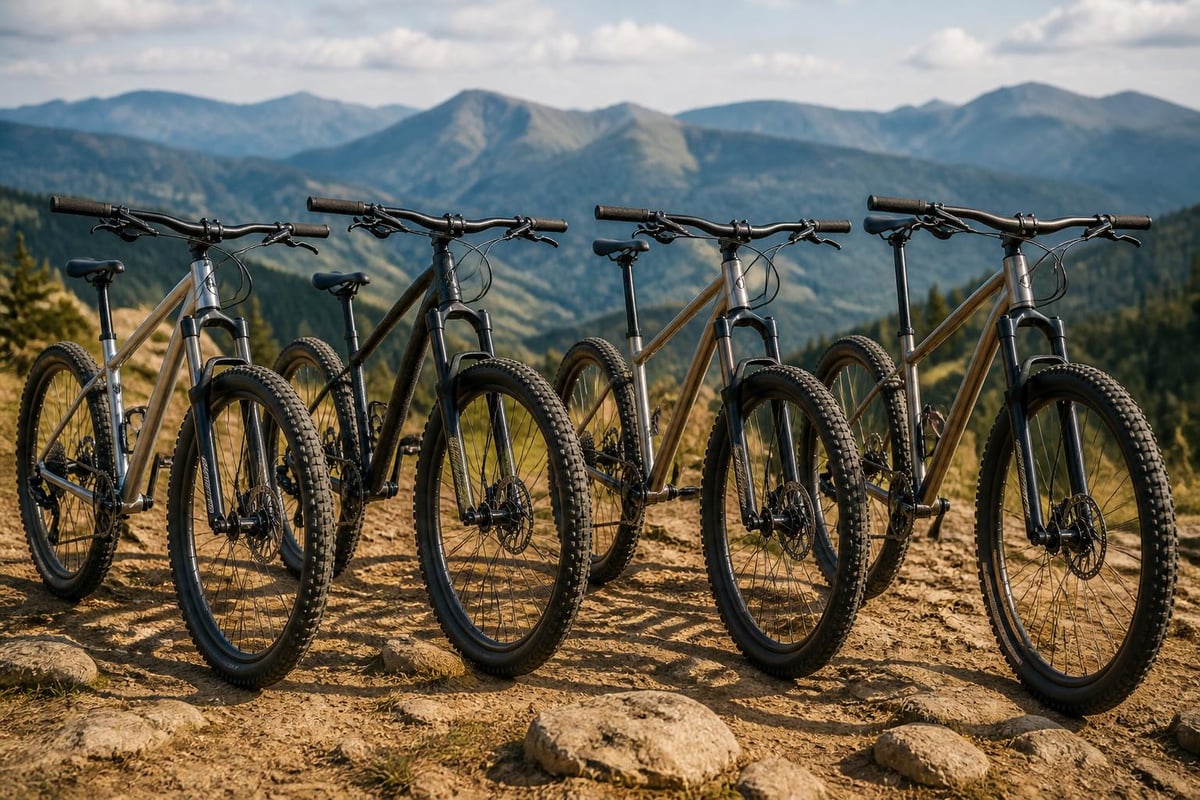
When browsing mountain bikes online, you'll encounter three wheel size standards. 26-inch wheels have largely disappeared from modern mountain bikes except specialty applications. 27.5-inch (650b) wheels provide nimble handling and quick acceleration, favored by riders prioritizing technical terrain maneuverability.
29-inch wheels roll over obstacles more easily and maintain momentum better, making them dominant in cross-country and trail categories. Some manufacturers now offer "mullet" configurations combining a 29-inch front wheel with a 27.5-inch rear, attempting to merge the benefits of both sizes.
Your height and riding style should inform this decision. Taller riders generally benefit from 29-inch wheels, while shorter riders may find 27.5-inch wheels more manageable.
Suspension Systems Explained
Hardtail mountain bikes feature front suspension only, offering efficiency, lower weight, and reduced maintenance. They excel for cross-country riding, bike park progression, and budget-conscious buyers. Full-suspension bikes incorporate both front and rear shock absorption, dramatically improving control and comfort on rough terrain.
Rear Suspension Designs
- Single pivot: Simple, reliable design with predictable pedaling characteristics
- Four-bar linkage: Complex system offering independent tuning of compression and pedaling efficiency
- Virtual pivot point: Engineered to minimize pedal bob while maintaining sensitivity
- High pivot: Rearward axle path improves bump absorption but adds chain growth complexity
Understanding these systems helps when evaluating mountain bikes online, as each design philosophy creates different ride characteristics. Proper maintenance of your suspension system ensures optimal performance regardless of design type.
Component Groups and Quality Tiers
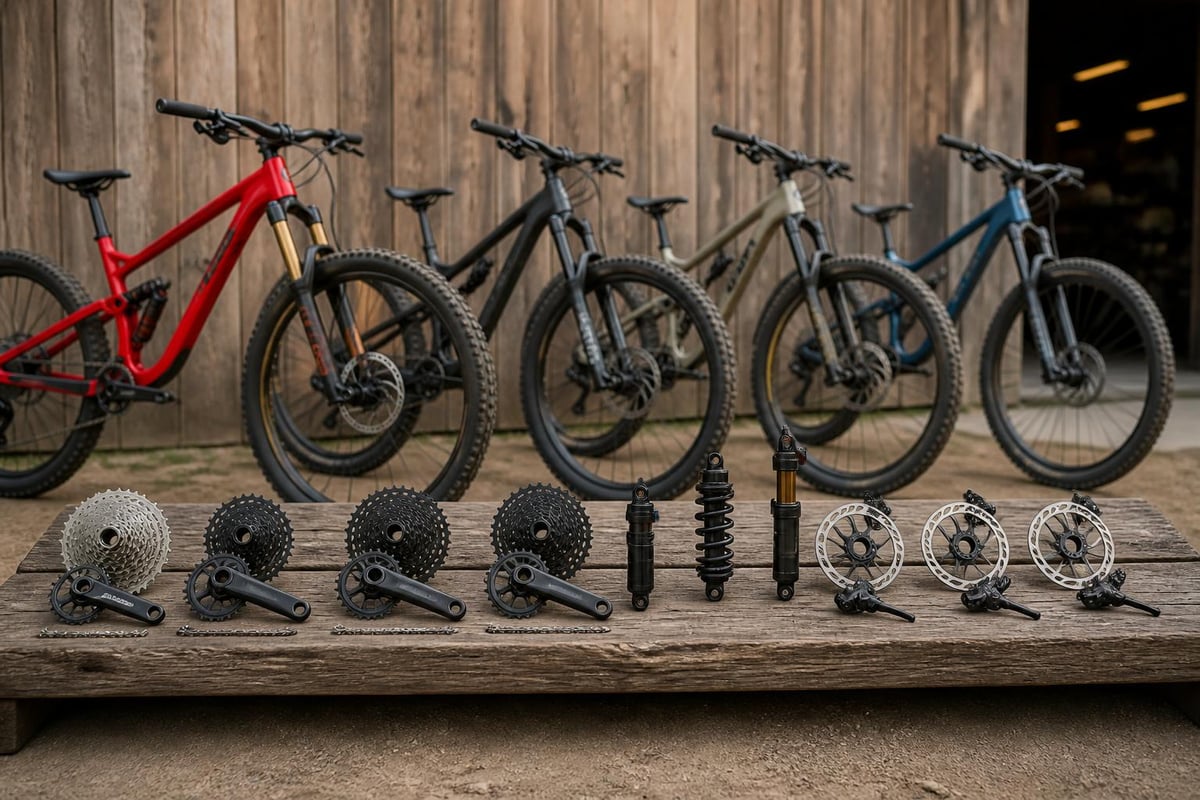
Drivetrain components significantly impact the overall performance and price of mountain bikes online. Shimano and SRAM dominate the market with hierarchical product ranges.
Shimano's mountain bike groups progress from Tourney (entry-level) through Altus, Acera, Alivio, Deore, SLX, XT, to XTR (professional). SRAM offers SX Eagle, NX Eagle, GX Eagle, X01 Eagle, and XX1 Eagle. Each tier increase brings weight reduction, smoother shifting, and improved durability.
12-speed drivetrains have become standard in quality builds, offering wide gear ranges without front derailleurs. Single-chainring setups simplify operation and reduce weight while maintaining adequate gearing for most riders.
Budget-oriented mountain bikes online may feature 8-speed or 9-speed systems, which function adequately for beginners but limit upgrade potential. Mid-range bikes typically spec 10-speed or 11-speed components, providing excellent value for recreational riders.
Brake System Selection
Mountain bikes online universally feature disc brakes, but quality varies dramatically. Mechanical disc brakes use cable actuation, offering simple maintenance and adequate stopping power for casual riding. Hydraulic disc brakes provide superior modulation, consistent performance in wet conditions, and reduced hand fatigue.
Rotor size affects braking power and heat dissipation. Standard configurations include 160mm rotors for cross-country bikes and 180-203mm rotors for trail, enduro, and downhill applications. Heavier riders or those tackling steep descents benefit from larger rotors.
Evaluating Online Specifications
When comparing mountain bikes online, brake specifications reveal build quality:
- Entry-level: Mechanical discs or basic hydraulic systems (Tektro, entry Shimano)
- Mid-range: Shimano Deore/SLX or SRAM Level/Guide hydraulics
- Premium: Shimano XT/XTR, SRAM Code/G2, or specialty brands like Hope, Magura
Quality brakes dramatically improve control and safety. Understanding essential bike checks including brake maintenance becomes crucial after your purchase.
Geometry Numbers That Matter
Online bike specifications include geometry charts that predict handling characteristics. Head tube angle ranges from 63-68 degrees on modern mountain bikes, with slacker (lower) numbers improving descending stability while steeper angles enhance climbing agility.
Seat tube angle affects pedaling position, with steeper angles (74-77 degrees) placing riders forward over the cranks for efficient climbing. Reach measures horizontal distance from bottom bracket to head tube, determining cockpit space and rider positioning.
Longer reach numbers suit taller riders and provide stability at speed. Shorter reach creates nimble handling preferred for technical trails. Stack measures vertical distance, influencing handlebar height and rider posture.
Understanding these measurements when shopping for mountain bikes online helps identify bikes proportioned for your body and riding style. Many brands provide size recommendation tools based on height, but geometry numbers offer precision beyond simple small/medium/large designations.
Evaluating Value When Shopping Online
Price alone doesn't determine value in mountain bikes online. A $1,500 bike with quality components outperforms a $2,000 bike with marketing-driven frame technology and budget parts. Prioritize functional components over frame brand prestige when working within budget constraints.
Fork quality deserves special attention, as this component significantly impacts ride quality. Entry-level air forks from RockShox (Judy, Recon) and SR Suntour (Raidon, Auron) provide basic performance. Mid-range options like RockShox Pike/Revelation and Fox 34/36 offer substantial performance improvements justifying their cost.
| Price Range | Expected Components | Target Rider |
|---|---|---|
| Under ₹40,000 | 8-9 speed, mechanical brakes, basic fork | Beginners, casual trail riders |
| ₹40,000-80,000 | 10-11 speed, hydraulic brakes, air fork | Enthusiasts, regular riders |
| ₹80,000-150,000 | 11-12 speed, quality brakes, performance fork | Serious riders, racers |
| Above ₹150,000 | Premium groups, carbon frames, top suspension | Competitive, elite riders |
Sizing Considerations for Online Purchases
Buying mountain bikes online without test riding requires careful size selection. Manufacturers provide size charts correlating height ranges to frame sizes, but individual proportions vary significantly. Riders with longer legs relative to torso height may size up, while those with longer torsos might size down.
Standover height ensures adequate clearance when stopped, particularly important for technical riding. Modern geometry trends favor longer, lower bikes, sometimes requiring sizing down from traditional recommendations.
Many Indian cyclists find guidance on proper bike selection helpful when navigating size choices. Contact manufacturer customer service or retailer chat support with your measurements for personalized recommendations before finalizing your purchase.
Test Ride Alternatives
Since purchasing mountain bikes online eliminates traditional test rides, consider these strategies:
- Research professional reviews from sources like Pinkbike, Bikeradar, and MTBR
- Watch video reviews demonstrating bike handling and features
- Join online cycling communities for owner feedback
- Check social media groups for local riders with similar models
- Verify return policies allowing exchanges if sizing proves incorrect
Spotting Quality in Online Listings
Detailed product photography signals retailer commitment to transparency. Quality mountain bikes online include multiple angles showing drivetrain side, non-drive side, cockpit, and rear triangle. Specifications should list exact component models, not just brands.
Vague descriptions like "quality suspension fork" or "reliable shifting" without manufacturer and model names suggest lower-tier components. Reputable sellers specify "RockShox Judy Silver TK" or "Shimano Deore M6100" rather than generic descriptions.
Weight specifications should appear in product details, though manufacturers occasionally omit this for heavier budget models. Warranty information demonstrates manufacturer confidence in product durability.
Accessories and Upgrades to Consider
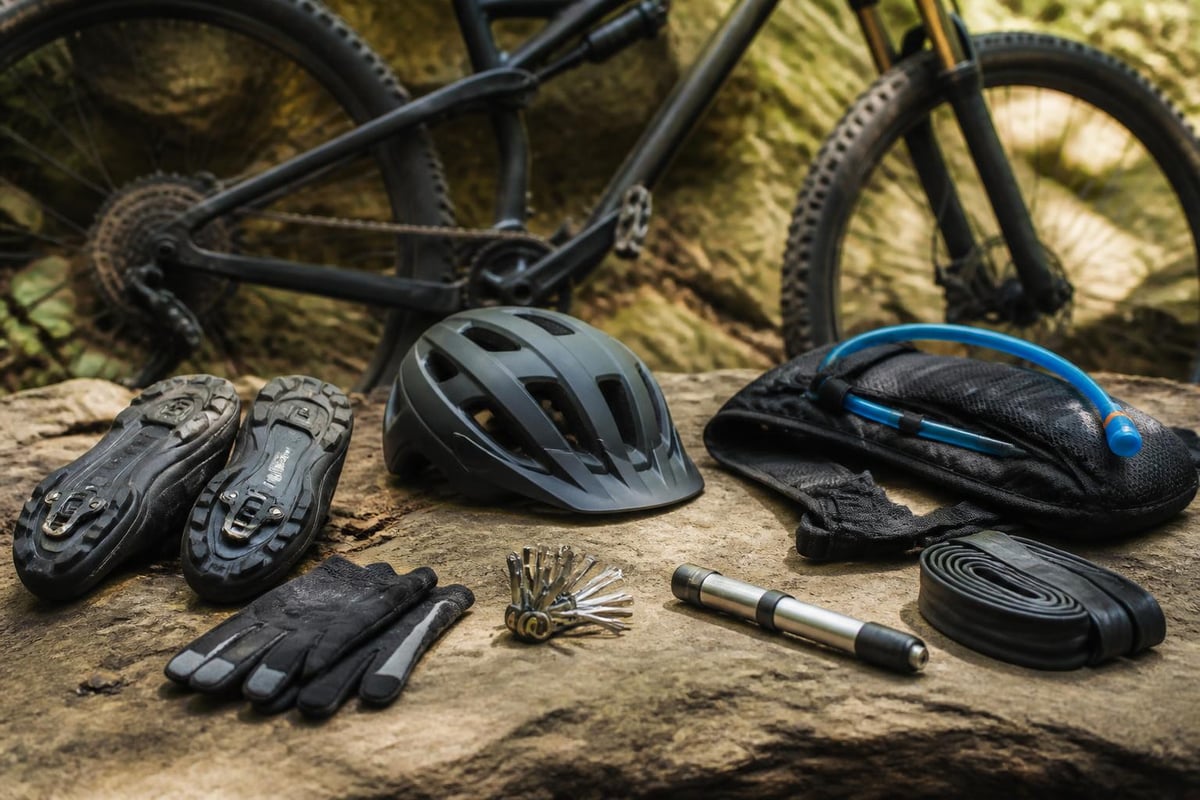
When budgeting for mountain bikes online, factor in essential accessories beyond the base bike cost. Quality pedals improve power transfer and control, with platform pedals costing ₹2,000-8,000 for reputable brands. Clipless pedals require compatible cycling shoes, adding ₹5,000-15,000 to initial investment.
A proper helmet is non-negotiable, with mountain bike-specific designs offering enhanced rear coverage and visor integration. Budget ₹3,000-10,000 for certified protection. Gloves improve grip and protect hands during inevitable falls, available from ₹800-3,000.
Cycling Gears Hub offers premium cycling gear, accessories, and performance essentials designed for riders of all levels, providing everything from helmets and gloves to bike accessories and training equipment to complement your new mountain bike purchase.

Additional considerations include:
- Multi-tool for trailside adjustments (₹800-2,500)
- Pump compatible with valve type (₹600-2,000)
- Spare tubes and tire levers (₹400-800)
- Water bottle and cage (₹500-1,500)
- Basic repair stand for home maintenance (₹3,000-8,000)
Shipping and Assembly Considerations
Mountain bikes online typically ship 85-95% assembled, requiring final assembly of handlebars, front wheel, pedals, and accessory installation. Most riders can complete assembly with basic tools and online tutorials, though professional bike shops offer assembly services for those lacking confidence or tools.
Inspect shipping boxes immediately upon delivery for damage. Document any issues with photographs before unboxing. Quality retailers include detailed assembly instructions and all necessary hardware.
Pre-ride safety check includes:
- Verify all bolts reach proper torque specifications
- Check brake function and rotor alignment
- Inspect tire pressure and seating
- Test shifting through all gears
- Ensure suspension sag matches rider weight
- Confirm headset and wheel hub bearing smoothness
Comprehensive maintenance guides help new owners establish proper care routines from the beginning.
Warranty and Return Policies
Reputable mountain bikes online retailers provide manufacturer warranties covering frame defects, typically 2-5 years for frames and 1-2 years for components. Understanding warranty terms before purchase protects your investment against manufacturing defects.
Return policies vary significantly between retailers. Some allow 30-day returns with minimal restocking fees, while others restrict returns to defective products only. Review return policies carefully before completing purchases, particularly for higher-value bikes.
Document bike condition upon arrival with photographs. Keep all original packaging until satisfied with your purchase. Test ride in controlled environments before venturing onto challenging trails that might void return eligibility.
Avoiding Common Online Shopping Mistakes
First-time buyers of mountain bikes online frequently prioritize aesthetics over functionality. Flashy paint schemes and aggressive marketing don't compensate for inadequate components or improper sizing. Focus on specifications, geometry, and component quality rather than brand prestige alone.
Overbuying represents another pitfall. Beginners don't need $3,000+ bikes to enjoy trail riding. Quality entry-level and mid-range options provide excellent performance for developing skills. Upgrade when your abilities exceed your bike's capabilities, not before.
Underbuying equally problematic. Rock-bottom prices often indicate compromised safety, durability, or performance. Bikes under ₹25,000 rarely provide satisfactory mountain biking experiences beyond paved paths. Balance budget constraints against quality thresholds ensuring safe, enjoyable riding.
Research trail difficulty levels in your area using resources like academic trail classification systems to match bike capability with intended terrain. Cross-country bikes struggle on extreme downhill trails, while downhill bikes frustrate on climbing-intensive routes.
Timing Your Purchase Strategically
Mountain bikes online see price fluctuations throughout the year. Previous model-year closeouts typically occur August through October as manufacturers introduce new lineups. Discounts of 20-40% become available on outgoing models, offering significant value for buyers unconcerned with having the latest release.
Holiday sales around Diwali, New Year, and mid-year shopping events provide additional savings opportunities. Subscribe to retailer newsletters and set price alerts for desired models to capitalize on limited-time promotions.
New model releases generally occur in spring (March-May), commanding premium prices. Unless new features substantially improve performance or value, previous-year models deliver comparable riding experiences at reduced cost.
Building Skills After Your Purchase
Acquiring mountain bikes online marks the beginning of your riding journey, not the destination. Develop fundamental skills through progressive practice. Beginner resources provide structured learning approaches covering basic techniques, safety practices, and trail etiquette.
Start with easier trails matching your current ability, gradually progressing to more challenging terrain as skills develop. Premature attempts at advanced trails risk injury and damage to your new bike. Local cycling clubs offer group rides and skills clinics accelerating learning while building community connections.
Consider investing in professional instruction. Single-day skills clinics typically cost ₹2,000-5,000 and dramatically accelerate progression while instilling proper techniques preventing bad habits.
Maintaining Your Investment
Regular maintenance extends the life of mountain bikes online purchases and ensures safe operation. Basic cleaning after muddy rides prevents premature wear. Chain lubrication every 100-200 kilometers maintains smooth shifting and reduces drivetrain wear.
Monthly maintenance checklist:
- Inspect brake pads for wear
- Check tire pressure and tread condition
- Clean and lubricate chain
- Verify bolt torque on critical components
- Inspect frame for cracks or damage
- Test suspension function and adjust sag
Annual professional servicing addresses complex maintenance like bearing replacement, suspension servicing, and brake bleeding. Budget ₹3,000-8,000 annually for professional maintenance depending on riding frequency and conditions.
Winter maintenance practices become particularly relevant for Indian cyclists riding through monsoon seasons, requiring additional attention to corrosion prevention and component protection.
Community and Resources
Successfully purchasing mountain bikes online connects you to a global community of passionate riders. Online forums, social media groups, and local clubs provide ongoing support, route recommendations, and riding partners. Engaging with experienced riders accelerates learning and enriches the overall cycling experience.
YouTube channels from GMBN, Seth's Bike Hacks, and Skills with Phil offer free instructional content covering maintenance, skills progression, and product reviews. Podcasts like The MTB Podcast provide entertainment and education during recovery periods.
Local bike shops remain valuable resources even when purchasing mountain bikes online. Building relationships with mechanics ensures access to expert service and advice. Supporting local shops through accessory purchases, maintenance services, and parts creates mutually beneficial relationships strengthening the cycling ecosystem.
Purchasing mountain bikes online successfully requires research, patience, and clear understanding of your riding goals and physical requirements. By focusing on appropriate categories, quality components, proper sizing, and reputable retailers, you can confidently navigate the digital marketplace and find the perfect bike for your adventures. Whether you're seeking performance equipment, essential accessories, or expert guidance, Cycling Gears Hub provides trusted products backed by fast shipping, flexible payment options, and hassle-free returns to support your cycling journey from purchase through thousands of trail kilometers.