

The bike hub serves as the central component of your wheel system, connecting the axle to the rim through spokes while allowing smooth rotation and power transfer. Whether you're a professional cyclist pushing performance limits or an amateur enjoying weekend rides, understanding your bike hub mechanics, maintenance requirements, and upgrade options can significantly enhance your cycling experience. This comprehensive guide explores everything you need to know about bike hubs, helping you make informed decisions about maintenance, repairs, and potential upgrades for your cycling setup.
What Is a Bike Hub and Why Does It Matter
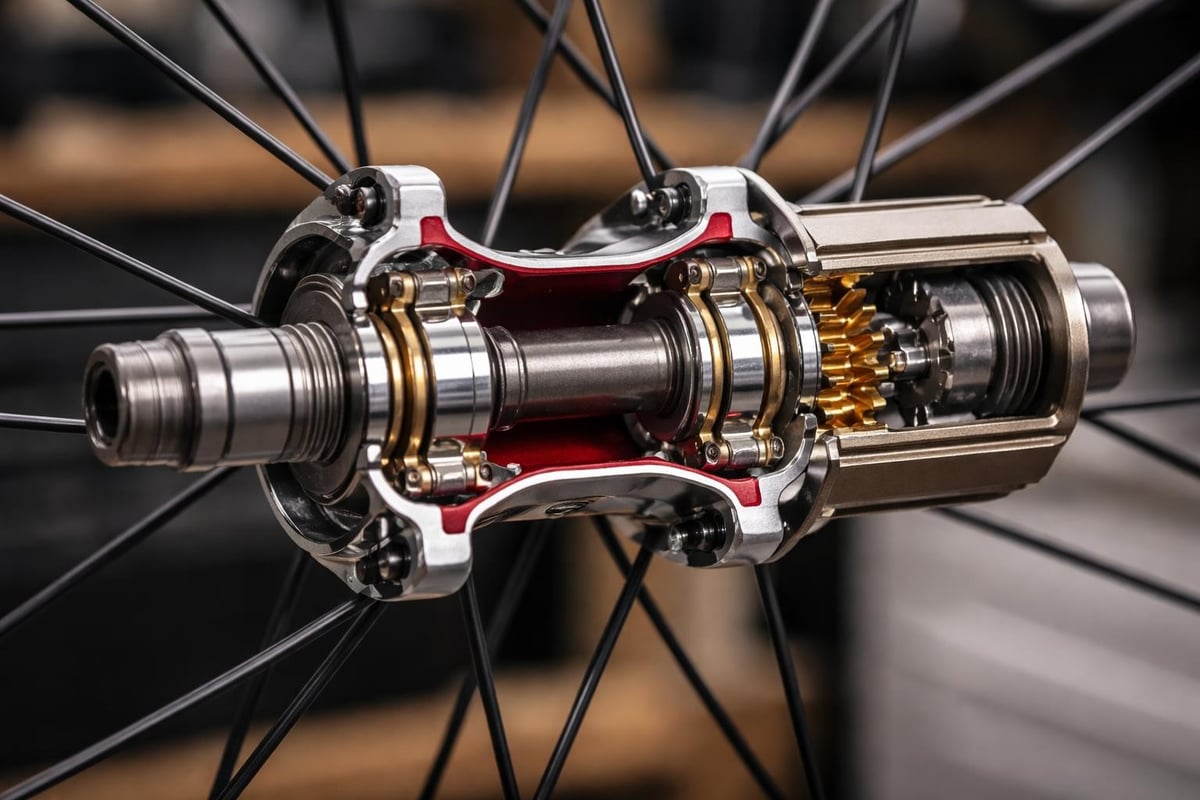
A bike hub is the cylindrical metal component at the center of each wheel that houses the axle and bearing system. This critical piece enables your wheels to rotate freely while supporting the bike's weight and transferring power from your pedals to the road.
The front hub focuses purely on smooth rotation, while the rear hub performs the additional task of engaging with your drivetrain through the freehub or freewheel mechanism. Together, these components determine how efficiently your bike converts your pedaling effort into forward motion.
Core Components of a Bike Hub
Every bike hub consists of several essential parts working in harmony:
- Axle: The central shaft that connects to your frame or fork
- Bearings: Ball or cartridge bearings that enable smooth rotation
- Hub shell: The outer body that houses internal components
- Freehub body: On rear hubs, this component engages with the cassette
- End caps: Protective pieces that secure the axle
The quality and condition of these components directly impact your ride quality, with proper maintenance ensuring optimal performance across all cycling conditions.
Types of Bike Hubs for Different Riding Styles
Bike hubs come in various designs, each optimized for specific cycling disciplines and performance requirements. Understanding these differences helps you select the right hub for your needs.
| Hub Type | Best For | Key Features |
|---|---|---|
| Quick Release | Road bikes, casual riding | Easy wheel removal, lightweight |
| Thru-Axle | Mountain bikes, gravel bikes | Increased stiffness, better alignment |
| Boost Spacing | Modern MTBs | Wider stance, stronger wheel builds |
| Track Hubs | Fixed-gear bikes | No freewheel mechanism, direct drive |
Front Hub Variations
Front hubs are relatively straightforward, focusing on rotational smoothness and structural integrity. The main variations involve axle standards and bearing types, with options ranging from traditional cup-and-cone designs to sealed cartridge bearings.
Most modern bikes use either 100mm spacing for road bikes or 110mm Boost spacing for mountain bikes. The bike hub buying guide provides detailed specifications for different front hub standards.
Rear Hub Complexity
Rear bike hub designs incorporate freehub bodies or freewheels, adding mechanical complexity. Freehub systems have become the industry standard, offering better bearing protection and easier cassette changes compared to traditional freewheel designs.
The engagement mechanism inside determines how quickly power transfers when you start pedaling. High-end hubs feature more engagement points, reducing the dead zone between pedal strokes and providing instant power delivery.
Maintaining Your Bike Hub for Longevity
Regular maintenance extends bike hub lifespan while ensuring consistent performance. Most cyclists should perform basic inspections monthly and deeper maintenance annually, though riding conditions may require more frequent attention.
Monthly Inspection Checklist
Check these elements during your regular bike maintenance routine:
- Spin each wheel to assess bearing smoothness
- Check for lateral play by gripping the rim and wiggling side-to-side
- Listen for grinding or clicking sounds during rotation
- Inspect axle tightness and quick release function
- Clean hub exteriors to prevent dirt infiltration
When you notice roughness or play, address issues promptly before they cause permanent bearing damage. Many cyclists discover that essential cycling accessories for beginners include basic maintenance tools for hub care.
Deep Maintenance Procedures
Annual or bi-annual hub overhauls involve disassembly, cleaning, bearing inspection, and re-greasing. This process requires specific tools including cone wrenches, bearing grease, and sometimes specialized hub tools.
For cup-and-cone bearings, proper adjustment achieves the perfect balance between smooth rotation and zero play. Cartridge bearing systems simplify maintenance, as you replace entire bearing units rather than adjusting individual components.
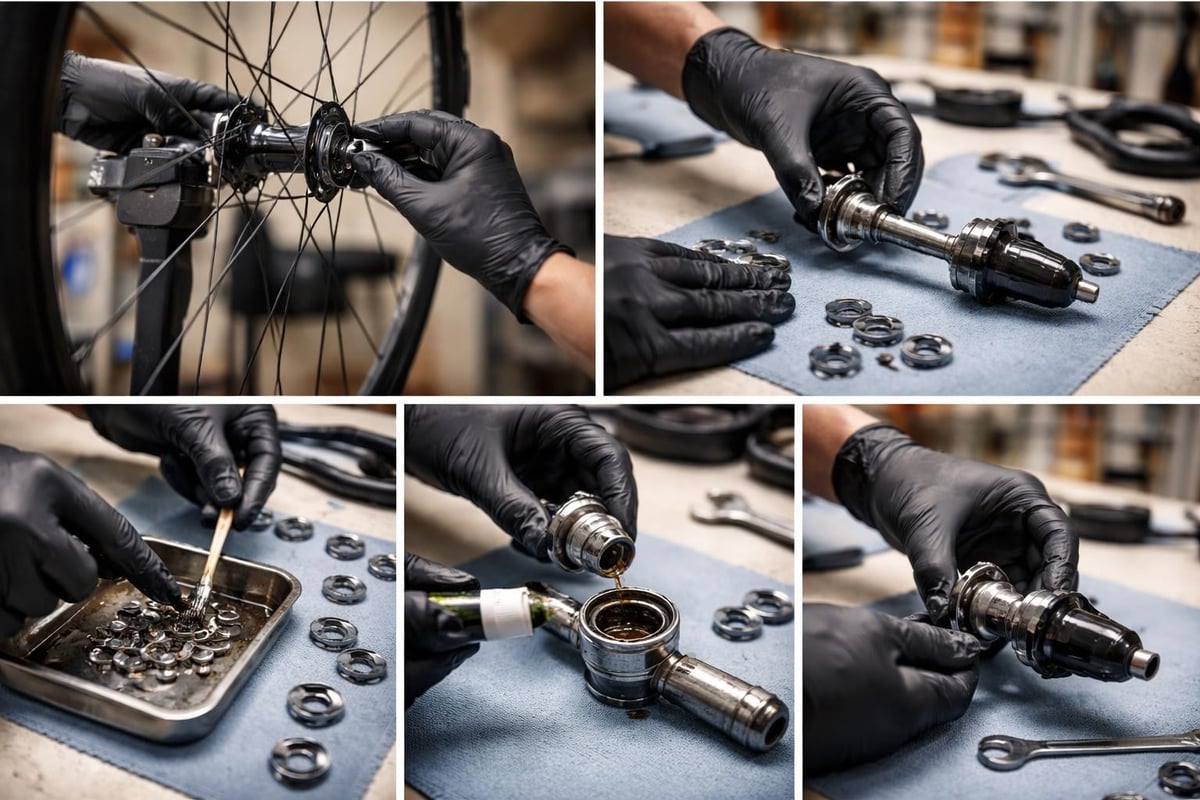
Winter conditions demand extra attention, as moisture and road salt accelerate corrosion. Following winter bike maintenance tips protects your bike hub investment during harsh weather months.
Bearing Systems: The Heart of Hub Performance
Bearing quality separates basic hubs from premium options, directly influencing rolling resistance, durability, and maintenance requirements.
Cup-and-Cone Bearings
Traditional cup-and-cone systems use loose ball bearings that roll between machined cup and cone surfaces. These offer several advantages:
- Adjustability for perfect bearing preload
- Easy servicing with basic tools
- Cost-effective replacement parts
- Long lifespan when properly maintained
However, they require more frequent adjustment and skilled setup to achieve optimal performance. Many professional mechanics prefer this system for its serviceability and ability to fine-tune bearing preload.
Sealed Cartridge Bearings
Modern cartridge bearings come pre-assembled with seals protecting against contamination. They provide consistent performance with minimal maintenance but require complete replacement when worn.
Benefits of cartridge bearings:
- Superior weather sealing
- Consistent performance
- Lower friction coefficients
- Simpler maintenance procedures
Drawbacks to consider:
- Higher replacement costs
- Non-adjustable bearing preload
- Requires bearing press for installation
- Limited repairability
For riders who commute in all weather conditions, sealed cartridge bearings offer significant advantages in longevity and reduced maintenance.
Upgrading Your Bike Hub: When and Why
Upgrading to higher-quality hubs delivers noticeable improvements in ride quality, durability, and performance. Consider upgrades when your current hubs show excessive wear, fail to meet performance needs, or limit your wheel build options.
Performance Gains from Premium Hubs
High-end bike hub options reduce rotational weight, improve bearing quality, and enhance engagement speed. These factors combine to create a more responsive, efficient cycling experience.
Weight savings occur primarily at the wheel's rotation point, where every gram removed has magnified impact on acceleration and climbing performance. Premium hubs typically save 50-150 grams per wheelset compared to budget options.
Engagement improvements come from increased pawl counts or ratchet systems that engage more frequently. Instead of the standard 36 engagement points, premium hubs offer 72, 108, or even 240 points of engagement, translating to virtually instant power transfer.
Hub Standards and Compatibility
Before upgrading, verify compatibility with your frame, fork, and drivetrain components. Key specifications include:
| Specification | What to Check | Common Options |
|---|---|---|
| Axle Standard | Frame/fork dropout type | QR, 12mm, 15mm thru-axle |
| Hub Spacing | Distance between dropouts | 100/135mm, 110/148mm Boost |
| Freehub Type | Cassette compatibility | Shimano/SRAM, XD, Micro Spline |
| Brake Mount | Disc brake interface | 6-bolt, Centerlock |
Mismatched specifications create compatibility issues that prevent proper installation or function. Always confirm these details before purchasing new hubs.
Hub Engagement and Drivetrain Efficiency
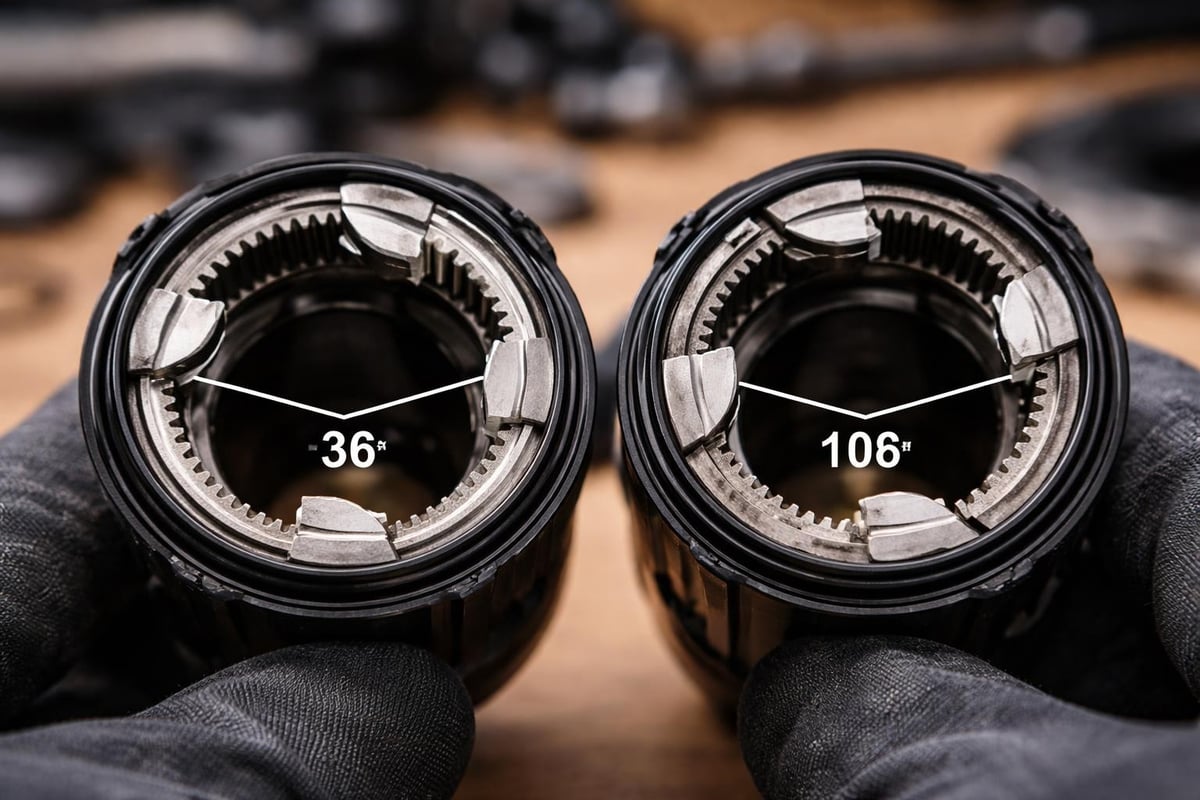
The freehub engagement system determines how your bike hub connects pedaling power to wheel rotation. This mechanism consists of pawls, ratchets, or sprag clutches that engage when you pedal forward and disengage when coasting.
Understanding Engagement Points
More engagement points reduce the angular distance your cranks must rotate before power transfer begins. With 36 points of engagement, you need 10 degrees of crank rotation before engagement. With 108 points, only 3.3 degrees of rotation is required.
This difference becomes critical during technical climbs or tight switchbacks where pedal positioning matters. Quick engagement allows you to apply power immediately, regardless of crank position.
Sound and Performance Relationship
The characteristic clicking sound from freehubs comes from pawls or ratchets engaging and disengaging. Louder hubs typically feature more engagement points or stronger spring tension, though sound level doesn't necessarily correlate with quality.
Some manufacturers design quiet hubs for stealth riding, while others embrace the distinctive buzz as a performance indicator. Your preference depends on riding style and personal taste.
Weather Protection and Hub Durability
Environmental conditions significantly impact bike hub longevity. Moisture, dust, and temperature extremes challenge bearing seals and lubricants, making weather protection essential for consistent performance.
Sealing Technologies
Modern hubs employ multiple sealing strategies to exclude contaminants:
- Labyrinth seals create tortuous paths preventing water entry
- Rubber contact seals physically block contamination
- Grease barriers provide additional protection layers
- Anodized hub shells resist corrosion
Premium hubs combine these technologies, creating systems that withstand thousands of miles in challenging conditions. Following proper wheel care protocols maximizes seal effectiveness and hub lifespan.
Post-Ride Care
After wet or muddy rides, basic cleaning prevents long-term damage. Wipe hub exteriors with a clean cloth, removing visible dirt and moisture. Avoid high-pressure water that forces contamination past seals into bearing areas.
For riders frequently encountering harsh conditions, more protective measures prove worthwhile. Some cyclists apply frame protection film over hub shells or use wheel covers during storage, preventing corrosion during inactive periods.
Quality equipment makes all the difference in maintaining peak performance across varied conditions. Cycling Gears Hub - Premium Cycling Gear & Accessories offers carefully selected maintenance tools and protective equipment that help keep your bike hub and entire drivetrain operating smoothly, regardless of riding conditions.

Hub Service and Repair Considerations
Knowing when to service yourself versus seeking professional help saves money while preventing costly mistakes. Basic maintenance falls within most cyclists' capabilities, while complex repairs require specialized tools and expertise.
DIY-Friendly Maintenance Tasks
These hub service tasks are accessible to home mechanics with basic tools:
- Bearing adjustment: Cup-and-cone systems need periodic preload adjustment
- Cleaning and regreasing: Annual maintenance keeps bearings running smoothly
- Freehub body removal: Allows cassette body cleaning and lubrication
- Seal replacement: Extends hub life without full bearing replacement
Video tutorials demonstrate proper techniques, helping you develop confidence for these procedures. Start with simpler tasks before attempting complex overhauls.
When to Seek Professional Service
Certain situations warrant professional attention:
- Bearing replacement in press-fit cartridge systems
- Hub shell damage or thread repair
- Unusual noises despite proper adjustment
- Freehub pawl or ratchet replacement
- Complete hub rebuilds after crash damage
Professional mechanics possess specialized tools and diagnostic experience that identify problems quickly. For complex issues, their expertise prevents expensive trial-and-error repairs.
Choosing the Right Bike Hub for Your Needs
Selecting appropriate hubs balances performance requirements, budget constraints, and intended use. Different cycling disciplines prioritize different hub characteristics, making universal recommendations impossible.
Road Cycling Priorities
Road cyclists value lightweight construction, aerodynamic profiles, and smooth bearing action. Hubs for road applications typically feature:
- Minimal weight through optimized materials
- High engagement for responsive power transfer
- Durable sealing for year-round training
- Compatibility with wide cassette ranges
For riders exploring road cycling accessories in India, hub selection often complements other performance upgrades like lightweight wheels and aerodynamic components.
Mountain Biking Requirements
Mountain bike hubs endure significantly higher stress from impacts, mud, and water exposure. Essential features include:
Durability factors:
- Robust bearing seals against trail debris
- Strong hub shells resisting impact damage
- Reliable engagement under variable loads
- Easy field serviceability
Performance elements:
- Quick engagement for technical terrain
- Wide spoke flange spacing for lateral stiffness
- Tool-free axle systems for trailside repairs
Riders focusing on MTB accessories in India should prioritize durability over minimal weight savings, as trail conditions demand robust components.
Commuter and Touring Applications
Daily riders and touring cyclists need maximum reliability with minimal maintenance. Hub characteristics for these applications include:
- Sealed cartridge bearings resisting weather
- Proven designs with established reliability
- Widespread parts availability
- Reasonable cost for replacement
These priorities differ from racing applications, where ultimate performance justifies higher maintenance requirements and replacement costs.
Hub Standards Evolution and Future Trends
Bike hub standards have evolved significantly over recent decades, with manufacturers continually refining designs for improved performance and compatibility. Understanding these trends helps anticipate future upgrade paths.
Recent Standard Changes
The cycling industry has shifted toward several key standards:
- Thru-axles replacing quick release systems
- Boost spacing (110mm front, 148mm rear) becoming standard
- Centerlock brake mounts gaining market share
- XD and Micro Spline freehubs accommodating wider cassette ranges
These changes improve wheel stiffness, bearing alignment, and drivetrain capability. However, they also create compatibility challenges when mixing components from different generations.
Emerging Technologies
Current development focuses on several innovations:
- Improved sealing systems extending maintenance intervals
- Lightweight materials including carbon fiber hub shells
- Ratchet mechanisms offering infinite engagement points
- Integrated power meters measuring wattage directly at the hub
- Electronic shifting integration coordinating hub and drivetrain operation
While some innovations remain niche, others gradually filter into mainstream products. Staying informed about these developments helps you make future-proof purchasing decisions.
Impact of Hub Quality on Overall Cycling Experience
The bike hub might seem like a small component, but its influence extends throughout your entire cycling experience. From energy efficiency to maintenance requirements, hub quality affects every ride.
Rolling Resistance and Efficiency
Premium bearings and proper lubrication minimize rolling resistance, the energy lost to friction within the hub. While individual hub efficiency gains seem small, they accumulate across long distances.
Studies show that upgrading from basic to high-quality hubs can save 2-5 watts of rolling resistance per wheel. Over a 100-kilometer ride, this translates to measurable energy savings that reduce fatigue and improve average speeds.
Reliability and Confidence
Knowing your hubs are properly maintained and high quality provides psychological benefits during challenging rides. This confidence allows you to focus on performance rather than worrying about mechanical failures.
For touring cyclists and bikepacking enthusiasts exploring bikepacking equipment options, reliable hubs become even more critical. Remote locations offer limited repair options, making component reliability essential for successful adventures.
Long-Term Value Proposition
Quality hubs represent a worthwhile investment through extended lifespan and reduced maintenance costs. While premium hubs cost more initially, their durability and serviceability often provide better value over ownership periods measured in years or decades.
Budget hubs may require replacement after 5,000-10,000 kilometers, while premium options routinely exceed 50,000 kilometers with proper maintenance. This longevity justifies higher initial costs for serious cyclists accumulating significant annual mileage.
Understanding your bike hub mechanics, maintenance requirements, and upgrade options empowers better decisions about your cycling equipment and care routines. Regular maintenance extends component life while ensuring optimal performance across all riding conditions. Whether you're building a new wheelset, performing routine maintenance, or troubleshooting performance issues, Cycling Gears Hub provides the parts, accessories, and expert guidance Indian cyclists need to keep their bikes running smoothly. Explore our comprehensive selection of cycling products with fast shipping, flexible payment options, and hassle-free returns that make maintaining your bike simpler than ever.