

Buying a bike represents one of the most rewarding investments you can make in your health, transportation, and lifestyle. Whether you're a first-time cyclist exploring the basics or an experienced rider seeking an upgrade, the process requires careful consideration of multiple factors. The Indian cycling market has evolved dramatically in 2026, offering unprecedented variety in bike types, price points, and specialized features. Understanding what to look for, where to shop, and how to match your needs with the right bicycle can transform a simple purchase into years of enjoyable riding.
Understanding Different Bike Types Before Making Your Purchase
Before buying a bike, you need to identify which category best suits your intended use. The type of riding you plan to do should directly influence your decision.
Road Bikes for Speed and Distance
Road bikes prioritize efficiency, lightweight construction, and speed on paved surfaces. These bikes feature narrow tires, drop handlebars, and aerodynamic frames designed for long-distance riding and fast commutes. When purchasing a bicycle at a shop, road bike enthusiasts should focus on carbon or aluminum frame options, gearing systems suitable for varied terrain, and proper sizing for optimal power transfer.
The geometry of road bikes positions riders in a forward-leaning stance that maximizes efficiency but may require adaptation for newcomers. Professional cyclists and serious fitness enthusiasts gravitate toward road bikes for training and competitive events. If you're interested in exploring more about performance cycling, check out the latest insights on road cycling accessories in India.
Mountain Bikes for Off-Road Adventures
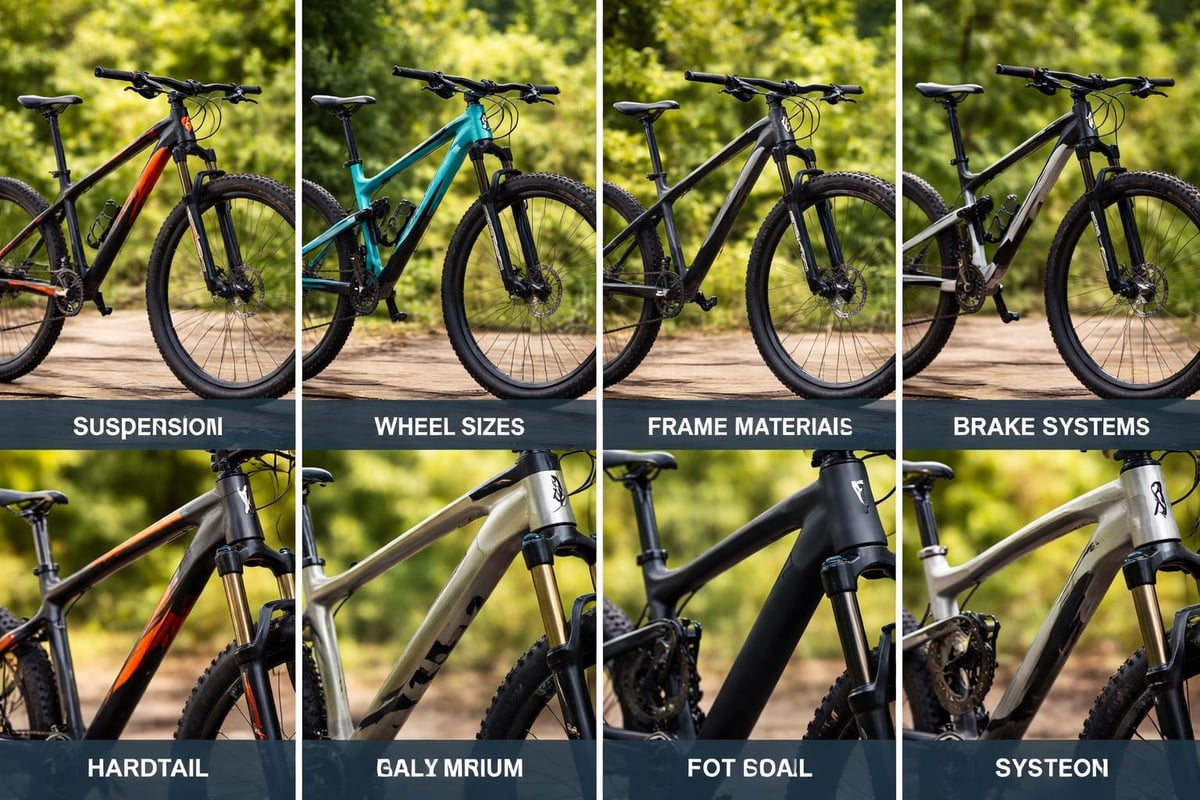
Mountain bikes excel on trails, rough terrain, and unpredictable surfaces where durability matters most. These robust machines feature wider tires with aggressive tread patterns, suspension systems to absorb shocks, and sturdy frames built to withstand impacts.
When buying a bike for mountain trails, consider these essential specifications:
- Suspension type: Hardtail (front suspension only) versus full suspension (front and rear)
- Wheel size: 27.5-inch for agility or 29-inch for rolling efficiency
- Frame material: Aluminum for budget-friendly options, carbon for premium performance
- Brake system: Hydraulic disc brakes provide superior stopping power in all conditions
Mountain bike pricing varies significantly based on component quality. For budget-conscious buyers exploring MTB cycles under 15000, focusing on reputable brands with solid warranties ensures better long-term value.
Hybrid Bikes for Versatile Riding
Hybrid bikes combine road bike efficiency with mountain bike stability, creating versatile machines suitable for commuting, fitness rides, and light trail exploration. These bikes represent excellent choices for riders who want one bicycle capable of handling multiple scenarios.
The upright riding position provides comfort during extended rides while maintaining reasonable speed on pavement. Understanding what hybrid bikes offer helps buyers recognize why these models dominate the commuter market in urban India.
Electric Bikes for Assisted Cycling
Electric bikes have revolutionized cycling accessibility, offering motor assistance that makes longer distances, steeper hills, and daily commutes more manageable. When shopping for your first e-bike, understanding motor placement, battery capacity, and range becomes crucial.
| E-Bike Component | What to Look For | Why It Matters |
|---|---|---|
| Motor Power | 250W-750W options | Higher wattage provides more assistance on hills |
| Battery Capacity | 400Wh-700Wh range | Larger capacity extends riding distance per charge |
| Motor Placement | Hub vs mid-drive | Mid-drive offers better weight distribution and efficiency |
| Range | 40-100+ kilometers | Determines how far you can travel on a single charge |
Electric bikes carry higher price tags, but the investment pays dividends in expanded riding possibilities and reduced physical strain.
Determining Your Budget and Value Expectations
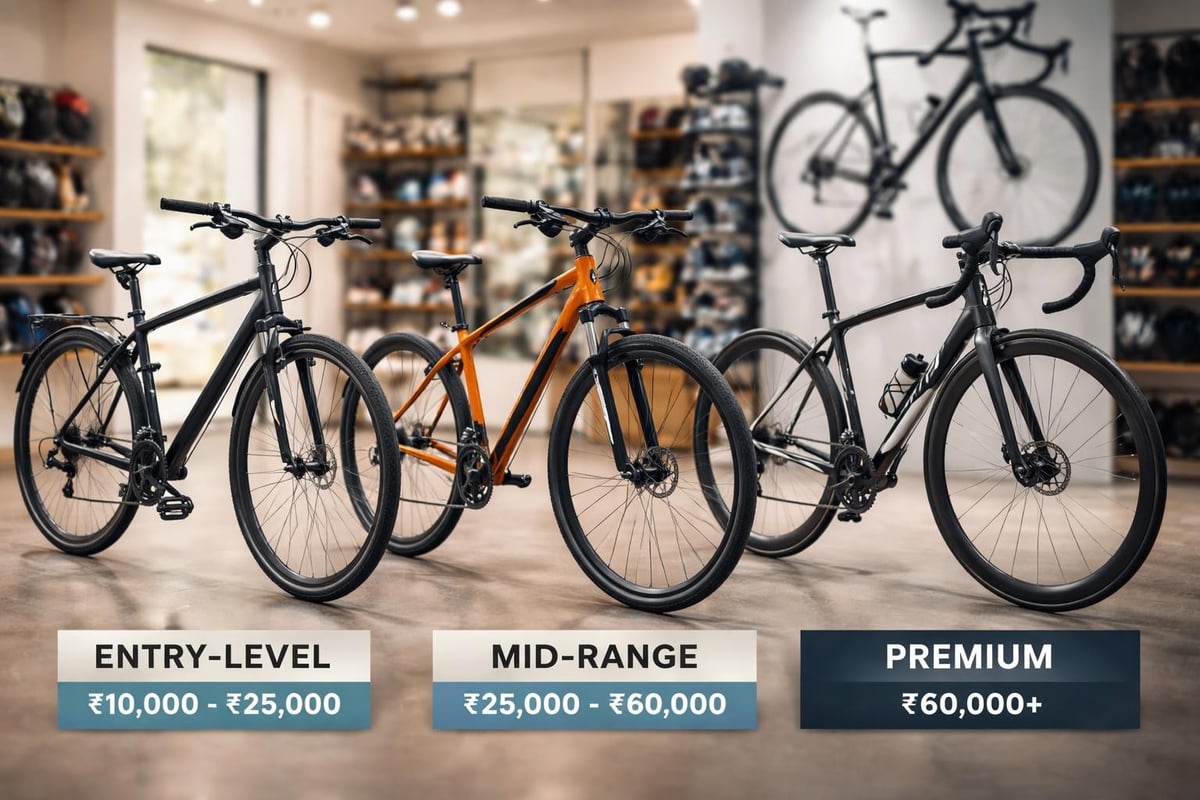
Financial planning plays a critical role when buying a bike. The cycling market offers options from entry-level models to professional-grade machines costing lakhs of rupees.
Entry-Level Budget: ₹10,000-₹25,000
This range provides access to basic commuter bikes, entry-level hybrids, and starter mountain bikes. While components may not match premium standards, reputable manufacturers in this bracket deliver reliable transportation and recreational riding opportunities.
Buyers should prioritize frame quality, warranty coverage, and established brand reputation. Compromising slightly on component upgrades makes more sense than selecting unknown brands with questionable durability.
Mid-Range Investment: ₹25,000-₹60,000
This sweet spot delivers significant quality improvements in frame materials, drivetrain components, and braking systems. Serious recreational cyclists find excellent value here, with bikes capable of handling regular use and moderate performance demands.
Many riders discover their perception of bike pricing changes when they experience the difference quality components make during actual rides.
Premium Category: ₹60,000 and Above
High-end bikes incorporate carbon frames, advanced suspension technology, electronic shifting, and lightweight components that enhance performance measurably. Competitive cyclists, enthusiasts seeking the best equipment, and riders logging serious mileage justify these investments through improved efficiency and durability.
Budget e-bikes deserve special consideration. While tempting for their lower prices, evaluating whether budget e-bikes are worth it reveals potential compromises in battery longevity, motor reliability, and component quality that may cost more long-term.
Getting the Right Size and Fit
Improper sizing represents one of the most common mistakes when buying a bike. Even premium bicycles deliver poor performance and discomfort when the frame doesn't match your body proportions.
Professional bike shops offer sizing consultations, measuring your height, inseam length, arm reach, and riding flexibility to recommend appropriate frame sizes. Most manufacturers provide sizing charts correlating measurements to small, medium, large, or numeric size designations.
Critical fit factors include:
- Stand-over height: You should comfortably straddle the top tube with feet flat on the ground
- Reach distance: Handlebars should be accessible without overstretching or cramping
- Saddle position: Proper height allows near-full leg extension at the bottom of pedal strokes
- Handlebar height: Influences riding posture and comfort during extended rides
Test riding before finalizing your purchase eliminates guesswork. Spending 15-20 minutes on a bike reveals comfort issues that aren't apparent from visual inspection alone.
Women-specific bikes merit consideration for female cyclists. Specialized women's road bikes feature geometry adjustments, component sizing, and saddle designs that better accommodate female physiology and riding preferences.
Evaluating Components and Build Quality
Beyond frame selection, component quality significantly impacts your riding experience when buying a bike. Understanding what to examine helps distinguish genuine value from marketing claims.
Drivetrain and Gearing Systems
The drivetrain transfers your pedaling power to the wheels. Entry-level bikes typically feature 7-9 speed systems, while mid-range and premium models offer 11-12 speed options providing smoother shifting and better gear range.
Shimano, SRAM, and Campagnolo dominate the component market, with Shimano's tiered system (Tourney, Altus, Acera, Deore, SLX, XT, XTR) clearly indicating quality levels. Higher tiers deliver lighter weight, more precise shifting, and improved durability.
Brake Systems
Braking technology has evolved significantly. Rim brakes remain common on entry-level road bikes, but disc brakes have become standard for mountain bikes and increasingly popular across all categories.
| Brake Type | Advantages | Disadvantages | Best For |
|---|---|---|---|
| Rim Brakes | Lightweight, simple maintenance | Reduced performance in wet conditions | Budget road bikes, fair-weather riding |
| Mechanical Disc | Better wet-weather performance | Requires periodic cable adjustment | Entry to mid-range bikes |
| Hydraulic Disc | Superior stopping power, minimal maintenance | Higher cost, complex repairs | Performance-oriented bikes |
Wheels and Tires
Wheel quality affects acceleration, handling, and durability. Factory wheels on entry-level bikes serve basic needs but represent common upgrade points for serious riders.
Tire selection balances speed, grip, and puncture resistance. Wider tires provide comfort and traction; narrower options reduce rolling resistance for faster speeds on smooth surfaces.
Deciding Between New and Used Bikes
Budget constraints often lead buyers to consider pre-owned bicycles. The used market offers opportunities for significant savings but requires careful evaluation to avoid problematic purchases.
Advantages of Buying Used
Purchasing previously-owned bikes allows access to higher-quality models at reduced prices. A well-maintained three-year-old bike from a premium brand often outperforms a new entry-level model at similar cost.
Depreciation works in buyers' favor, particularly for bikes less than two years old where owners absorbed the steepest value decline. When buying a used bike, inspection expertise becomes crucial for identifying hidden issues.
Essential inspection points include:
- Frame integrity: Check for cracks, dents, or alignment issues
- Component wear: Examine chain stretch, cassette teeth, brake pad thickness
- Shifting performance: Test all gears for smooth, reliable operation
- Wheel trueness: Spin wheels to identify wobbles or spoke damage
- Brake function: Ensure consistent, powerful stopping without noise
When New Makes More Sense
Warranty protection, latest technology, and zero-wear components justify buying new bikes for many cyclists. Manufacturers typically provide one to two-year frame warranties and shorter coverage on components.
New bikes eliminate uncertainty about maintenance history, accident damage, or component compatibility issues that plague some used purchases. For beginners unfamiliar with bike mechanics, new purchases from reputable dealers provide peace of mind and ongoing support.
Choosing Where to Buy Your Bike
Shopping location significantly influences your buying experience, available support, and long-term satisfaction when buying a bike.
Local Bike Shops
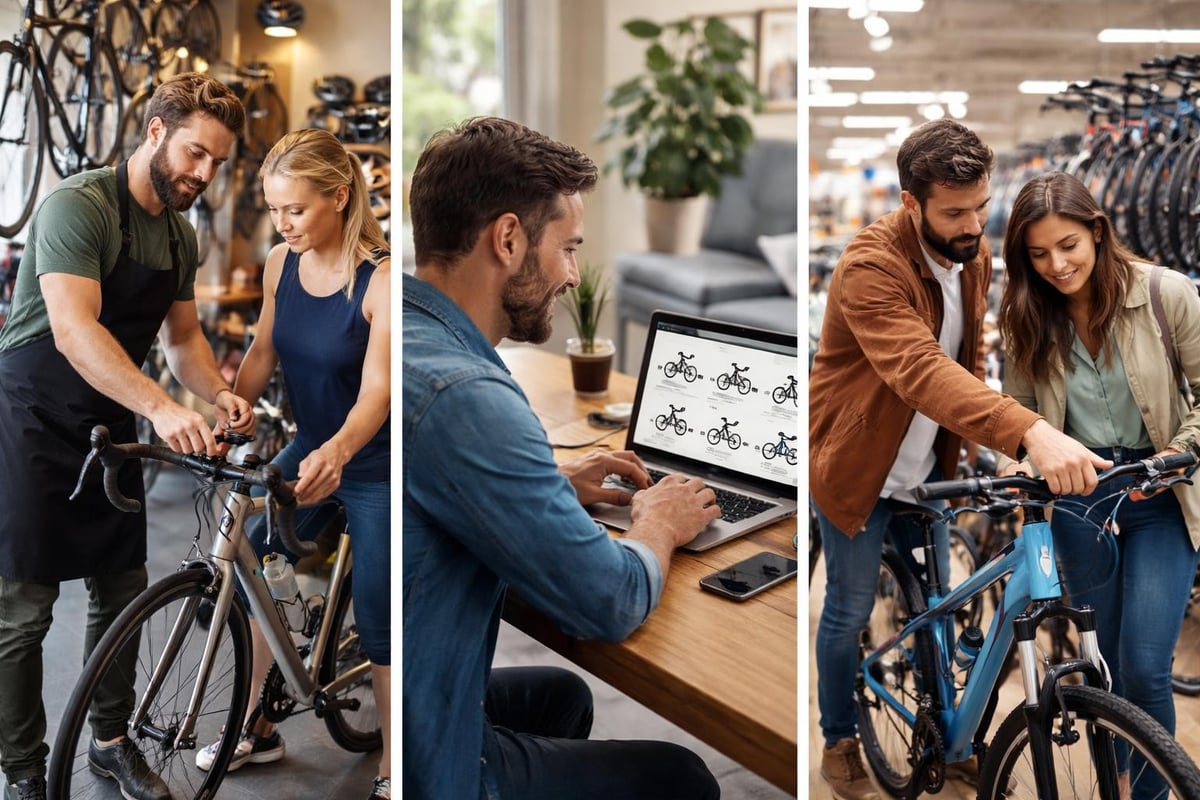
Specialized cycling retailers offer expert guidance, professional fitting services, and ongoing maintenance support that online retailers cannot match. Building relationships with local shop staff provides access to riding community connections, event information, and personalized service recommendations.
Premium brands often restrict sales to authorized dealers, making local shops the only option for certain models. The slightly higher prices compared to online alternatives include valuable services like assembly, initial adjustments, and free tune-ups.
Online Retailers
E-commerce platforms provide broader selection and competitive pricing but eliminate personal interaction and hands-on evaluation. Buying bikes online works best for experienced cyclists who understand sizing, can perform assembly, and feel confident in their selection.
Cycling Gears Hub bridges this gap by offering extensive product ranges with the convenience of online shopping while maintaining commitment to customer support through multiple payment options and hassle-free returns.
Big-Box Retailers
Department stores and sporting goods chains stock entry-level bikes at attractive prices. However, assembly quality varies, staff expertise may be limited, and long-term support often falls short of specialty retailers.
These options serve casual riders with minimal performance expectations but rarely satisfy serious cycling enthusiasts seeking quality equipment and knowledgeable guidance.
Understanding Bike Features and Technology
Modern bicycles incorporate numerous features that affect performance, comfort, and utility. Recognizing which innovations matter for your riding style prevents paying for unnecessary complexity.
Frame Materials
Bicycle frames utilize four primary materials, each offering distinct characteristics:
Steel provides durability, smooth ride quality, and easy repair but carries extra weight. Classic touring bikes and some vintage-styled models favor steel construction.
Aluminum dominates the mid-range market, delivering light weight and stiffness at affordable prices. Most recreational and fitness bikes use aluminum frames.
Carbon fiber offers the best strength-to-weight ratio, vibration damping, and design flexibility. Premium road bikes, mountain bikes, and performance-oriented models justify carbon's higher cost through measurable advantages.
Titanium combines steel's ride quality with exceptional durability and corrosion resistance but commands premium pricing that limits its market presence.
Suspension Systems
Mountain bikes and some hybrids incorporate suspension to absorb trail impacts. Front suspension (hardtail) suffices for moderate trails and commuting. Full suspension (front and rear) becomes worthwhile for aggressive trail riding and technical terrain.
Suspension travel measurement (millimeters of shock absorption) should match intended use. Cross-country riding requires 80-120mm; trail riding benefits from 120-150mm; enduro and downhill demand 150mm+.
Accessories and Mounting Points
Practical cyclists should verify mounting points for racks, fenders, and water bottle cages before buying a bike. Commuters need cargo capacity; touring cyclists require stable load-carrying capability; fitness riders prioritize hydration access.
Many performance-oriented bikes sacrifice utility features to minimize weight, limiting their versatility for practical applications.
Environmental and Sustainability Considerations
Environmentally conscious consumers increasingly factor sustainability into purchasing decisions. Eco-friendly bicycle buying guides highlight material choices, manufacturing practices, and longevity considerations that reduce environmental impact.
Choosing quality bikes that last decades rather than disposable models requiring frequent replacement represents the most significant sustainability action. Steel and aluminum frames both offer excellent recyclability at end-of-life.
Supporting manufacturers committed to ethical labor practices, reduced packaging waste, and carbon-neutral shipping aligns purchases with environmental values.
Preparing for Your First Rides
After buying a bike, proper preparation ensures safe, enjoyable early experiences that build confidence and skills. New cyclists should invest in essential safety equipment before hitting the road.
Must-Have Safety Equipment
Helmet selection stands as the single most critical safety decision. Quality helmets meeting safety certifications protect against head injuries during falls or collisions. For comprehensive guidance, explore the ultimate buying guide to cycling helmets in India.
Front and rear lights ensure visibility during low-light conditions, while reflective clothing increases driver awareness. Lock systems protect your investment when parking in public spaces.
Essential Accessories for New Riders
Beyond safety equipment, several accessories enhance comfort and convenience. Essential cycling accessories for beginners include padded shorts to reduce saddle discomfort, cycling gloves for better grip and hand protection, and a basic multi-tool for minor adjustments during rides.
Water bottle cages and bottles prevent dehydration on longer rides. Floor pumps with pressure gauges maintain optimal tire inflation for better performance and puncture prevention.
Planning Your Initial Rides
Start with short, easy routes that build fitness gradually. Flat, low-traffic paths allow focus on bike handling, shifting practice, and comfort adjustments without navigation stress or challenging terrain.
Progressive training approach:
- Week 1-2: 20-30 minute rides on flat surfaces
- Week 3-4: Extend to 45-60 minutes, introduce gentle hills
- Week 5-6: Increase distance and incorporate varied terrain
- Week 7+: Add group rides or explore new routes based on growing confidence
Maintenance Fundamentals for New Bike Owners
Proper maintenance extends your bike's lifespan and ensures reliable performance. Understanding basic care requirements prevents minor issues from becoming expensive problems.
Regular cleaning removes dirt and grime that accelerate component wear. After wet or muddy rides, washing your bike and lubricating the chain prevents corrosion and maintains smooth operation.
Monthly maintenance should include checking tire pressure, inspecting brake pads, ensuring all bolts remain tight, and examining tires for cuts or excessive wear. Winter maintenance tips become particularly important for year-round riders in variable climates.
Professional tune-ups once or twice annually address complex adjustments like derailleur indexing, brake bleeding, and wheel truing that exceed most casual mechanics' skills.
Special Considerations for Different Rider Groups
Buying a bike involves unique factors depending on the rider's specific circumstances and intended use cases.
Bikes for Commuters
Urban cyclists prioritize reliability, security features, and practical accessories. Fenders prevent road spray during monsoon season; integrated lights improve safety during early morning or evening commutes; rack systems facilitate carrying work essentials.
Commuter bikes should offer comfortable, upright geometry for navigating traffic and moderate speeds rather than aggressive, race-oriented positioning.
Bikes for Fitness Enthusiasts
Riders focused on exercise and performance seek efficiency, lightweight construction, and components supporting higher speeds and longer distances. Road bikes or performance hybrids typically serve fitness goals better than casual cruisers or heavy commuter models.
Group ride compatibility matters for social cyclists. Local cycling clubs often establish minimum equipment standards ensuring participants can maintain pace safely.
Bikes for Families
Parents introducing children to cycling need appropriately sized bikes that grow with young riders. Quality children's bikes feature proper geometry, reliable brakes, and durability for rough handling.
Adult bikes for family riding emphasize stability, comfort, and often include child seat compatibility or trailer attachment points for transporting younger family members.
Buying a bike in 2026 offers incredible opportunities to find the perfect match for your riding style, budget, and goals when you approach the process with knowledge and careful consideration. From understanding bike types and sizing to evaluating components and selecting the right retailer, each decision contributes to long-term satisfaction with your purchase. Whether you're commuting daily, exploring trails, or pursuing fitness goals, Cycling Gears Hub provides the quality equipment, expert guidance, and comprehensive support that over 10,000 Indian cyclists trust for their cycling needs. Explore our extensive collection today with fast shipping, flexible payment options, and hassle-free returns that make starting your cycling journey easier than ever.