

Cycling mountain biking has evolved into one of the most exhilarating outdoor sports, combining physical endurance with technical skill and adventure. Whether you're navigating rocky terrain in the Western Ghats or exploring forest trails in the Himalayas, this discipline offers Indian cyclists an unmatched opportunity to connect with nature while pushing their physical limits. For both beginners taking their first trail ride and experienced riders tackling advanced downhill courses, understanding the fundamentals of equipment, technique, and safety transforms an ordinary ride into an extraordinary experience. This comprehensive guide explores everything you need to know about cycling mountain biking, from selecting the right gear to mastering essential techniques that will elevate your performance on any trail.
Understanding the Different Types of Cycling Mountain Biking
Cycling mountain biking encompasses several distinct disciplines, each requiring specific skills and equipment. Cross-country (XC) riding focuses on endurance and efficiency across varied terrain, making it the most accessible entry point for new riders. This style emphasizes climbing ability and sustained power output over long distances.
Trail riding represents the sweet spot for most cyclists, balancing technical challenges with enjoyable flow. These intermediate-level rides incorporate climbs, descents, and natural obstacles without the extreme difficulty of more specialized disciplines.
Downhill and Enduro Riding
Downhill mountain biking prioritizes gravity-fed descents with significant elevation drops and technical features. Riders typically use shuttle services or chairlifts to access starting points, focusing their energy entirely on the descent. The technical skills required for downhill riding demand precise body positioning and braking control.
Enduro combines elements of cross-country and downhill, featuring timed descent sections connected by untimed climbs. This format tests both climbing endurance and descending prowess, making it popular among riders seeking comprehensive challenges.
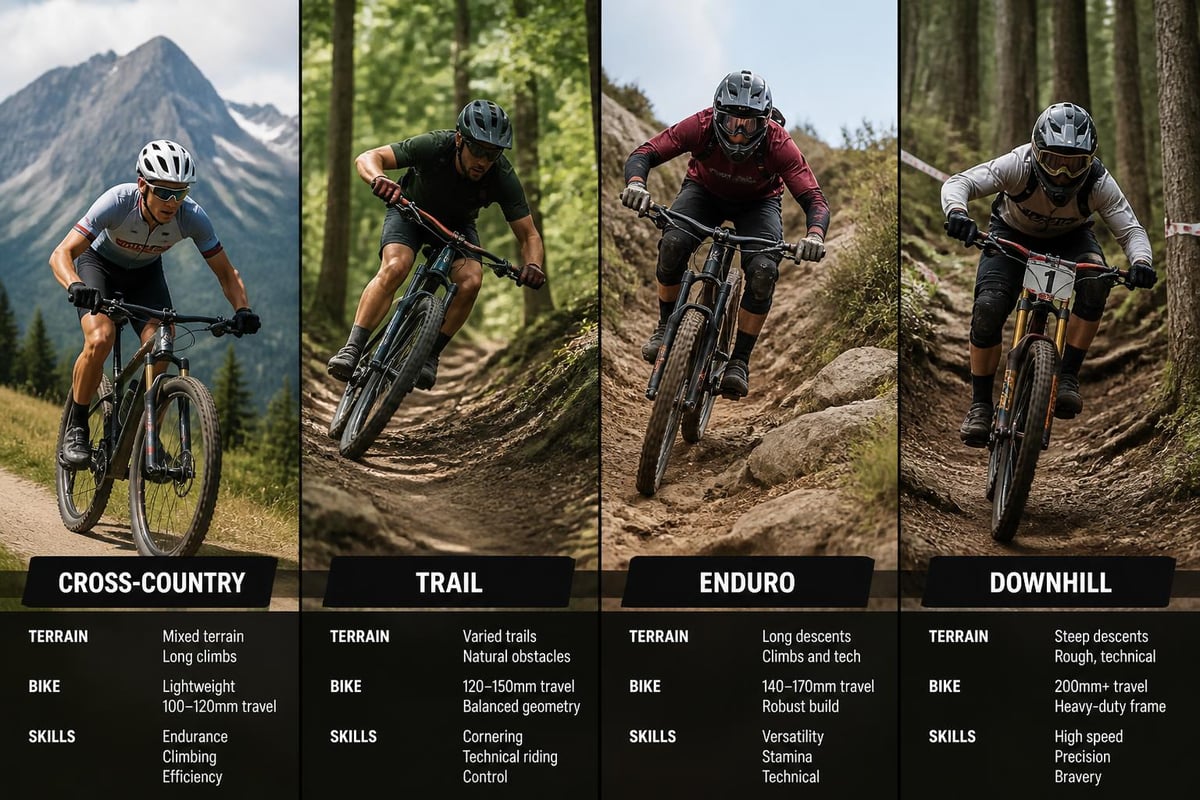
| Discipline | Terrain Focus | Bike Weight | Suspension Travel | Skill Level |
|---|---|---|---|---|
| Cross-Country | Climbs & efficiency | 10-13 kg | 80-120mm | Beginner-Advanced |
| Trail | Balanced riding | 13-15 kg | 120-150mm | Intermediate |
| Enduro | Technical descents | 14-16 kg | 150-170mm | Advanced |
| Downhill | Steep descents | 16-20 kg | 180-210mm | Expert |
Essential Gear for Cycling Mountain Biking Success
Proper equipment forms the foundation of safe and enjoyable cycling mountain biking experiences. Your bike represents the most significant investment, but choosing the right model depends on your intended riding style and local terrain conditions.
Hardtail bikes feature front suspension only, offering lightweight efficiency ideal for cross-country riding and smoother trails. Full-suspension models incorporate both front and rear shock absorption, providing superior control on technical terrain and aggressive descents. For Indian riders exploring diverse landscapes, full-suspension bikes offer versatility across varying trail conditions.
Protective Equipment and Safety Gear
Helmet selection stands as the single most critical safety decision. Modern mountain bike helmets feature extended rear coverage, enhanced ventilation, and MIPS (Multi-directional Impact Protection System) technology. Choosing the best helmet for bike riders ensures your head protection meets current safety standards.
Additional protective gear includes:
- Gloves: Full-finger models provide grip, protection, and vibration dampening
- Eyewear: Protects against debris, insects, and UV radiation
- Knee and elbow pads: Essential for technical riding and learning new skills
- Body armor: Chest and back protection for downhill and enduro riding
- Proper footwear: Clipless pedal shoes or flat-pedal specific designs
The comprehensive range of cycling accessories available today gives riders multiple options suited to their specific needs and budget considerations.
Technical Equipment and Accessories
Beyond basic protective gear, serious mountain bikers benefit from performance-enhancing accessories. Dropper seatposts allow on-the-fly saddle height adjustment, enabling riders to shift their weight efficiently during technical sections. Tubeless tire setups reduce puncture risk while allowing lower tire pressures for improved traction.
Hydration systems keep riders properly fueled during extended trail sessions. Backpack-style reservoirs distribute weight evenly, while frame-mounted bottle cages offer quick access on less technical terrain. GPS devices and cycling computers track performance metrics, navigation data, and emergency location information.
Mastering Fundamental Cycling Mountain Biking Techniques
Technical proficiency separates confident riders from those who struggle on challenging terrain. The five essential mountain biking techniques form the building blocks of advanced riding skills.
Body positioning serves as the foundation for all other techniques. The neutral "attack position" features slightly bent knees and elbows, weight centered over the bike, and eyes focused ahead on the trail. This stance allows quick reactions to terrain changes and maintains bike control through rough sections.
Cornering and Braking Fundamentals
Effective cornering requires coordinating multiple elements simultaneously. As you approach a turn, shift your weight to the outside pedal while leaning the bike into the corner. Your inside knee should point toward the turn's apex, while your outside arm applies pressure to the handlebar. Look through the corner toward your exit point rather than at obstacles.
Progressive braking technique prevents skidding and maintains control. Apply both brakes together, using more rear brake on loose surfaces and increasing front brake pressure on firm terrain with good traction. Release brakes before obstacles to allow the suspension to work effectively.
- Approach phase: Reduce speed before the corner entrance
- Entry phase: Lean the bike while maintaining body position
- Apex phase: Look toward the exit and maintain consistent speed
- Exit phase: Gradually accelerate while straightening the bike
Climbing technique balances traction with momentum. Shift your weight forward to maintain front wheel contact while keeping enough weight on the rear tire for traction. Seated climbing works best on moderate grades, while standing provides power for steep or technical sections.
Trail Selection and Difficulty Assessment
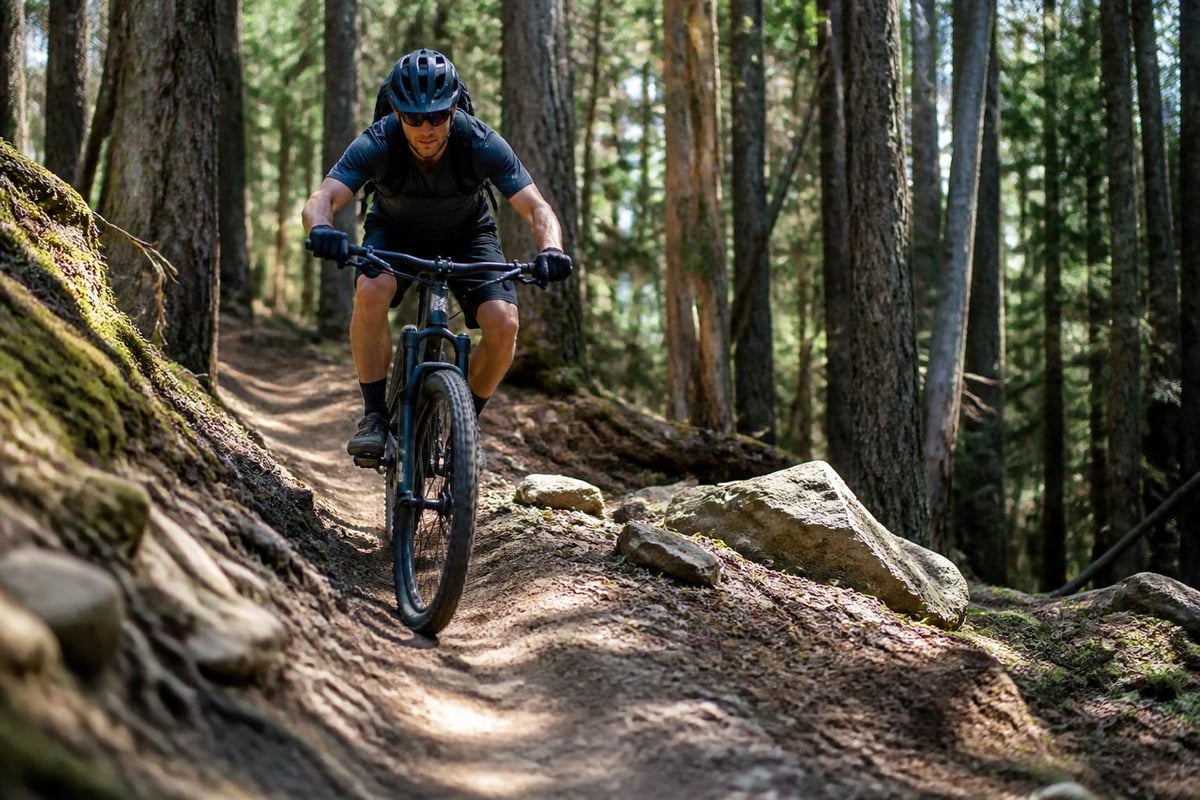
Choosing appropriate trails matches your current ability level while providing room for skill development. Mountain biking safety requires matching trail difficulty to rider capability, preventing injuries and building confidence progressively.
Trail rating systems vary globally, but most regions use green (beginner), blue (intermediate), black (advanced), and double-black (expert) designations. These ratings consider technical features, terrain steepness, obstacle size, and required skill levels. However, ratings remain subjective, and a blue trail in one location might challenge riders differently than a similarly rated trail elsewhere.
Reading Trail Features and Conditions
Understanding trail composition helps predict bike behavior and adjust riding technique accordingly. Loose-over-hard conditions (loose dirt over compact base) require careful speed control and smooth inputs. Hardpack trails offer excellent traction but punish line choice errors. Wet conditions transform familiar trails into slippery challenges requiring modified techniques.
Common trail features include:
- Rock gardens: Collections of embedded or loose rocks requiring precise line selection
- Root sections: Tree roots creating natural obstacles and traction challenges
- Berms: Banked corners allowing higher speeds through turns
- Drops: Vertical features requiring proper technique to land safely
- Switchbacks: Tight hairpin turns testing slow-speed balance and control
Advanced trail analysis incorporates gradient percentages, technical feature density, and exposure levels. This comprehensive assessment, potentially aided by machine learning classification, helps riders make informed decisions about trail selection and preparation needs.
Building Physical Fitness for Cycling Mountain Biking
Successful mountain biking demands specific physical conditioning beyond general cardiovascular fitness. The physical and mental benefits extend well beyond the trails, improving overall health and wellness.
Cardiovascular endurance forms the aerobic base supporting long rides and sustained climbing efforts. Interval training develops the anaerobic capacity needed for explosive efforts and technical sections. Zone 2 training (conversational pace) builds aerobic efficiency, while threshold intervals increase sustainable power output.
Strength and Stability Training
Core strength stabilizes your body during technical maneuvers and rough terrain. Planks, rotational exercises, and anti-rotation movements build the stability necessary for advanced riding. Leg strength supports climbing power and control during descents, with squats, lunges, and step-ups developing functional strength patterns.
Upper body conditioning often receives insufficient attention from cyclists, yet arm, shoulder, and back strength proves essential for bike control and rider safety. Push-ups, rows, and pull-ups develop the muscular endurance required for long descents and technical sections.
Weekly training structure:
- Two endurance rides (90-180 minutes, Zone 2)
- One interval session (threshold or VO2max intervals)
- Two strength training sessions (full-body focus)
- One technical skills practice session
- Two rest or active recovery days
Flexibility and mobility work prevents injuries and maintains proper riding position. Hip flexor stretches, hamstring flexibility, and thoracic spine mobility particularly benefit mountain bikers dealing with the sport's demands.
Safety Protocols and Risk Management
Comprehensive safety practices minimize injury risk while maximizing enjoyment. The essential mountain biking safety tips emphasize preparation, appropriate gear, and riding within your abilities.
Pre-ride bike checks identify mechanical issues before they cause accidents. Inspect brake function, tire pressure and condition, suspension operation, drivetrain performance, and handlebar/stem tightness. A five-minute inspection prevents trail-side emergencies and potential injuries.
Trail Etiquette and Group Riding
Understanding trail right-of-way rules promotes harmony among different trail users. Cyclists yield to hikers and equestrians, while downhill riders typically yield to climbing riders. However, common sense and communication supersede rigid rules in most situations.
Group riding protocols enhance safety and enjoyment for all participants. Ride single file on narrow trails, announce passes clearly, regroup at intersections, and designate a sweep rider to assist anyone experiencing difficulties. Communication about obstacles ("rock," "root," "rider up") helps following riders navigate safely.
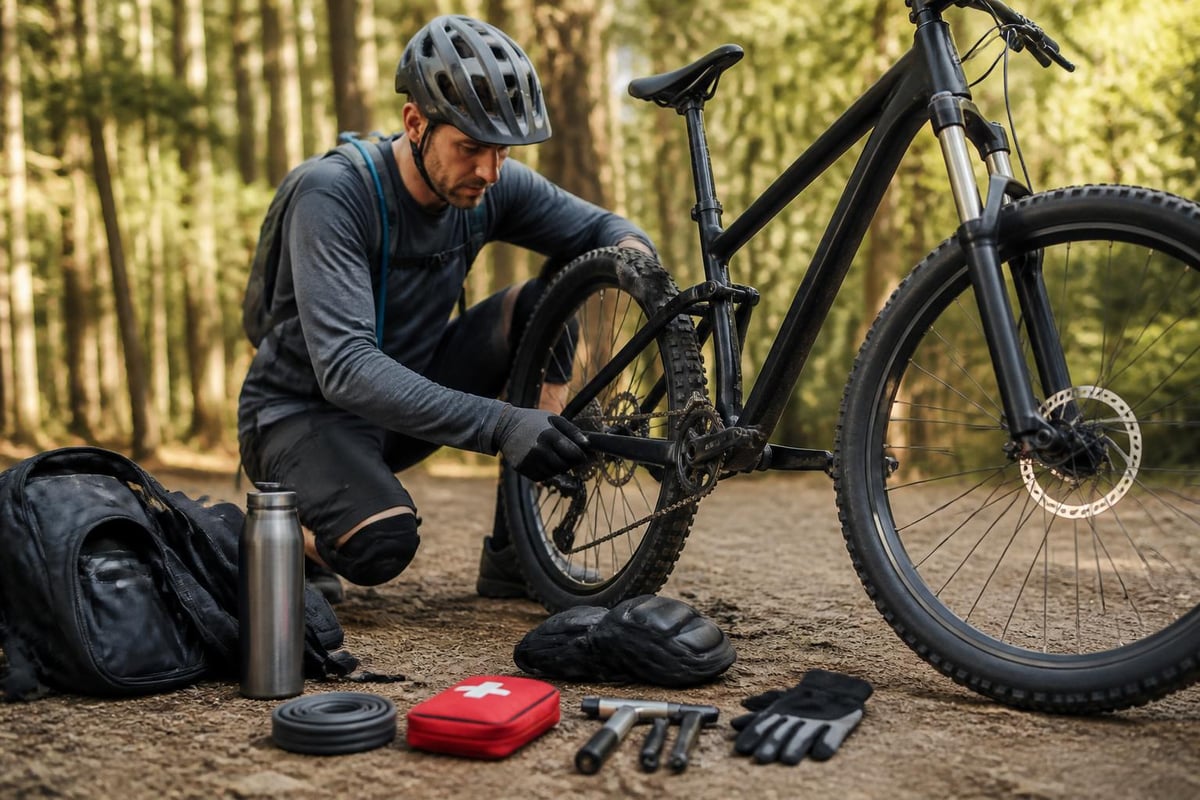
Emergency preparedness includes carrying essential tools and supplies:
- Multi-tool with chain breaker
- Spare tube or tubeless repair kit
- Tire pump or CO2 inflator
- First aid supplies
- Emergency contact information
- Sufficient water and nutrition
The complete safety guide covers additional considerations including weather assessment, communication devices, and route planning protocols that experienced riders incorporate into their preparation routines.
Bike Maintenance and Technical Knowledge
Regular maintenance extends bike lifespan while ensuring reliable performance on demanding trails. Understanding basic mechanical principles empowers riders to handle common issues and recognize when professional service becomes necessary.
Critical maintenance intervals:
| Component | Check Frequency | Service Interval | Common Issues |
|---|---|---|---|
| Brakes | Before each ride | Pad replacement: 500-1000 km | Reduced power, noise |
| Chain | Weekly | Replacement: 2000-4000 km | Skipping, noise |
| Suspension | Monthly | Full service: 50-100 hours | Poor performance, leaks |
| Tires | Before each ride | Replacement: wear indicators | Punctures, sidewall damage |
| Drivetrain | Weekly cleaning | Component replacement: varies | Poor shifting, wear |
Suspension setup significantly impacts bike performance and rider comfort. Proper sag adjustment (typically 25-30% for trail riding) ensures the suspension operates within its optimal range. Rebound and compression damping adjustments fine-tune how the suspension responds to terrain features and rider inputs.
Tubeless Tire Systems
Converting to tubeless tires eliminates pinch flats while allowing lower pressures for improved traction. The setup process requires tubeless-ready rims and tires, sealant, and valve stems. While initial setup demands patience, the performance and reliability benefits justify the effort for serious mountain bikers.
Tire pressure optimization balances traction, rolling resistance, and puncture protection. Heavier riders require higher pressures, while aggressive riding styles benefit from lower pressures within safe limits. Front tires typically run 2-5 psi lower than rear tires, providing enhanced steering traction.
Equipment Selection for Indian Trail Conditions
India's diverse geography presents unique challenges requiring thoughtful equipment choices. Monsoon conditions demand excellent mud clearance and reliable braking performance. Rocky Himalayan terrain necessitates robust wheel builds and puncture-resistant tire casings.
Temperature variations across regions influence clothing and hydration strategies. Southern trails require maximum ventilation and sun protection, while northern mountain routes may demand layering systems and cold-weather specific gear. The best cycling accessories available in India address these regional considerations with products suited to local conditions.
Wheel size selection impacts handling characteristics and terrain capability. The 29-inch standard offers superior rollover capability and momentum maintenance, ideal for cross-country and trail riding. The 27.5-inch format provides quicker handling and acceleration, preferred by some riders for technical terrain and smaller frame sizes.
Budget-Conscious Equipment Strategies
Quality cycling mountain biking gear requires significant investment, but strategic purchasing maximizes value. MTB accessories in India span various price points, allowing riders to prioritize critical items while deferring less essential purchases.
Prioritize safety equipment first, investing in a quality helmet, gloves, and eyewear before upgrading performance components. Entry-level bikes from reputable manufacturers offer better value than unknown brands with impressive-looking specifications. Used equipment from trustworthy sources extends budgets while providing access to higher-quality components.
Whether you're just beginning your cycling mountain biking journey or looking to upgrade your current setup, having access to reliable gear makes all the difference. Cycling Gears Hub - Premium Cycling Gear & Accessories offers everything from protective equipment to performance-enhancing accessories, ensuring you have the right tools for every trail challenge.

Nutrition and Hydration Strategies
Proper fueling supports performance and prevents the bonking that ruins rides. Pre-ride nutrition should emphasize easily digestible carbohydrates consumed 2-3 hours before departure. During rides exceeding 90 minutes, consume 30-60 grams of carbohydrates hourly through energy gels, bars, or whole foods.
Hydration needs vary based on temperature, humidity, and individual sweat rates. Most riders require 500-750ml of fluid hourly during moderate conditions, increasing substantially in hot weather. Electrolyte replacement becomes critical during extended efforts or high-temperature riding to prevent cramping and performance degradation.
Post-ride recovery nutrition accelerates adaptation and prepares your body for subsequent training. The 30-minute post-exercise window represents an optimal time to consume protein and carbohydrates, though recent research suggests this window extends several hours for most riders.
Advanced Skills and Progression
Beyond fundamental techniques, advanced skills unlock new terrain possibilities and riding enjoyment. Manual and wheelie skills help navigate obstacles and maintain momentum through technical sections. Jumping technique allows clearing gaps and drops while maintaining speed and control.
Progressive skill development follows a logical sequence. Master basic skills thoroughly before attempting advanced maneuvers. Visualization and mental rehearsal complement physical practice, building confidence before attempting challenging features. Consider professional instruction or skills clinics to accelerate learning and develop proper technique from the beginning.
Video analysis reveals technique flaws invisible during riding. Recording your attempts at challenging features provides objective feedback highlighting areas needing improvement. Compare your technique against skilled riders to identify specific elements requiring focus.
Trail Building and Advocacy
Understanding trail construction principles deepens appreciation for well-designed routes while highlighting the work required to maintain quality riding destinations. Sustainable trail design incorporates proper drainage, grade reversals, and erosion control measures that preserve trails for future generations.
Volunteer trail maintenance days offer opportunities to give back to the mountain biking community while developing new friendships. Many riding areas depend entirely on volunteer labor for trail upkeep and development. Contributing your time ensures continued access to quality trails while learning valuable construction skills.
Advocacy efforts protect and expand trail access in the face of competing land use interests. Supporting local cycling organizations and participating in public land management processes helps preserve riding opportunities. Responsible riding behavior and positive interactions with other trail users strengthen the cycling community's reputation and access rights.
Weather Considerations and Seasonal Riding
Different seasons present distinct challenges and opportunities for cycling mountain biking. Summer riding in most Indian regions demands early morning or evening sessions to avoid dangerous heat. Monsoon conditions create slippery trails requiring modified techniques and accepting limited traction. Winter months offer ideal temperatures in many areas, though northern regions may experience snow and ice.
Trail conditions evolve throughout the day as temperature and sunlight patterns shift. Morning dew creates slippery conditions that improve as surfaces dry. Afternoon heat may soften previously firm trails, altering traction characteristics. Understanding these patterns helps optimize ride timing and technique adjustments.
Weather-appropriate clothing maintains comfort across varying conditions. Layering systems allow temperature regulation as effort levels fluctuate. Water-resistant shells protect against unexpected rain while maintaining breathability during high-output efforts. Essential cycling gear for beginners includes versatile pieces suited to multiple conditions.
Cycling mountain biking combines physical challenge, technical skill, and outdoor adventure into an incredibly rewarding pursuit that continues growing in popularity across India. Success requires appropriate equipment, developing fundamental techniques, maintaining your bike properly, and prioritizing safety on every ride. Whether you're exploring local trails for the first time or pushing your limits on expert-level terrain, Cycling Gears Hub provides the quality gear, expert guidance, and reliable service that over 10,000 Indian cyclists trust. Start your mountain biking journey with the right equipment and support to make every trail experience safer and more enjoyable.