

Understanding mountain cycle cost is essential for every cyclist planning to invest in off-road riding. The financial commitment extends far beyond the initial purchase price, encompassing maintenance, upgrades, protective gear, and accessories. Whether you're a beginner exploring local trails or an experienced rider tackling challenging terrain, knowing what to expect financially helps you make informed decisions and avoid budget surprises. This comprehensive guide breaks down everything you need to know about mountain bike pricing in the Indian market for 2026.
Understanding Mountain Bike Price Categories
Mountain bikes in India span a wide price spectrum, typically ranging from ₹15,000 to over ₹5,00,000. Each category serves different rider needs and terrain challenges.
Entry-Level Mountain Bikes
Budget-friendly options between ₹15,000 and ₹35,000 make excellent starting points for recreational riders. These bikes feature basic components and aluminum frames that handle light trail riding effectively.
Key characteristics of entry-level models:
- Basic hardtail frames with front suspension only
- 21 to 24-speed drivetrains with entry-level derailleurs
- Mechanical disc brakes or rim brakes
- Standard 26-inch or 27.5-inch wheel sizes
- Heavier frame weight compared to premium options
For beginners exploring best gear bicycle options, these models provide reliable performance without overwhelming financial commitment. The mountain cycle cost at this level focuses on fundamental functionality rather than advanced features.
Mid-Range Performance Bikes
The ₹35,000 to ₹1,00,000 bracket represents the sweet spot for serious recreational riders and weekend warriors. These bikes incorporate better components and improved suspension systems that handle diverse terrain conditions.
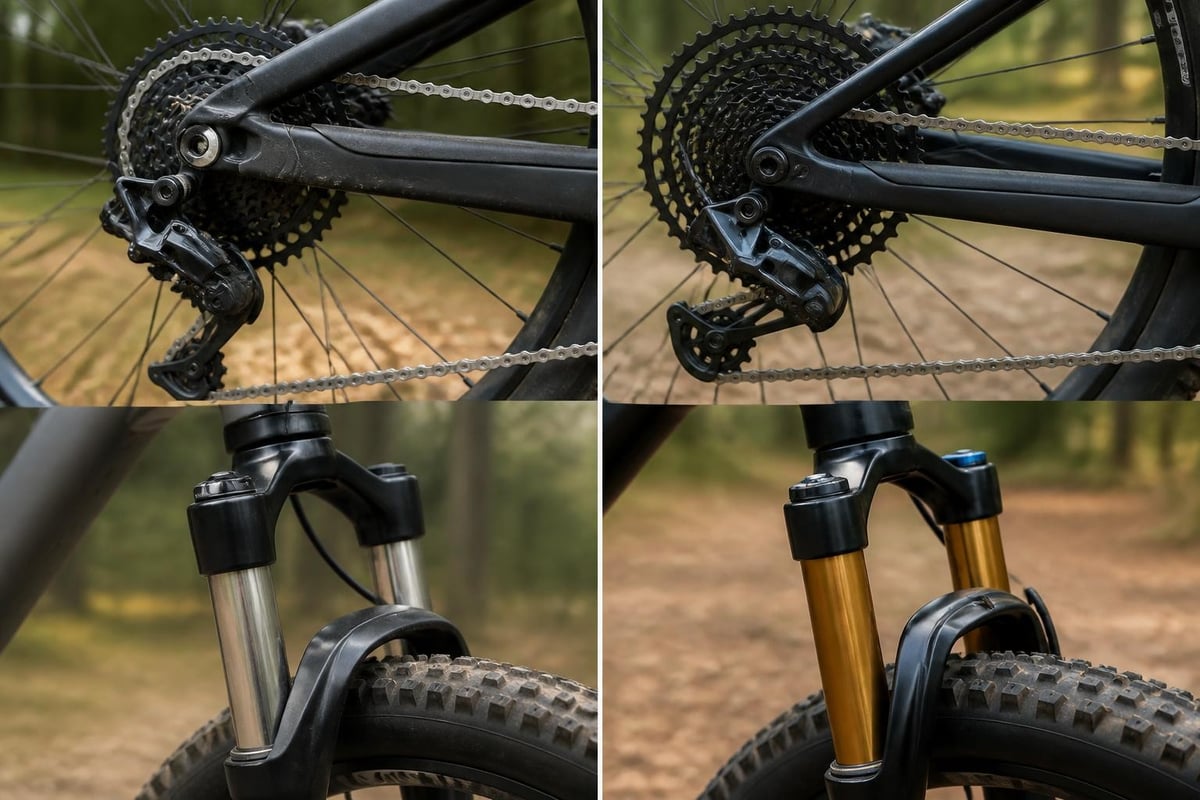
| Component | Entry-Level | Mid-Range |
|---|---|---|
| Frame Material | Basic Aluminum | Quality Aluminum Alloy |
| Suspension Travel | 80-100mm | 100-140mm |
| Drivetrain | 2x8 or 3x7 | 1x10 or 1x11 |
| Brakes | Mechanical Disc | Hydraulic Disc |
| Weight Range | 15-17 kg | 13-15 kg |
According to comprehensive pricing analysis, mid-range bikes deliver significantly better durability and performance per rupee spent. These models typically feature better geometry, lighter materials, and components that require less frequent replacement.
Premium and Professional Models
High-end mountain bikes priced above ₹1,00,000 cater to competitive riders and serious enthusiasts. The mountain cycle cost in this category reflects cutting-edge technology, carbon fiber construction, and top-tier components.
Premium bike advantages include:
- Carbon fiber frames reducing weight by 30-40%
- Advanced suspension with lockout and compression adjustments
- Wireless electronic shifting systems
- Tubeless-ready wheelsets with premium hubs
- Warranty coverage and professional support
Full-suspension models in this range often exceed ₹2,00,000, while world-class racing bikes can reach ₹5,00,000 or more. These investments make sense for riders who spend significant hours on challenging trails and participate in competitive events.
Factors Influencing Mountain Cycle Cost
Frame Material and Construction
Frame composition dramatically impacts both performance and price. Steel frames offer durability at lower costs but add significant weight. Aluminum alloy provides the best value for most riders, balancing strength, weight, and affordability.
Carbon fiber represents the premium choice, reducing frame weight by several kilograms while maintaining structural integrity. However, mountain bike pricing factors indicate carbon frames can double or triple the overall mountain cycle cost compared to aluminum alternatives.
Titanium frames occupy a niche market segment, offering exceptional durability and corrosion resistance at premium prices. These remain rare in the Indian market due to import costs and limited availability.
Suspension Systems
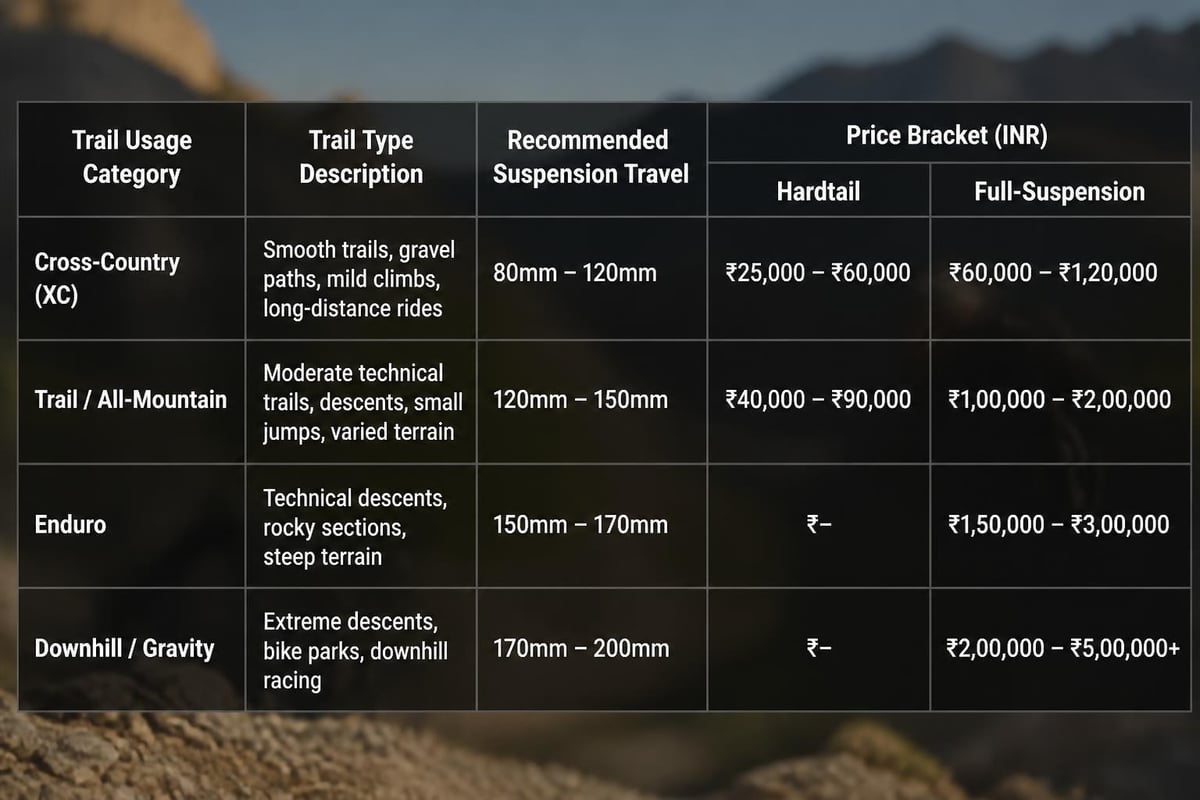
Hardtail bikes with front suspension only cost significantly less than full-suspension models. A quality hardtail typically runs ₹20,000 to ₹80,000, while comparable full-suspension bikes start around ₹60,000 and extend well beyond ₹3,00,000.
Suspension travel considerations:
- Cross-country: 80-100mm travel, lighter weight, lower cost
- Trail riding: 120-140mm travel, balanced performance, moderate pricing
- Enduro/All-mountain: 140-170mm travel, heavier components, higher investment
- Downhill: 180-200mm+ travel, specialized design, premium pricing
Full-suspension platforms require additional engineering, pivot bearings, rear shocks, and complex linkages that substantially increase manufacturing costs. Understanding your riding style helps determine whether the extra mountain cycle cost for rear suspension delivers worthwhile benefits.
Drivetrain and Components
Modern mountain bikes feature various drivetrain configurations affecting both performance and cost. Traditional 3x7 or 2x9 systems offer wide gear ranges at lower prices but require more maintenance and adjustments.
Single-chainring (1x) systems dominate current markets, providing adequate range with reduced weight and maintenance. Entry-level 1x8 drivetrains cost considerably less than premium 1x12 options featuring advanced materials and precision engineering.
| Drivetrain Level | Speed Range | Typical Cost | Best For |
|---|---|---|---|
| Basic | 21-24 speed | ₹3,000-₹8,000 | Casual riding |
| Mid-tier | 1x10, 1x11 | ₹15,000-₹35,000 | Trail enthusiasts |
| Premium | 1x12, electronic | ₹50,000-₹1,50,000 | Competitive riders |
Shimano, SRAM, and microSHIFT represent the primary manufacturers, with Shimano dominating the Indian market across all price points. Upgrading components later adds to long-term mountain cycle cost but allows gradual improvements matching skill development.
Hidden Costs Beyond Purchase Price
Essential Safety Gear and Accessories
The initial bike purchase represents just one component of total mountain cycle cost. Safety equipment and accessories add substantial expenses that many first-time buyers overlook.
Cycling Gears Hub understands these comprehensive needs, which is why they stock everything from protective helmets and gloves to hydration systems and repair tools. Their commitment to serving over 10,000 Indian cyclists means access to quality Cycling Gears Hub - Premium Cycling Gear & Accessories that complement your mountain bike investment perfectly.
Mandatory safety investments:
- Quality helmet: ₹2,000-₹8,000
- Cycling gloves: ₹800-₹3,000
- Eye protection: ₹1,500-₹5,000
- Knee and elbow pads: ₹2,000-₹6,000
- Appropriate footwear: ₹3,000-₹12,000

Additional accessories like water bottles, cages, pumps, multi-tools, and spare tubes typically add another ₹3,000-₹8,000 to initial setup costs. These items aren't optional-they're essential for safe, enjoyable riding experiences.
Maintenance and Repair Budget
Regular maintenance preserves performance and extends bike lifespan. Annual maintenance costs typically range from 5-10% of the original mountain cycle cost, depending on usage intensity and riding conditions.
Typical annual maintenance expenses:
- Chain replacement (every 2,000-3,000 km): ₹600-₹2,500
- Brake pad replacement: ₹800-₹3,000
- Tire replacement: ₹2,000-₹8,000 per pair
- Suspension service: ₹2,000-₹8,000 annually
- General tune-ups: ₹1,500-₹3,000 per service
Mountain biking in Indian conditions-dusty trails, monsoon moisture, and varied terrain-accelerates component wear. Riders covering 3,000-5,000 kilometers annually should budget ₹8,000-₹15,000 for maintenance and consumables. Those exploring mtb accessories in India will find numerous upgrade options that enhance performance while adding to long-term ownership costs.
Upgrades and Customization
Many riders gradually upgrade components as skills improve and riding demands increase. These modifications represent discretionary spending but significantly impact total mountain cycle cost over ownership duration.
Common upgrade paths include better wheelsets (₹8,000-₹40,000), dropper seatposts (₹5,000-₹20,000), upgraded suspension forks (₹15,000-₹80,000), and premium tires (₹3,000-₹6,000 each). According to ownership cost analysis, enthusiastic riders often invest 30-50% of original bike value in upgrades within three years.
Smart Shopping Strategies for Mountain Bikes
Timing Your Purchase
Strategic timing significantly reduces mountain cycle cost. End-of-season sales typically occur in August-September when retailers clear inventory for new models. Discounts of 15-30% commonly appear during these periods.
Festival sales around Diwali, New Year, and Republic Day also present excellent opportunities. Online platforms frequently offer additional cashback and EMI options that make premium bikes more accessible. However, buying previous-year models requires understanding which technological advances matter for your riding style versus mere cosmetic updates.
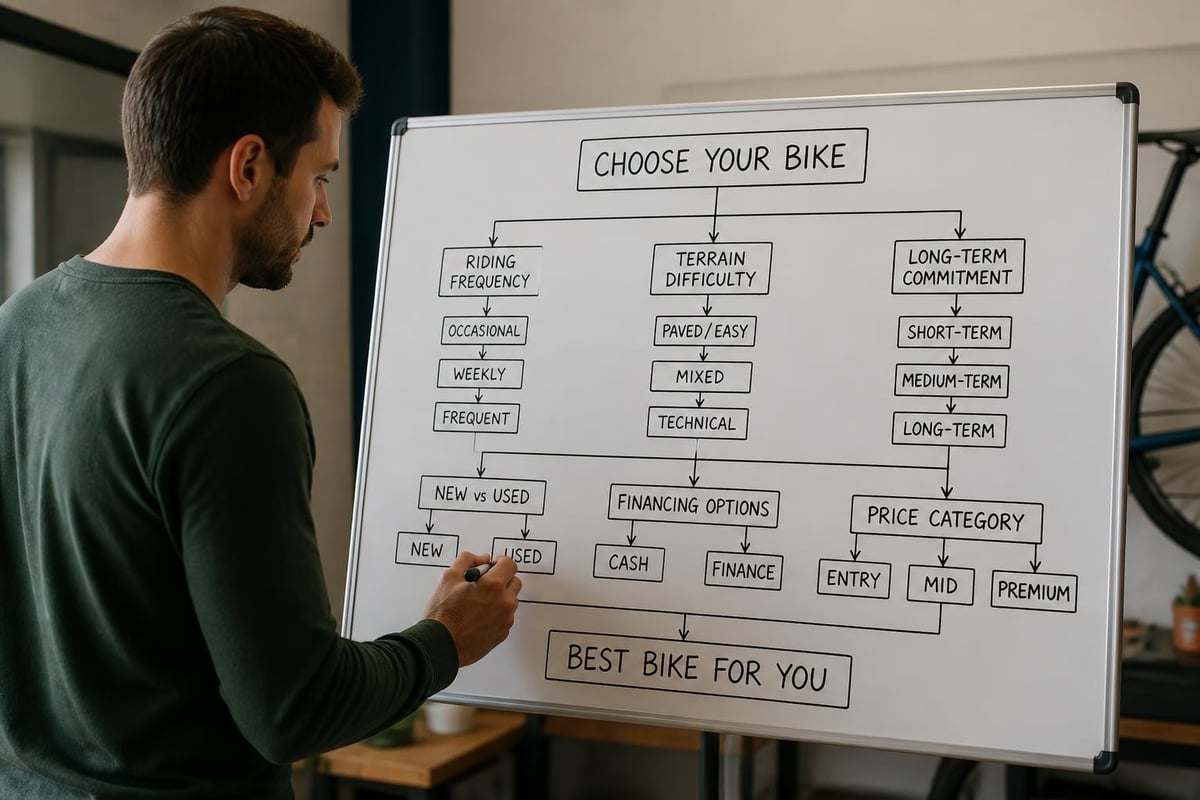
New Versus Used Considerations
The used market offers substantial savings but requires careful evaluation. Well-maintained 1-2 year old bikes from reputable brands can cost 40-60% of original prices while delivering excellent performance.
Used bike inspection checklist:
- Frame condition: cracks, dents, or structural damage
- Suspension function: smooth travel without unusual noises
- Drivetrain wear: chain stretch, cassette teeth condition
- Brake performance: pad thickness, rotor condition
- Wheel trueness: lateral and radial alignment
- Bearing smoothness: headset, bottom bracket, hubs
Purchasing used bikes from established cycling communities or clubs reduces risk compared to unknown private sellers. Resources like mountain bike cost guides help identify fair market values for specific models and condition levels.
Financing Options and Payment Plans
Many retailers now offer EMI plans that spread mountain cycle cost across 6-24 months. These arrangements make premium bikes accessible without depleting savings, though interest charges increase total expenditure.
Zero-interest EMI promotions during sales events provide genuine value. However, standard EMI plans carrying 12-18% annual interest should be carefully evaluated. A ₹80,000 bike financed at 15% over 12 months costs approximately ₹6,500 extra in interest charges.
Cash-on-delivery options remain popular in India, particularly when purchasing from trusted retailers. Understanding shipping policies and return options protects your investment when buying online.
Regional Price Variations Across India
Mountain cycle cost fluctuates across Indian markets based on local demand, dealer competition, and logistics. Metropolitan areas like Mumbai, Delhi, Bangalore, and Pune typically offer more competitive pricing due to higher dealer density and greater market competition.
Tier-2 and tier-3 cities often face 5-10% price premiums due to limited dealer networks and higher transportation costs. However, online retailers have largely eliminated these geographical disparities, though delivery times may extend in remote locations.
Import duties and taxes significantly affect premium international brands. Bikes manufactured domestically or within trade agreement countries cost considerably less than equivalent imported models. This pricing structure makes brands with Indian manufacturing facilities particularly attractive for budget-conscious buyers.
Comparing Mountain Bikes to Other Cycling Disciplines
Understanding relative costs across cycling categories provides valuable perspective. According to comprehensive bike pricing data, mountain bikes typically cost 20-40% more than equivalent road bikes due to robust construction, suspension systems, and durability requirements.
Hybrid bikes generally fall below mountain cycle cost, ranging ₹12,000-₹50,000 for comparable quality levels. Those exploring hybrid bike options discover these models sacrifice off-road capability for lower prices and urban versatility.
Fat bikes occupy a specialized niche with prices comparable to mid-range mountain bikes (₹45,000-₹1,50,000). These models excel in sand and snow but offer limited advantages on typical Indian trails.
Budget Planning for First-Time Buyers
Setting Realistic Financial Expectations
First-time mountain bike purchasers should budget holistically rather than focusing solely on bike cost. A realistic first-year budget includes:
Initial setup costs:
- Mountain bike: ₹25,000-₹50,000 (mid-entry level)
- Safety gear and helmet: ₹5,000-₹10,000
- Essential accessories: ₹3,000-₹5,000
- Basic tools and spares: ₹2,000-₹3,000
- Total initial investment: ₹35,000-₹68,000
Ongoing annual costs:
- Maintenance and repairs: ₹8,000-₹12,000
- Consumables (tubes, brake pads, chain): ₹3,000-₹5,000
- Riding apparel replacement: ₹2,000-₹4,000
- Trail fees and transportation: ₹3,000-₹6,000
- Total annual operating cost: ₹16,000-₹27,000
These projections assume moderate recreational riding (2,000-3,000 km annually). Intensive trail riding or competitive participation significantly increases maintenance frequency and component replacement costs.
Prioritizing Value Over Price
The cheapest mountain bike rarely delivers the best value. Bikes priced below ₹15,000 typically use inferior components that fail prematurely, creating frustration and safety concerns. Investing an additional ₹10,000-₹15,000 dramatically improves reliability, comfort, and long-term satisfaction.
Focus mountain cycle cost analysis on cost-per-ride rather than absolute purchase price. A ₹50,000 bike ridden 150 times annually costs ₹333 per ride in year one, dropping to ₹100 per ride by year five. This perspective shifts evaluation from sticker shock to genuine value assessment.
Quality components from established manufacturers-Shimano, RockShox, Tektro-deliver predictable performance and readily available replacement parts. Proprietary or generic components may reduce initial mountain cycle cost but create long-term supply chain challenges.
Mountain Biking Trip and Event Costs
Beyond ownership expenses, participation costs affect overall cycling budget. Local trail riding remains affordable, but organized events and multi-day trips add considerable expenses.
According to MTB trip cost analysis, weekend riding trips typically cost ₹3,000-₹8,000 including transportation, accommodation, and meals. Multi-day mountain biking holidays in Himalayan regions range ₹15,000-₹40,000 depending on duration and support level.
Event participation expenses:
- Local races and fun rides: ₹500-₹2,000 entry fees
- State-level competitions: ₹1,500-₹4,000 plus travel
- National championships: ₹3,000-₹8,000 plus significant travel costs
- Guided tours and skills clinics: ₹5,000-₹15,000 per event
Insurance considerations deserve attention for expensive bikes. Specialized cycling insurance costs approximately 2-4% of bike value annually but protects against theft, accidental damage, and third-party liability.
Depreciation and Resale Value
Mountain bikes depreciate faster than road bikes due to harsher usage conditions and rapid technological advancement. First-year depreciation typically reaches 25-35%, with subsequent annual depreciation of 15-20%.
A ₹60,000 mountain bike purchased in 2026 might resell for ₹40,000-₹45,000 after one year, ₹30,000-₹35,000 after two years, and ₹20,000-₹25,000 after three years. Premium brands like Trek, Specialized, and Giant maintain better resale values than lesser-known manufacturers.
Factors affecting resale value:
- Brand reputation and market demand
- Component quality and condition
- Maintenance history and documentation
- Frame material and construction
- Current model year versus purchase year
- Modifications and upgrades installed
Understanding depreciation patterns helps evaluate true mountain cycle cost over ownership duration. Riders planning short-term ownership might prioritize resale-friendly brands, while long-term owners can focus purely on personal preference and performance requirements.
Making the Final Purchase Decision
Comprehensive mountain cycle cost evaluation requires balancing immediate budget constraints against long-term value and satisfaction. Test riding multiple bikes within your price range reveals significant performance differences that specifications alone don't communicate.
Reputable dealers provide professional fitting services ensuring proper frame size and geometry. Improper sizing creates discomfort and reduces riding efficiency regardless of component quality. Many serious cyclists consider professional fitting worth ₹2,000-₹5,000 for optimizing bike-rider interface.
Those researching bicycle price options across categories benefit from understanding that mountain bikes command premiums justified by specialized engineering and robust construction. The additional investment delivers capability and durability essential for off-road adventures.
Warranty coverage varies significantly across brands and price points. Entry-level bikes typically include one-year frame warranties, while premium models extend coverage to 5-10 years on frames and 1-2 years on components. Extended warranty value depends on riding intensity and maintenance habits.
Understanding mountain cycle cost requires looking beyond the sticker price to encompass safety gear, maintenance, upgrades, and ongoing operational expenses that define true ownership costs. Smart buyers balance immediate budget realities with long-term value, selecting bikes that match riding ambitions while maintaining financial sustainability. Whether you're just starting your mountain biking journey or upgrading to the next level, Cycling Gears Hub offers the complete range of bikes, accessories, and expert guidance needed to make confident decisions backed by fast shipping, flexible payment options, and hassle-free returns trusted by over 10,000 Indian cyclists.